Author: Eddie Saiz

  • Albuquerque Commercial Construction Contractor Integrates New Software To Improve Productivity

    Albuquerque Commercial Construction Contractor Integrates New Software To Improve Productivity

    [fusion_builder_container type=”flex” hundred_percent=”no” equal_height_columns=”no” menu_anchor=”” hide_on_mobile=”small-visibility,medium-visibility,large-visibility” class=”” id=”” background_color=”” background_image=”” background_position=”center center” background_repeat=”no-repeat” fade=”no” background_parallax=”none” parallax_speed=”0.3″ video_mp4=”” video_webm=”” video_ogv=”” video_url=”” video_aspect_ratio=”16:9″ video_loop=”yes” video_mute=”yes” overlay_color=”” video_preview_image=”” border_color=”” border_style=”solid” padding_top=”” padding_bottom=”” padding_left=”” padding_right=””][fusion_builder_row][fusion_builder_column type=”1_1″ layout=”1_1″ background_position=”left top” background_color=”” border_color=”” border_style=”solid” border_position=”all” spacing=”yes” background_image=”” background_repeat=”no-repeat” padding_top=”” padding_right=”” padding_bottom=”” padding_left=”” margin_top=”0px” margin_bottom=”0px” class=”” id=”” animation_type=”” animation_speed=”0.3″ animation_direction=”left” hide_on_mobile=”small-visibility,medium-visibility,large-visibility” center_content=”no” last=”true” min_height=”” hover_type=”none” link=”” border_sizes_top=”” border_sizes_bottom=”” border_sizes_left=”” border_sizes_right=”” first=”true”][fusion_text columns=”” column_min_width=”” column_spacing=”” rule_style=”” rule_size=”” rule_color=”” hue=”” saturation=”” lightness=”” alpha=”” content_alignment_medium=”” content_alignment_small=”” content_alignment=”” hide_on_mobile=”small-visibility,medium-visibility,large-visibility” sticky_display=”normal,sticky” class=”” id=”” margin_top=”” margin_right=”” margin_bottom=”” margin_left=”” fusion_font_family_text_font=”” fusion_font_variant_text_font=”” font_size=”” line_height=”” letter_spacing=”” text_transform=”” text_color=”” animation_type=”” animation_direction=”left” animation_color=”” animation_speed=”0.3″ animation_delay=”0″ animation_offset=”” logics=””]

    ALBUQUERQUE, New Mexico:  DUB-L-EE Construction, the fastest-growing commercial construction and utility contractor in the state of New Mexico, is streamlining and modernizing its estimating and project management processes.  The company recently put money into HCSS’s HeavyBid software and is also on the verge of investing in HCSS’s HeavyJob software.  Both platforms are designed to increase efficiency, organization, and convenience and will greatly benefit DUB-L-EE’s team members, administration, and clients alike.  

    DUB-L-EE Construction was founded in 2012 by the father-son team, Eddie W. Saiz (Sr.) and Eddie J. Saiz (Jr.).  Since then, it has quickly established itself as the go-to New Mexico contractor for professionally licensed services, including new commercial construction, repairs, and utilities work.  DUB-L-EE’s current team includes more than 45 qualified and experienced crew members, and as the company continues to expand, Saiz Sr. and Jr. are on the constant lookout for ways to improve its operations.  Investing in top-of-the-line estimating and project management software seemed like a logical next step.  

    HeavyBid software is a construction estimating software platform used by more than 50,000 industry professionals for streamlining the estimating and proposal processes.  Work generated in HeavyBid can be exported directly to Microsoft Project, while financial information can be exported directly to DUB-L-EE’s Foundation accounting system.  

    HeavyJob is a construction project management platform used to improve communication, job costing, timecards, quantity tracking, safety reports, error minimization, change orders, and much more.  Within the next month, all DUB-L-EE project managers and supervisors (18 in total) will receive HeavyJob software training and iPads to use in the field.  

    “We look forward to seeing the productivity of both tools fully leveraged on every job from now on,” said Eddie J. Saiz (Jr.), adding that he expects clients as well as DUB-L-EE team members to notice the positive impact.  

    For more information about DUB-L-EE Construction and the services it provides, visit https://www.dub-l-ee.com.

    [/fusion_text][/fusion_builder_column][/fusion_builder_row][/fusion_builder_container]

  • How Technology & AI Will Change The Utilities Industry

    How Technology & AI Will Change The Utilities Industry

    [fusion_builder_container type=”flex” hundred_percent=”no” equal_height_columns=”no” menu_anchor=”” hide_on_mobile=”small-visibility,medium-visibility,large-visibility” class=”” id=”” background_color=”” background_image=”” background_position=”center center” background_repeat=”no-repeat” fade=”no” background_parallax=”none” parallax_speed=”0.3″ video_mp4=”” video_webm=”” video_ogv=”” video_url=”” video_aspect_ratio=”16:9″ video_loop=”yes” video_mute=”yes” overlay_color=”” video_preview_image=”” border_color=”” border_style=”solid” padding_top=”” padding_bottom=”” padding_left=”” padding_right=””][fusion_builder_row][fusion_builder_column type=”1_1″ layout=”1_1″ background_position=”left top” background_color=”” border_color=”” border_style=”solid” border_position=”all” spacing=”yes” background_image=”” background_repeat=”no-repeat” padding_top=”” padding_right=”” padding_bottom=”” padding_left=”” margin_top=”0px” margin_bottom=”0px” class=”” id=”” animation_type=”” animation_speed=”0.3″ animation_direction=”left” hide_on_mobile=”small-visibility,medium-visibility,large-visibility” center_content=”no” last=”true” min_height=”” hover_type=”none” link=”” border_sizes_top=”” border_sizes_bottom=”” border_sizes_left=”” border_sizes_right=”” first=”true”][fusion_text]

    Business analytics tools that use artificial intelligence and machine learning technologies have been developed to help companies reduce costs and lower the risk of costly shutdowns, all while making life easier for utility repair companies.

    Commercial utilities are a key component of any company’s operations. In this article, we’ll explore how AI-powered data analytics tools can help companies reduce their carbon footprint, create actionable predictive and preventive strategies for utilities management, and forecast growth in power demand. 

    Uses Cases for AI in the Utilities Industry

    Defect Detection & Predictive Maintenance

    Repairs are costly—the adage “an ounce of prevention is worth a pound of cure” applies to utilities as well as to people.

    Artificial intelligence can assist in preventive maintenance in two powerful ways: Defect detection and predictive maintenance. Image AI is one of the best up-and-coming tools for commercial utility repair and maintenance companies—it can be used to detect minor defects, deformities, and cracks that may be nearly invisible to the human eye.

    This defect detection can be coupled with predictive maintenance technology. Using machine learning, AI will soon be able to predict how likely a defect is to become a major problem—this will allow building managers and utility companies to create a schedule for maintenance and repairs. 

    Even without imaging, predictive maintenance can already predict how likely a pipe, circuit breaker, gas valve, or other component is to need maintenance or repairs based on factors like make, how long it’s been in use, and other factors like frequency of use, flow, and more. 

    Water & Energy Consumption Forecasts

    Businesses need to anticipate when water and energy consumption are most needed—by doing so, they can reduce availability and consumption during off-peak hours, lowering their overall costs and reducing their environmental footprint. 

    When fed enough data, artificial intelligence can predict when consumption will reach its peak. This data can be used to plan maintenance schedules, helping business owners avoid disruptions during peak hours.

    The Impact of AI in the Utilities Industry

    Improvements to Costs & Operational Efficiency

    Through its data-driven insights, AI promises to offer cost savings, reduce unnecessary power consumption, and improve energy efficiency. We’ve already seen the advantages of AI through devices like smart meters for water and electricity—these meters allow companies to monitor their consumption and make modifications to improve efficiency.

    Future Planning & Forecasting

    Advanced analytics software will help businesses monitor energy demand patterns, ensuring they have excess capacity available when demand peaks and predict future customer demand. Predictive maintenance analytics allow facility managers to assess the health of equipment based on use, power consumption, and more, allowing them to schedule maintenance before repairs are needed.

    Forecasting allows companies to lower operational costs by preventing power outages and reducing the need for costly repairs. Companies suffer losses when serious emergency repairs or shut-downs are needed—utilities AI can help companies avoid these losses. 

    Ethical Considerations for AI in Utilities

    Job Displacement

    Though the benefits of resource management powered by AI and data analytics shouldn’t be underestimated, there are some fears that AI could lead to job displacement. This is a valid concern, though one that shouldn’t cause most companies distress.

    Utility companies should take the time to retrain existing employees to use AI-assisted tools and programs. In most cases, these tools simply make the work of facilities managers, repair and maintenance workers, and other stakeholders easier—those employees should not be replaced.

    There’s also the potential for new employment opportunities—data scientists have become essential players in most large companies, in part because of their ability to parse data about energy and utilities. 

    Privacy & Security Concerns

    One of the biggest problems facing the data and information industry is cyber threats; data can be stolen, modified, or otherwise disrupted by cybercriminals. Without proper security protocols, hacked data could lead to security breaches, equipment failure, and other problems. Cybersecurity is a must when using AI. 

    Conclusion

    AI for utilities isn’t just designed for the energy industry or power plants—it’s useful for any business that wants to lower costs, improve the upkeep of essential equipment and utilities, and avoid costly shutdowns. At Dub-L-EE Utility Construction, we’ve embraced AI to help our customers improve their utilities maintenance—we’d love to help you do the same. 

    [/fusion_text][/fusion_builder_column][/fusion_builder_row][/fusion_builder_container]

  • The Role Of Project Management In Commercial Construction

    The Role Of Project Management In Commercial Construction

    [fusion_builder_container type=”flex” hundred_percent=”no” equal_height_columns=”no” menu_anchor=”” hide_on_mobile=”small-visibility,medium-visibility,large-visibility” class=”” id=”” background_color=”” background_image=”” background_position=”center center” background_repeat=”no-repeat” fade=”no” background_parallax=”none” parallax_speed=”0.3″ video_mp4=”” video_webm=”” video_ogv=”” video_url=”” video_aspect_ratio=”16:9″ video_loop=”yes” video_mute=”yes” overlay_color=”” video_preview_image=”” border_color=”” border_style=”solid” padding_top=”” padding_bottom=”” padding_left=”” padding_right=””][fusion_builder_row][fusion_builder_column type=”1_1″ layout=”1_1″ background_position=”left top” background_color=”” border_color=”” border_style=”solid” border_position=”all” spacing=”yes” background_image=”” background_repeat=”no-repeat” padding_top=”” padding_right=”” padding_bottom=”” padding_left=”” margin_top=”0px” margin_bottom=”0px” class=”” id=”” animation_type=”” animation_speed=”0.3″ animation_direction=”left” hide_on_mobile=”small-visibility,medium-visibility,large-visibility” center_content=”no” last=”true” min_height=”” hover_type=”none” link=”” border_sizes_top=”” border_sizes_bottom=”” border_sizes_left=”” border_sizes_right=”” first=”true”][fusion_text]

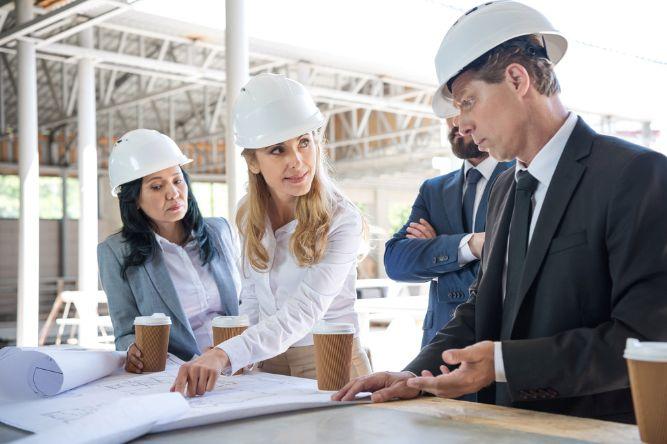
    Commercial construction projects are incredibly complex. Architects, construction crews, plumbers, electricians, heavy equipment operators, and other key players are all involved in the process. Their work needs to be coordinated to complete the project on time and on budget, all while keeping everyone safe.

    Commercial construction management is the key to coordinating all of these moving pieces and ensuring your construction project is completed to the satisfaction of all stakeholders—on time and on budget. 

    What Is Commercial Construction Management?

    Commercial construction management is a discipline that seeks to make construction projects more successful by coordinating architects, engineers, subcontractors, and other parties, all while using management principles to find efficiencies.

    Construction managers are part of the construction planning process from step one. This means they can help address cost, scheduling, scope, safety, quality, and more. 

    The Commercial Construction Management Process

    We can break the commercial construction management process into 7 steps:

    • Development and planning: Working with architects and engineers, the commercial construction manager may help set budgets and schedules, assist in site selection, and perform feasibility studies. 
    • Pre-design: In the pre-design phase, the construction manager provides input on the proposed construction methods and materials, helping stakeholders understand the feasibility of these methods and materials and how they may impact the project’s final costs. 
    • Design: The construction manager can give much clearer estimates of the cost and schedule of the project in this phase. They’ll also provide constructability reviews, highlighting potential challenges posed by the methods and materials used in the design. 


    • Pre-construction: At this point, a full construction plan is detailed—site logistics, a safety plan, and schedules are all established. The construction manager may also be involved in securing the permits needed for the project. 


    • Procurement: The construction manager handles bids and negotiates contractors with subcontractors and suppliers to procure both supplies and labor for the project. 


    • Construction: This is where construction managers shine the brightest—they oversee every element of construction, including coordinating contractors, conducting quality checks, ensuring that safety protocols are met, and providing updates to stakeholders. 


    • Post-construction: The manager may coordinate site cleanup, review construction to ensure that everything meets the project’s requirements, and coordinate the turnover of the building to the client. 

    The Responsibilities of a Commercial Construction Project Manager

    As you can see, commercial construction managers have a wide variety of different responsibilities, including:

    • Setting project goals and objectives
    • Developing and implementing project plans
    • Managing budgets and resources
    • Ensuring project delivery within scope, schedule and budget
    • Communication with staff and stakeholders

    Years of experience in the construction industry are required in order to gain the skills needed to manage a commercial construction site effectively and safely. 

    Challenges Involved in Commercial Construction

    There are a wide array of challenges facing the construction industry in 2023, including:

    • Rising cost of materials
    • Shortage of skilled and unskilled labor
    • Growing complexity of projects

    A skilled construction project manager will help reduce the cost of materials by working with a variety of trusted suppliers. Having worked with several subcontractors before, they’ll be able to find the labor force needed to complete the project on time and on budget. And with years of experience, they’ll have dealt with projects similar to yours—no matter how complex your project may be. 

    Conclusion

    A commercial construction manager can save you tens or even hundreds of thousands of dollars on your commercial construction project. Their knowledge and involvement in the bidding process, construction methods, budgeting, scheduling, and more will help you find savings and efficiencies.

    Dub-L-EE Construction offers commercial construction management services in Albuquerque—call us today. 

    [/fusion_text][/fusion_builder_column][/fusion_builder_row][/fusion_builder_container]

  • The Role Modular Construction Plays In Commercial Construction

    The Role Modular Construction Plays In Commercial Construction

    [fusion_builder_container type=”flex” hundred_percent=”no” equal_height_columns=”no” menu_anchor=”” hide_on_mobile=”small-visibility,medium-visibility,large-visibility” class=”” id=”” background_color=”” background_image=”” background_position=”center center” background_repeat=”no-repeat” fade=”no” background_parallax=”none” parallax_speed=”0.3″ video_mp4=”” video_webm=”” video_ogv=”” video_url=”” video_aspect_ratio=”16:9″ video_loop=”yes” video_mute=”yes” overlay_color=”” video_preview_image=”” border_color=”” border_style=”solid” padding_top=”” padding_bottom=”” padding_left=”” padding_right=””][fusion_builder_row][fusion_builder_column type=”1_1″ layout=”1_1″ background_position=”left top” background_color=”” border_color=”” border_style=”solid” border_position=”all” spacing=”yes” background_image=”” background_repeat=”no-repeat” padding_top=”” padding_right=”” padding_bottom=”” padding_left=”” margin_top=”0px” margin_bottom=”0px” class=”” id=”” animation_type=”” animation_speed=”0.3″ animation_direction=”left” hide_on_mobile=”small-visibility,medium-visibility,large-visibility” center_content=”no” last=”true” min_height=”” hover_type=”none” link=”” border_sizes_top=”” border_sizes_bottom=”” border_sizes_left=”” border_sizes_right=”” first=”true”][fusion_text]

    Construction is always changing, and modular buildings are at the forefront of new construction techniques. A modular building is made up of parts that are fabricated in a factory, then shipped to the construction site.

    We believe commercial modular buildings will have a significant impact on construction in Albuquerque and New Mexico. Here’s everything you need to know: 

    How Modular Construction Works

    Modular construction is a type of construction where most of the components (called “modules”) for a building are constructed off-site in factories, then delivered and assembled on-site. These modules can be practically anything involved in creating a building—walls, ceilings, roofs, sidings, windows, doors, and more. Plumbing, electrical, ductwork, and other utilities can be fully integrated into the modules during construction.

    The Benefits of Modular Construction 

    There are many different benefits to modular construction—the industry has spawned think pieces on how it could change construction forever. While modular construction has some downsides (we’ll get to those later), the advantages of building with modules are pretty incredible. They include faster construction times, lower costs, greater design flexibility, and a greener industry—all things that both contractors and consumers want. 

    Faster Construction Times

    Modules are constructed to code (or better)—the resulting buildings are as high-quality as a comparable building constructed on-site. 

    These modules are all built in factories under tightly controlled conditions. There’s no need to worry about adverse weather conditions, and supply can be more tightly controlled with on-site inventory, which leads to fewer delays and faster construction times.

    Here’s what’s most remarkable: That’s not even where most of the time-savings are found!

    The reason modular construction is so fast is that the modules can all be built while the construction site is being prepared. Contractors can build the foundation, handle landscaping, and ensure that all utilities are ready to be connected while the modules are being built. The site will be completed as the modules are being delivered—from there, it’s a simple matter of putting the modules together.

    Some finishing touches are often required once the modules are put together (depending on what was included in the modules). Altogether, however, there’s less downtime, less cleanup, and fewer delays—it’s a much faster process than traditional construction. 

    Improved Cost and Schedule Predictability

    Factory-built modules don’t just improve speed—they make both costs and timeframes more predictable. “On time and on budget” are important goals for any construction project—modular construction promises to provide both with greater reliability. There are a number of factors that contribute to this:

    • Labor costs are lowered, as laborers don’t need to move from site to site, and labor needs are more predictable.
    • Economies of scale allow modular construction facilities to purchase materials for less.
    • The controlled factory setting eliminates weather concerns and creates opportunities for better quality control.
    • Site preparation and module building occur in tandem, reducing construction times and overall costs.
    • Vandalism and theft are eliminated.

    More predictable commercial construction is a boon to both the private and public sectors; commercial construction contractors will be able to make more accurate bids, and both governments and companies will benefit. 

    Greater Design Flexibility

    You might be surprised to learn that modular builds, which we’ve just described as being predictable, also offer incredible flexibility and customization. All kinds of different modules can be used to build a building, different styles of sidings, windows, and other architectural features can be integrated, and custom modules can be designed. Additionally, the orientation of modules can be changed with ease.

    Most importantly, however, modules can be stacked on top of each other. This allows commercial buildings to expand as necessary. Imagine a hotel that needs greater capacity or a hospital in need of a new wing—with modules that can be easily integrated on top or to the side of existing facilities, expansion is made easy.

    Greener Construction

    Demolition creates a lot of waste. Once demolished, many of the materials in buildings cannot be recycled, and there’s always a risk of contamination to waterways. Demolition can also create air pollution.

    Modular buildings can be fully deconstructed rather than demolished—they’re taken apart piece by piece. 

    Where Commercial Modular Construction Is Used

    Commercial modular construction can be used to create malls, office spaces, multi-family dwellings, and more. We’re going to focus on the advantages of modular commercial construction for two particular types of buildings: Hospitals and hotels. 

    Hospitals

    Regular construction can cause disruptions to the essential work of hospitals, with dust, debris, and noise being introduced into the environment. Modular construction mitigates these problems. Infection control is also improved, with most of the work being done off-site.

    Modules can be moved—this makes it easy to add capacity when necessary and to move capacity from one hospital to another within a city if it becomes necessary. This can make it easier for public health officials and hospital managers to meet demand. 

    Hotels

    Hotel chains have taken to modular construction—they value predictability in their facilities, and modular buildings make it easier for these chains to manage maintenance across dozens or hundreds of buildings.

    Reduced noise levels and shorter construction times also enable hotel owners to add capacity to their buildings while creating minimal disruptions for their guests. 

    Drawbacks of Modular Construction

    There’s a Steep Learning Curve

    While modular builds promise faster construction times with fewer delays and more predictable costs, these things are only the case if the contractors working with the supplier know how to prepare for and assemble modular buildings. They also need to time their labor so that site preparation is complete as close to when the modules are delivered as possible.

    That makes choosing a contractor with experience in commercial module construction essential to the success of your project. 

    Errors Can Reduce or Eliminate Any Cost Savings

    Errors generally fall into three categories: Design errors, which can make the modules incompatible with each other; manufacturing errors, which may only be discovered on-site; and assembly errors, which can compromise the structural integrity of the build.

    Any of these errors can mean one or several different modules need to be remade, causing substantial delays, as the modules need to be fabricated, then delivered. These delays can reduce or eliminate any cost savings. 

    Modules Can Be Damaged During Shipping

    While any construction material can be damaged during the shipping process, damage to modules is particularly problematic, as they’ll need to be constructed from scratch again. While most companies specializing in commercial modular construction have tight controls over their shipping, accidents happen—and those accidents can be particularly costly.

    Conclusion

    Despite the disadvantages of modular construction, we believe it to be a key piece of the future of the commercial construction industry. Here at Dub-L-EE Construction, we’re proud of the modular commercial construction work we’ve done—we look forward to the sector’s continued growth and the benefits it will provide to all stakeholders. 

    [/fusion_text][/fusion_builder_column][/fusion_builder_row][/fusion_builder_container]
  • Albuquerque Commercial Construction Contractor Goes Paperless

    Albuquerque Commercial Construction Contractor Goes Paperless

    [fusion_builder_container type=”flex” hundred_percent=”no” equal_height_columns=”no” menu_anchor=”” hide_on_mobile=”small-visibility,medium-visibility,large-visibility” class=”” id=”” background_color=”” background_image=”” background_position=”center center” background_repeat=”no-repeat” fade=”no” background_parallax=”none” parallax_speed=”0.3″ video_mp4=”” video_webm=”” video_ogv=”” video_url=”” video_aspect_ratio=”16:9″ video_loop=”yes” video_mute=”yes” overlay_color=”” video_preview_image=”” border_color=”” border_style=”solid” padding_top=”” padding_bottom=”” padding_left=”” padding_right=””][fusion_builder_row][fusion_builder_column type=”1_1″ layout=”1_1″ background_position=”left top” background_color=”” border_color=”” border_style=”solid” border_position=”all” spacing=”yes” background_image=”” background_repeat=”no-repeat” padding_top=”” padding_right=”” padding_bottom=”” padding_left=”” margin_top=”0px” margin_bottom=”0px” class=”” id=”” animation_type=”” animation_speed=”0.3″ animation_direction=”left” hide_on_mobile=”small-visibility,medium-visibility,large-visibility” center_content=”no” last=”true” min_height=”” hover_type=”none” link=”” border_sizes_top=”” border_sizes_bottom=”” border_sizes_left=”” border_sizes_right=”” first=”true”][fusion_text columns=”” column_min_width=”” column_spacing=”” rule_style=”” rule_size=”” rule_color=”” hue=”” saturation=”” lightness=”” alpha=”” content_alignment_medium=”” content_alignment_small=”” content_alignment=”” hide_on_mobile=”small-visibility,medium-visibility,large-visibility” sticky_display=”normal,sticky” class=”” id=”” margin_top=”” margin_right=”” margin_bottom=”” margin_left=”” fusion_font_family_text_font=”” fusion_font_variant_text_font=”” font_size=”” line_height=”” letter_spacing=”” text_transform=”” text_color=”” animation_type=”” animation_direction=”left” animation_color=”” animation_speed=”0.3″ animation_delay=”0″ animation_offset=”” logics=””]

    ALBUQUERQUE, New Mexico:  At DUB-L-EE Construction, located at 98 Highway 66 E., employees will soon be saying goodbye to paper check stubs, policy books, safety manuals, and more.  Financially, environmentally, and efficiency-wise, it’s a move that the company sees as an all-around win.  

    Established in the spring of 2012, DUB-L-EE is a father-son success story.  Starting from scratch, Eddie W. Saiz (Sr.) and Eddie J. Saiz (Jr.) have built DUB-L-EE into a thriving commercial construction and utility company over the course of the past decade.  The company is currently the fastest-growing construction contractor in the state of New Mexico and employs 45 experienced workers.  It provides licensed, professional services that include new construction, repairs, and utilities—all to a commercial standard.  

    As DUB-L-EE has expanded, Eddie Sr. and Jr. have both invested substantial energy and resources to make the company a great place to work.  Their most recent project involves drastically reducing DUB-L-EE’s paper usage.  “We are trying to streamline our paper processes and provide employees with digital access to documents via the employee web portal instead,” says Saiz Jr.  “This will benefit the employees by having all their documents readily available, make our hiring process more efficient, and save money and time on printing thousands of papers annually.”  

    Aside from those benefits and the positive environmental impact, going digital will also allow DUB-L-EE to standardize its training through the use of videos.  The company is currently creating an orientation video that it believes will ensure performance and safety standards are understood and met by new employees.  

    Going paperless is a process, but DUB-L-EE is excited to have begun the journey.  Though there will undoubtedly be bumps along the way, Saiz Jr. and Sr. both feel that it’s a worthwhile and important next step for their business.  


    For more information about DUB-L-EE Construction and the services it provides, visit https://www.dub-l-ee.com.

    [/fusion_text][/fusion_builder_column][/fusion_builder_row][/fusion_builder_container]
  • Commercial Construction Loans: How Exactly Do They Work?

    Commercial Construction Loans: How Exactly Do They Work?

    [fusion_builder_container type=”flex” hundred_percent=”no” equal_height_columns=”no” menu_anchor=”” hide_on_mobile=”small-visibility,medium-visibility,large-visibility” class=”” id=”” background_color=”” background_image=”” background_position=”center center” background_repeat=”no-repeat” fade=”no” background_parallax=”none” parallax_speed=”0.3″ video_mp4=”” video_webm=”” video_ogv=”” video_url=”” video_aspect_ratio=”16:9″ video_loop=”yes” video_mute=”yes” overlay_color=”” video_preview_image=”” border_color=”” border_style=”solid” padding_top=”” padding_bottom=”” padding_left=”” padding_right=””][fusion_builder_row][fusion_builder_column type=”1_1″ layout=”1_1″ background_position=”left top” background_color=”” border_color=”” border_style=”solid” border_position=”all” spacing=”yes” background_image=”” background_repeat=”no-repeat” padding_top=”” padding_right=”” padding_bottom=”” padding_left=”” margin_top=”0px” margin_bottom=”0px” class=”” id=”” animation_type=”” animation_speed=”0.3″ animation_direction=”left” hide_on_mobile=”small-visibility,medium-visibility,large-visibility” center_content=”no” last=”true” min_height=”” hover_type=”none” link=”” border_sizes_top=”” border_sizes_bottom=”” border_sizes_left=”” border_sizes_right=”” first=”true”][fusion_text columns=”” column_min_width=”” column_spacing=”” rule_style=”” rule_size=”” rule_color=”” hue=”” saturation=”” lightness=”” alpha=”” user_select=”” awb-switch-editor-focus=”” content_alignment_medium=”” content_alignment_small=”” content_alignment=”” hide_on_mobile=”small-visibility,medium-visibility,large-visibility” sticky_display=”normal,sticky” class=”” id=”” width_medium=”” width_small=”” width=”” min_width_medium=”” min_width_small=”” min_width=”” max_width_medium=”” max_width_small=”” max_width=”” margin_top=”” margin_right=”” margin_bottom=”” margin_left=”” fusion_font_family_text_font=”” fusion_font_variant_text_font=”” font_size=”” line_height=”” letter_spacing=”” text_transform=”” text_color=”” animation_type=”” animation_direction=”left” animation_color=”” animation_speed=”0.3″ animation_delay=”0″ animation_offset=”” logics=””]

    Commercial construction loans are common in the industry. They’re a type of business loan that helps your company cover costs during a renovation or construction project. You can use a commercial construction loan to acquire land, buy materials for the project, and/or pay your construction crew. 

    Obtaining a commercial construction loan can make things much more manageable during a build. Why? Because most commercial lenders accept interest-only payments during a construction job. These loans can also help you manage the increasing costs associated once the build is complete. 

    But how do commercial construction loans work? 

    We’ll answer this question and provide further information about commercial construction loans below:

    How Commercial Construction Loans Work 

    Contrary to most other loans, a commercial construction loan is unique: Instead of receiving the full amount in one lump sum, the lender and borrower create a draw schedule that indicates when the lender releases parts of the payment. 

    When Are Funds Dispersed? 

    A draw schedule can be considered a schedule that identifies when the builder will receive payments throughout the construction process. The schedule of payments may follow project milestones, like clearing the site, pouring the foundation, and constructing the frame of the building.

    Before the milestone is reached, the lender may send an inspector to confirm that the work has been completed before releasing funds. This pattern will continue until the full amount of the loan has been distributed. 

    How Is the Loan Paid Back?

    Much like other loans, the borrower is responsible for paying the interest on the loan amount as well. However, the interest is only paid once the amount has been released. At the end of the construction project, the borrower must repay the full loan amount. 

    If the borrower cannot pay the amount back in full, they can use the property from the build as collateral to get a commercial mortgage. With those funds, the borrower can repay the commercial construction loan. 

    The Application Process for Commercial Construction Loans

    What the Lender Will Want To Know

    The more detailed information you offer your lender, the better the outcome. They’ll want to know everything related to your business, such as your specific industry, financial records, current projects, operations, etc. 

    The lender will also want more information about the commercial construction project you need financing for. You’ll also need to prepare projected costs, specs, designs, and estimated payments for commercial construction contractors, materials, and other expenses. 

    When meeting with your lender, make sure to have the following:

    • Balance sheets
    • Bank statements
    • Income statements
    • Profit and loss statements
    • Debt schedules 
    • Tax returns 

    Credit Requirements 

    Most lenders want you to have a credit score of 670 or more. They’ll also look into bankruptcy claims, foreclosures, and previous construction loans. 

    When You Can Expect Approval/Rejection of Your Application

    The loan application can take up to several weeks for approval or rejection. 

    What Commercial Construction Loans Can Be Used For

    Equipment Purchases 

    Receiving a commercial construction loan is good for purchasing or leasing heavy machinery, tools, and other equipment needed for the project. For example, if you don’t have the cash flow to purchase a new dump truck halfway through the build, you can use the funds from your loan. 

    Purchasing Property 

    When constructing a commercial building, you may need to purchase land. Maybe you want to turn an empty lot into a gym or a retail store into a restaurant. A commercial construction loan can help you fund the project from the very beginning. 

    Hiring Employees 

    You’re going to need an extra set of hands, no matter the size and scale of the construction project. A small construction loan can help you hire the help you need to get the job done on time. 

    Bidding on Projects

    Thinking about bidding on a project? A construction loan can get you the funding you need while you bid on potential construction projects. You can sit on the money while you take the time to strategically bid on prospective construction projects using your knowledge of the industry. That way, you have the funds ready if your bid is accepted. 

    Covering Payroll Expenses

    The day-to-day costs associated with a construction project can add up. Construction loans can help you out by providing the money you need to cover payroll, taxes, insurance, and other operating costs. 

    Risks Associated With Commercial Construction Loans 

    The Risk of Cost Overruns and Budget Constraints 

    Sometimes unexpected costs can impact your overall budget during a construction job. Unexpected expenses could potentially delay the project during the build. The construction crew might also come across unexpected repairs or other unforeseen factors that may increase the budget, making it difficult to complete the project on time.

    The Potential for Delays and Other Issues 

    Delays may negatively affect your loan and repayment, especially if you have a draw schedule in place. As mentioned, many lenders will distribute payments at specific milestones. If you’re unable to make it to the milestone due to an unforeseen delay, you may not receive the next portion of your construction loan, meaning you’ll require cash flow. This problem could affect your loan repayment cost in the end, as well as the amount of interest you’ll need to pay. 

    The Impact of Interest Rates on the Overall Cost of the Loan

    The more money you ask for in a commercial construction loan, the higher the interest rates. You may find yourself struggling to keep up with the interest payments, especially if you run into delays and issues during the project.   

    Conclusion

    By now, you can see the amount of work required to obtain a commercial construction loan. Even when your application is accepted, you’ll need a committed crew that’s professional, prompt, and dependable. 

    That’s why you can rely on our Dub-L-EE Construction crew. With years of experience and hundreds of commercial building projects, we have the skills needed for any project, large or small. We’ve worked with a wide range of clients, from NASA to smaller businesses across New Mexico. Let’s make your construction project happen. Contact us today!

    [/fusion_text][/fusion_builder_column][/fusion_builder_row][/fusion_builder_container]
  • Contractor Communication Tips

    Contractor Communication Tips

    Communication is an essential part of a major commercial construction project. From the beginning of the planning stages through budgeting, signing the written contract, and the end of the construction phase, miscommunication can hinder the progress of your entire project. 

    To ensure you steer clear of any mishaps, you should practice communicating with your contractor as often as possible. This way, you can rest easy knowing that your project and investments are on track and safely secured.

    But how can you ensure that your communication skills are concise throughout the construction process? 

    Communication Is the Key to Success

    Because there are so many roles involved in construction, there’s usually a chain of communication from one person to another. Since you’ll be working closely with a team of contractors, you must be clear with your vision. Poor communication can cause a snowball effect and lead to mistakes that need to be fixed. 

    Our Tips for Effective Client-Contractor Communication 

    • Be Clear About Your Budget

    This is quite possibly the most important part of client-contractor communications. If your contractor isn’t aware of your exact budget, they won’t know the limitations. The last thing you need is for your project to cost you much more than you’re willing to invest. 

    • Establish Your Means of Communication 

    To stay on top of communicating with contractors, you should establish a way to communicate. Ask what your contractor’s preferred means of communication is; you’ll want to speak with your contractor regularly, so establishing a time and way to talk can strengthen your project’s success rate. Determine whether you’ll make on-site visits to chat about the construction progress or when your contractor is available to speak over the phone or through text. 

    • Communicate Things in Multiple Ways

    To ensure communications are reinforced throughout the entire team, try communicating important points in multiple ways. For example, if you want to stress an important aspect of your construction build, communicate it to your contractor and the rest of the team through numerous platforms, such as text messages and in-person meetings. 

    • Understand the Chain of Command

    There is typically a chain of command in commercial construction jobs. It’s paramount to understand who reports to whom. Being clear about who’s responsible for keeping everyone current is crucial. This way, the right people can be held accountable throughout the build. 

    • Avoid Slang

    Be professional when conversing with your contractor, and use language the entire team can understand. That means avoiding slang. 

    • Reach Out 

    Foster a construction site that promotes honesty and feedback. Encourage all parties to reach out when they aren’t confident in the way you’re communicating. 

    Conclusion

    Communicating isn’t always easy, especially when you have a lot on your plate. Taking the extra step and creating a communicative environment can positively impact the success of your project. If you want contractors that are clear and communicative, contact Dub-L-EE Construction. You can count on our responsible team to provide exceptional communication from the beginning of the commercial construction process to the end. 

  • The Environmental Impacts Of Commercial Construction

    The Environmental Impacts Of Commercial Construction

    [fusion_builder_container type=”flex” hundred_percent=”no” equal_height_columns=”no” menu_anchor=”” hide_on_mobile=”small-visibility,medium-visibility,large-visibility” class=”” id=”” background_color=”” background_image=”” background_position=”center center” background_repeat=”no-repeat” fade=”no” background_parallax=”none” parallax_speed=”0.3″ video_mp4=”” video_webm=”” video_ogv=”” video_url=”” video_aspect_ratio=”16:9″ video_loop=”yes” video_mute=”yes” overlay_color=”” video_preview_image=”” border_color=”” border_style=”solid” padding_top=”” padding_bottom=”” padding_left=”” padding_right=””][fusion_builder_row][fusion_builder_column type=”1_1″ layout=”1_1″ background_position=”left top” background_color=”” border_color=”” border_style=”solid” border_position=”all” spacing=”yes” background_image=”” background_repeat=”no-repeat” padding_top=”” padding_right=”” padding_bottom=”” padding_left=”” margin_top=”0px” margin_bottom=”0px” class=”” id=”” animation_type=”” animation_speed=”0.3″ animation_direction=”left” hide_on_mobile=”small-visibility,medium-visibility,large-visibility” center_content=”no” last=”true” min_height=”” hover_type=”none” link=”” border_sizes_top=”” border_sizes_bottom=”” border_sizes_left=”” border_sizes_right=”” first=”true”][fusion_text]

    Commercial construction has a significant impact on carbon emissions and can pollute the air and waterways.

    Our industry can do better.

    In this article, we’ll cover the negative impacts of construction. We don’t point out problems without providing solutions, though. Once you know how construction can impact the environment, we’ll take you through a number of methods that you can use (and that we’ve used) to make construction projects greener and more sustainable.

    There’s a lot to cover—let’s build our knowledge: 

    The negative impacts of construction

    The built environment accounts for 39% of worldwide carbon emissions.  “Embodied carbon”—basically, CO2 emitted from the production of building materials—accounts for a significant portion of that 39%.

    Commercial construction has a huge environmental footprint.

     Waste generation

    The EPA estimates that 600 million tons of waste were generated through construction & demolition in 2018—more than twice the amount generated by homes and businesses in the same year. 

    While most of this waste is generated through demolition, construction creates its share of waste, too. Materials can go unused if they’re flawed or if too many were ordered. Packaging materials must be discarded, and chemicals like paints can expire if there are delays in the construction process.

     Resource consumption

    Commercial construction consumes a staggering amount of resources, with buildings like skyscrapers being among the most resource-intensive to build. Lumber, glass, metal, concrete, and more are all consumed when buildings are constructed—in fact, concrete is the second most consumed resource on the planet (with water being the first).

    Fuel is used to transport materials and operate machinery. Water is consumed to create concrete. Commercial construction is among the most resource-intensive activities on the planet.

     Air pollution

    As we’ve already discussed, construction is an important contributor to global CO2 emissions. C02 is released in the creation of cement—in fact, the cement industry is responsible for about 8% of the world’s carbon emissions. These emissions are caused by burning the fuel needed to create cement and by the chemical reaction that occurs when cement is created.

    This embodied carbon is only part of the problem—as discussed above, transportation and heavy machinery also require fuel, which further contributes to CO2 emissions. 

     Water pollution

    The materials used in construction can be carried by wind and rainwater into waterways. Sediment, chemicals, and trash can all end up in nearby bodies of water, harming aquatic life and rendering the water dangerous to humans, as well. 

    Sustainable construction

    With calls for climate action growing louder, both the public and private sectors are incentivizing greener commercial construction. A number of new, green commercial construction tools and methods have been developed in response to these incentives. Let’s discuss three such options:

     Pollution prevention measures

    The first step is to take measures to reduce pollution. These measures can include:

    • Using more fuel-efficient heavy equipment
    • Sourcing materials from local companies
    • Controlling dust with sprinklers and on-tool extraction
    • Properly disposing of all waste, recycling where possible
    • Covering all drains and treating wastewater
    • Securing sand, cement, and sediment

    These measures tackle both how pollution is generated and how those emissions are controlled. One of the best ways to eliminate pollution, however, is to use fewer materials and fuel. This can be accomplished by choosing to retrofit existing buildings rather than tearing them down and constructing new buildings.


     Using sustainable materials

    The materials used to construct the building play a key role in the project’s ability to meet sustainability goals. 

    Together with architects and engineers, construction companies can plan to use a number of different sustainable materials, including:

    • Lumber from companies with sustainable forestry practices
    • Reused materials, like masonry from deconstructed buildings
    • Recycled (and recyclable) materials, like recycled steel and insulation made from recycled products

    Eco-friendly materials can also play an important role in green commercial construction—windows, for example, can be built with low-E glass. Passive green design elements can also be chosen; for example, green roofs can be chosen over traditional roofing systems.

     EPA Greenscapes program

    This article has largely focused on the more obvious elements of the built environment—the buildings themselves. That’s not the only thing commercial construction companies and business owners should focus on, however.

    Green landscaping practices are a crucial piece of the sustainability puzzle. The EPA Greenscapes program offers advice on how to lower landscaping costs, all while using more environmentally-friendly materials. Everything from aesthetics to drainage is impacted by landscaping—the Greenscapes program can help you make your landscape greener and more efficient. 

    Sustainable construction with Dub-L-EE

    At Dub-L-EE Construction, we have a long track record of providing high-quality construction using sustainable, green methods. Looking to reduce your carbon footprint while building or renovating? Call Dub-L-EE. 

    [/fusion_text][/fusion_builder_column][/fusion_builder_row][/fusion_builder_container]
  • What Is A Regulator Station?

    [fusion_builder_container hundred_percent=”no” equal_height_columns=”no” menu_anchor=”” hide_on_mobile=”small-visibility,medium-visibility,large-visibility” class=”” id=”” background_color=”” background_image=”” background_position=”center center” background_repeat=”no-repeat” fade=”no” background_parallax=”none” parallax_speed=”0.3″ video_mp4=”” video_webm=”” video_ogv=”” video_url=”” video_aspect_ratio=”16:9″ video_loop=”yes” video_mute=”yes” overlay_color=”” video_preview_image=”” border_size=”” border_color=”” border_style=”solid” padding_top=”” padding_bottom=”” padding_left=”” padding_right=””][fusion_builder_row][fusion_builder_column type=”1_1″ layout=”1_1″ background_position=”left top” background_color=”” border_size=”” border_color=”” border_style=”solid” border_position=”all” spacing=”yes” background_image=”” background_repeat=”no-repeat” padding_top=”” padding_right=”” padding_bottom=”” padding_left=”” margin_top=”0px” margin_bottom=”0px” class=”” id=”” animation_type=”” animation_speed=”0.3″ animation_direction=”left” hide_on_mobile=”small-visibility,medium-visibility,large-visibility” center_content=”no” last=”no” min_height=”” hover_type=”none” link=””][fusion_text]

    We understand that the topic of regulator stations probably doesn’t come up too often. We’d be surprised if most people knew what they were. 

    So, what is a gas regulator station, and why is it so important?

    A gas regulator station works hard to ensure that proper gas flow and pressure flow through devices correctly; too much pressure can lead to dangerous consequences, such as explosions, property damage, or injuries to others. 

    The Purpose of Gas Regulation Stations 

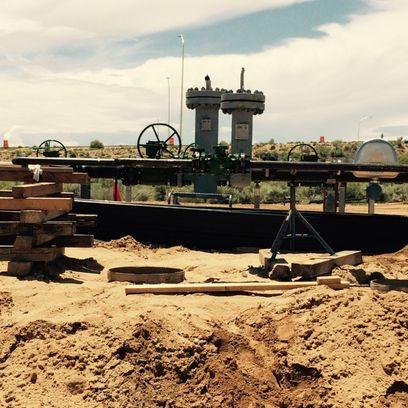
    A gas regulation station is a facility that includes multiple regulators that help reduce gas pressure to the appropriate amount of pressure for customers around different residential, commercial, and industrial sectors. 

    When it comes to natural gas distribution pipelines, they tend to operate at higher elevated pressures, which help the gas travel longer distances through a well-crafted network of pipes. High pressure is more suitable for long distances but is unsuitable for end-users and requires reduction from the regulator stations so customers can receive and use the natural gas. 

    Complicated? A little, but here’s more info: 

    As the demand for the regulator system increases, the regulator flow will also rise, whereas when the system decreases, the regulator flow will reduce. The regulator consistently attempts to match the flow of gas through the station to meet the demand, all while maintaining the appropriate amount of pressure.  

    How Does a Gas Regulator Work?

    Gas enters the regulator’s chamber and puts pressure on the diaphragm. The diaphragm then moves upward as controlled by the set spring attached to a rod that runs down from the set screw. This function allows a specific flow of gas to the appliance or device. Adjusting the control knob will determine the flow and the pressure. Turning the knob one way will push the diaphragm down and allow more gas into the valve. Turning the opposite way will reduce the amount of gas and pressure. 

    Now imagine that on a larger scale. That’s where regulator stations come in and provide natural gas for numerous customers. 

    How Does It Differ From a Pressure Regulator? 

    Pressure regulators tend to work through the same motions as natural gas regulators. When pressurized gas enters the regulator system, it pushes up against the diaphragm and brings tension onto the spring. The diaphragm moves up as far as the spring allows. Once it reaches its maximum closure, the diaphragm will regulate until the natural gas pressure stops flowing. The valve at the bottom of the rod closes off the gas flow once in the closed position. 

    How Does Natural Gas Get Delivered into a City Distribution System?  

    In many cases, construction projects are responsible for creating pipeline systems that deliver gas to entire cities. Gas transportation goes through many physical facilities, like pipes, valves, compressor units, metering stations, regulator stations, delivery stations, holders, and fabricated assemblies. 

    The gas then moves off the pipeline into distribution systems. The pipeline has a volume measurement station to assess how much volume is moved from the pipes and into your system. Most measuring stations have EFM (electronic flow measurement) for accuracy. 

    It’s through these distribution systems that gas is provided to end-user customers. 

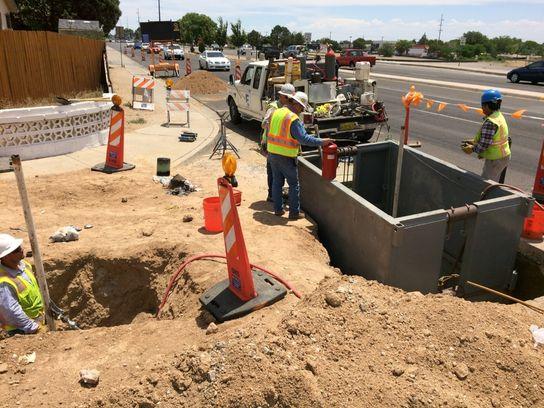
    Are you planning your own pipeline system and require the help of experienced commercial utility contractors to install a regulation system? Contact the team at DUB-L-EE. We can provide an array of services for commercial construction projects, including gas, water, sewer, and storm systems. 

    [/fusion_text][/fusion_builder_column][/fusion_builder_row][/fusion_builder_container]
  • What Is A Revetment Mat?

    [fusion_builder_container hundred_percent=”no” equal_height_columns=”no” menu_anchor=”” hide_on_mobile=”small-visibility,medium-visibility,large-visibility” class=”” id=”” background_color=”” background_image=”” background_position=”center center” background_repeat=”no-repeat” fade=”no” background_parallax=”none” parallax_speed=”0.3″ video_mp4=”” video_webm=”” video_ogv=”” video_url=”” video_aspect_ratio=”16:9″ video_loop=”yes” video_mute=”yes” overlay_color=”” video_preview_image=”” border_size=”” border_color=”” border_style=”solid” padding_top=”” padding_bottom=”” padding_left=”” padding_right=””][fusion_builder_row][fusion_builder_column type=”1_1″ layout=”1_1″ background_position=”left top” background_color=”” border_size=”” border_color=”” border_style=”solid” border_position=”all” spacing=”yes” background_image=”” background_repeat=”no-repeat” padding_top=”” padding_right=”” padding_bottom=”” padding_left=”” margin_top=”0px” margin_bottom=”0px” class=”” id=”” animation_type=”” animation_speed=”0.3″ animation_direction=”left” hide_on_mobile=”small-visibility,medium-visibility,large-visibility” center_content=”no” last=”no” min_height=”” hover_type=”none” link=””][fusion_text]

    These days, erosion control isn’t as easy as it could be. It can be defeating when so many methods seem to fail. 

    But what about revetment mats? 

    Believe it or not, revetment mats are taking the engineering world by storm. They’re sturdy, long-lasting, and effective in ensuring that your construction project avoids future damage. 

    Are you interested? Good. Below, we’ll be discussing revetment mats and how they can benefit you on your next project:

    The Purpose of Revetment Mats

    Revetment mats work in numerous conditions, no matter the environment. Whether your pipeline project is on land or water, this erosion control method has got you covered. Not only are concrete revetment mats a long-term solution for numerous projects across the country, but they’re also incredibly cost-effective.  

    These mats consist of articulated concrete elements connected by ultraviolet copolymer extruded fiber ropes. A mouthful, right? The concrete mats are meant to prevent erosion and provide stability and control of the land. They can also ensure proper watersheds in flood-prone areas.  

    Revetment mats are versatile and can be implemented almost anywhere, most often in volatile and erosive areas of water and land. You may see this method utilized in many pipeline projects. 

    Various Uses of a Revetment Mat

    Because of their versatility, revetment mats can provide protection from erosion in various areas and have many purposes. 

    Here are some areas where revetment mats provide structure and stability:

    • Access roads
    • Landfills
    • Riverbanks
    • Coastlines
    • Canals
    • Pipelines
    • Boat ramps

    Revetment mats are also useful in:

    • Pipeline protection
    • Shoreline protection
    • Culvert erosion
    • Embankment erosion
    • Stormwater repair
    • Bridge abutments 

    What Environment Do Revetment Mats Work Best In?

    The short answer is there’s no end to where revetment mats can work so we’ll highlight how a concrete revetment works in numerous environments:

    Onshore

    Our revetment mats consist of articulated concrete typically used as a protective cover for pipelines in rivers, lakes, or streams. They work as though there’s a concrete mattress that provides armored protection for the entirety of the pipeline. 

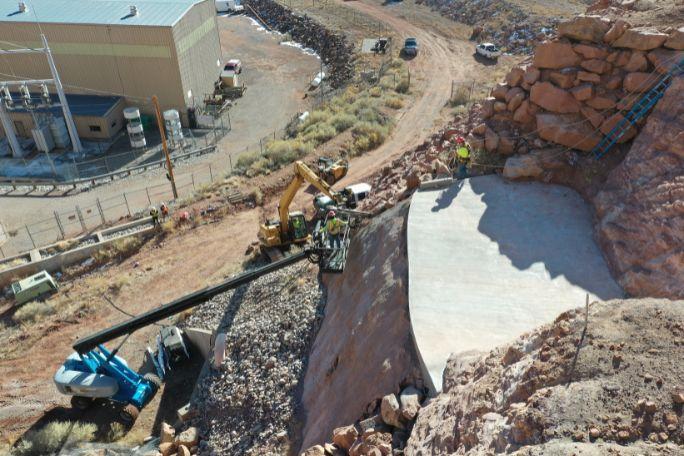
    These mats are similar to traditional alternatives, such as riprap, although they perform better in the beds of streams where higher stress occurs. Riprap is a collection of stones that range from 6 to 30 inches in diameter and are primarily used to create erosion-resistant shorelines. While they can be useful, they can cause punctures in the barrier of filter fabrics, which may lead to potential structural collapse. Concrete mats self-adjust to prevent the migration of erosion while also encouraging the growth of vegetation. A bonus is that these mats can also be removed/replaced for maintenance purposes. 

    Offshore

    Revetment mats work offshore just as well as onshore and are used primarily throughout the oil and gas industry. They perform better underwater compared to riprap, sandbags, grout mats, structural concrete, and other alternatives due to their concrete exteriors. They provide necessary protection against the forces of nature while offshore. 

    Desert Environments

    Our revetment mats work like a charm when placed in a desert area. Their tapered cells help collect moisture that allows them to remain strong no matter how dry the environment gets. They’re easy to move (as long as you have a skid steer) and straddle the pipeline before you set it down. 

    Does the idea of revetment mats seem like a good fit for your next construction project? Our team of commercial utility contractors can install them for you so you can avoid hassles and reap the rewards. If you’d like to learn more about our revetment mats, contact us at DUB-L-EE.

    [/fusion_text][/fusion_builder_column][/fusion_builder_row][/fusion_builder_container]