
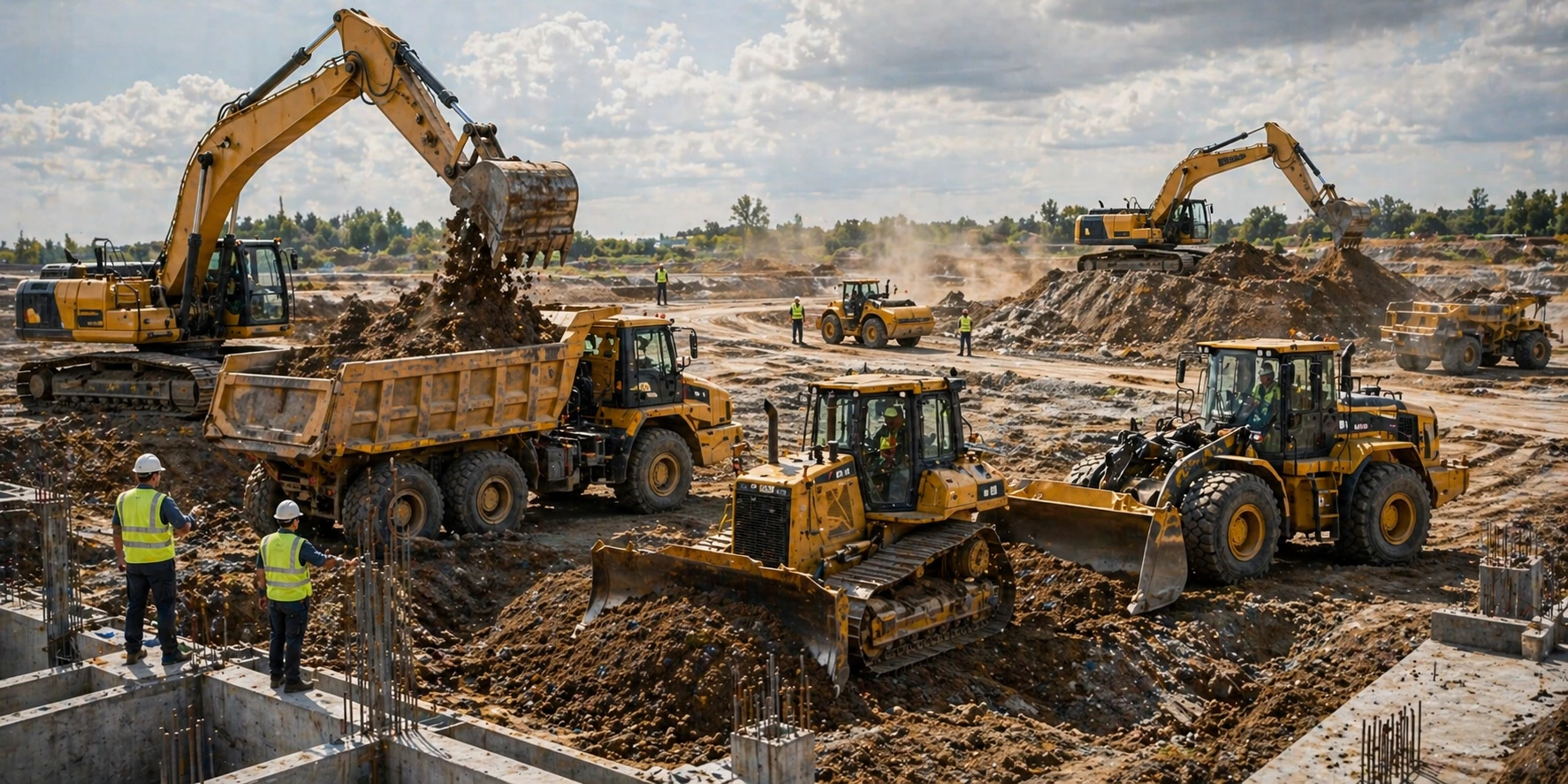
Earthmoving construction services involve using appropriate equipment to handle various construction tasks effectively. Each task, such as digging, leveling, and clearing the land, requires many different types of earthmoving equipment to be used.
These machines help make the work process faster, safer, and more efficient, and help builders and other construction professionals plan a project that requires effective, efficient services. So, in this guide, we will help you to get a clear understanding of the equipment required in construction work.
Earthmoving Equipment Overview and Key InsightsEarthmoving projects require the right machines for tasks like digging, leveling, and material handling to ensure smooth progress. Equipment such as excavators, bulldozers, loaders, graders, and rollers each serves specific purposes. Choosing suitable machinery depends on factors like project type, site conditions, size, load capacity, fuel usage, and operator skill. Proper selection improves efficiency, reduces errors, and ensures safe, cost-effective construction outcomes. |
Essential Earthmoving Equipment and Its Uses
Essential earthmoving equipment helps with digging, leveling, moving materials, and preparing land. It makes construction work easier, faster, and more accurate. Below are the main types and their uses.
Excavators
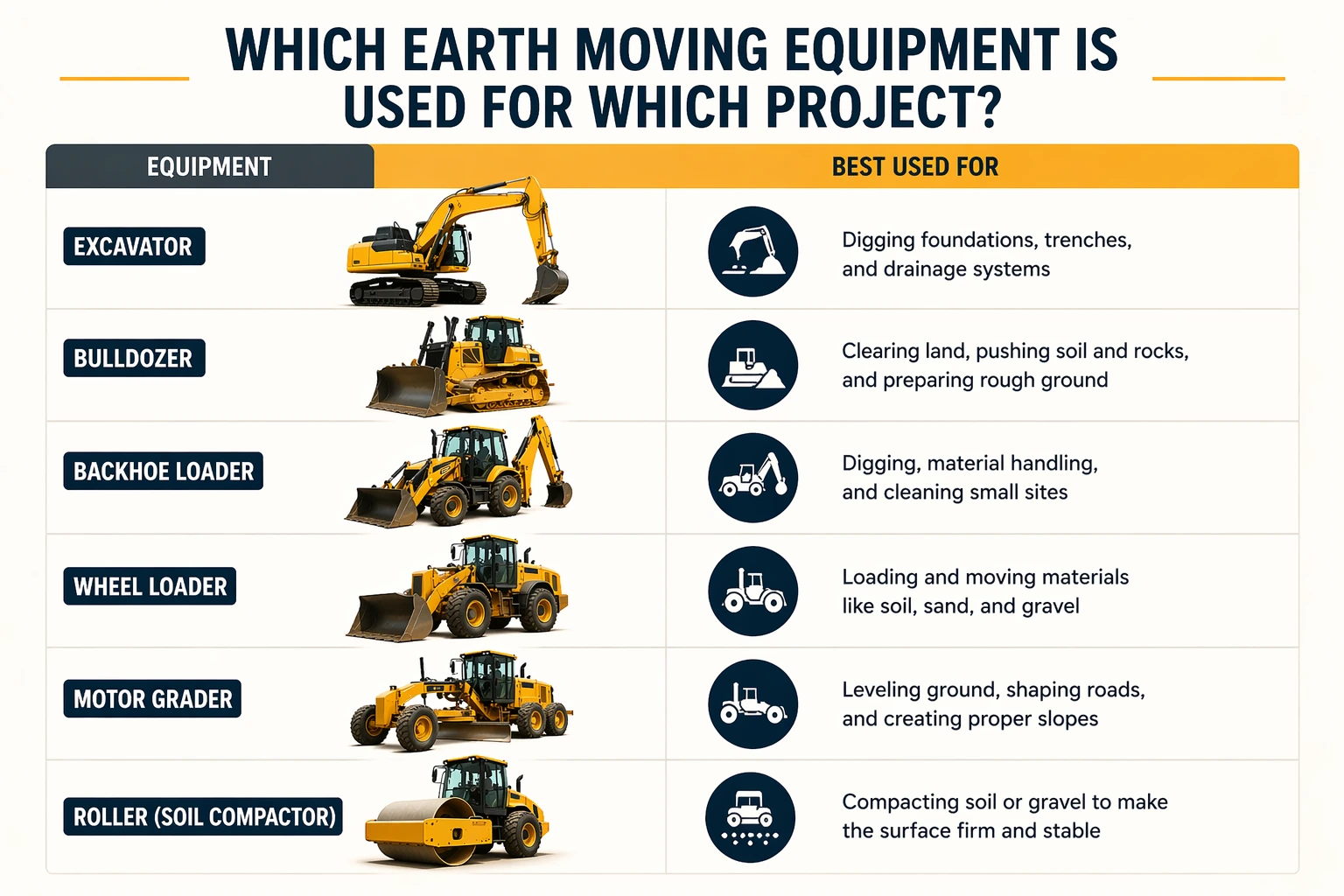
Excavators are usually machines that are used for digging deep into the ground. They are very helpful in making foundational pits, trenches, and drainage line systems. Their long arms can reach the difficult areas and can break hard surfaces with special attachments such as a hydraulic breaker, grapple, or ripper very easily. Excavators work well on harsh land and are commonly used at the starting of any project.
Bulldozers
These are earth moving construction machines used to push heavy materials like soil and rocks. Their wide front blade helps them clear the land, remove tree roots, and spread the soil evenly. Bulldozers are especially useful for cutting slopes and preparing rough ground before any construction work begins.
Backhoe Loaders
Backhoe loaders are very useful machines that can perform both digging and material handling. They have a bucket in front of it and a digging arm at the back. It is great for small jobs, such as digging pits, moving soil, and cleaning sites.
Wheel Loaders
This earth mover construction equipment is especially useful for handling and moving materials, soil, and sand with ease. They use a large bucket to quickly load the truck and shift it around the site. Wheel loaders are usually used for cleaning work and transporting materials on construction sites. Their strong wheels allow them to move smoothly on solid ground.
Motor Graders
Used mainly for making the ground smoother and even. They help in leveling the land and shaping it properly. Their long blades can be adjusted to create slopes so that the water can easily flow. They also spread soil and gravel evenly to fix the defected areas, and help to prepare a strong and stable foundation.
Rollers
Soil compactors or rollers are the earth mover construction equipment that are used for pressing the soil or gravel tightly in the ground so that it can become strong. They work by pressing the materials down with the heavy weight to remove any air gaps between them. It helps to keep the surface firm and stable so that buildings can be built on it carefully.
Which Factors to Consider When Selecting Earthmoving Equipment?
Choosing the right earthmoving equipment depends on factors like project size, soil type, site conditions, budget, and required efficiency. Considering these helps ensure smooth, safe, and cost-effective work.
Construction Work Type
The type of work to be performed is the most fundamental factor in selecting earthmoving equipment. Different machines are designed for specific operations such as excavation, hauling, grading, or compaction. For example, excavators are ideal for digging and trenching, while bulldozers are better suited for pushing and leveling. Choosing equipment that does not match the task leads to inefficiency, increased cycle time, and higher operational costs.
Material Characteristics
Another critical factor is the type and characteristics of the material being handled when selecting. Soil properties such as density, moisture content, and hardness directly affect equipment performance. Loose, dry soil can be handled easily with loaders, while wet clay or rocky ground may need heavy-duty machines with special attachments. Choosing the wrong equipment can reduce productivity and increase wear and tear.
Site Conditions and Terrain
Terrain characteristics such as slope, ground stability, and surface condition play a critical role in equipment selection. Tracked machines provide better traction on soft or uneven ground, while wheeled machines are more efficient on firm and flat surfaces. Site constraints like limited space or obstacles may also restrict equipment size.
Project Size and Duration
The size and duration of the project also matter, as they determine how many earth mover construction equipment will be needed and how long it will take to complete the project. Large projects require large machines that can work for longer hours, while the smaller projects need small machines. If you ignore these factors, it can lead to very common excavation mistakes, such as using the wrong machine for the project.
Load Capacity
The distance between the excavation site and the dumping area significantly influences equipment choice. Short distances are best handled by bulldozers or loaders, medium distances by scrapers, and long distances by dump trucks or articulated hauliers. Using unsuitable equipment for a given haul distance reduces efficiency and increases fuel consumption.
Machine Fuel Usage and Cost
It shows how a machine will consume the fuel during a project and what the overall cost will be. Machines with high fuel consumption can increase your daily expenses, especially if you are working on a longer project. So make sure to choose the fuel-efficient earth moving construction equipment to reduce your costs and re-fuel time for continuous work.
Machine Handling Skill Requirements
For these machines, skilled operators are needed who have the level of training to use these equipment. These skilled workers know how to control machines and follow the safety rules on the site. This is very important, especially in commercial and government construction, where each work should be done with strict rules and regulations and high accuracy.
To make it easier to choose the right equipment for your project, seeking professional assistance can be a smart decision. To help you identify a dependable service provider, here are some useful tips for finding the best commercial plumbing company.
Conclusion
Getting the right equipment and expertise in a project can help you make your construction process much more efficient and stress-free. Each project needs specific construction equipment, and also working with the right and experienced team can make a lot of difference. Dub-L-EE Construction provides reliable construction services using the right machines for excavation, land clearing, grading, and efficient site preparation across all project types.
FAQs
Can one machine be used for multiple tasks on a construction site?
Yes, machines like backhoe loaders are designed to handle both digging and material handling, making them a versatile choice for sites where budget or space limits the number of machines used.
What is the difference between a wheel loader and a bulldozer?
A wheel loader is primarily used for picking up and transporting materials like sand and soil, while a bulldozer is built to push heavy materials and clear rough terrain using its front blade.
What type of earthmoving equipment is best suited for soft or unstable ground?
For soft or waterlogged ground, tracked machines like excavators or tracked bulldozers are preferred over wheeled equipment because their wider tracks distribute weight more evenly and reduce sinking.
How does improper equipment selection affect project timelines?
Using an undersized or wrong machine for the job leads to slower progress, more trips, and higher fuel consumption, all of which can delay the project and significantly increase overall costs.
Do operators need specific certifications to run earthmoving equipment?
Yes, most earthmoving machines require operators to hold relevant training certifications or licenses, especially on commercial or government projects where safety compliance and regulatory standards are strictly enforced.