
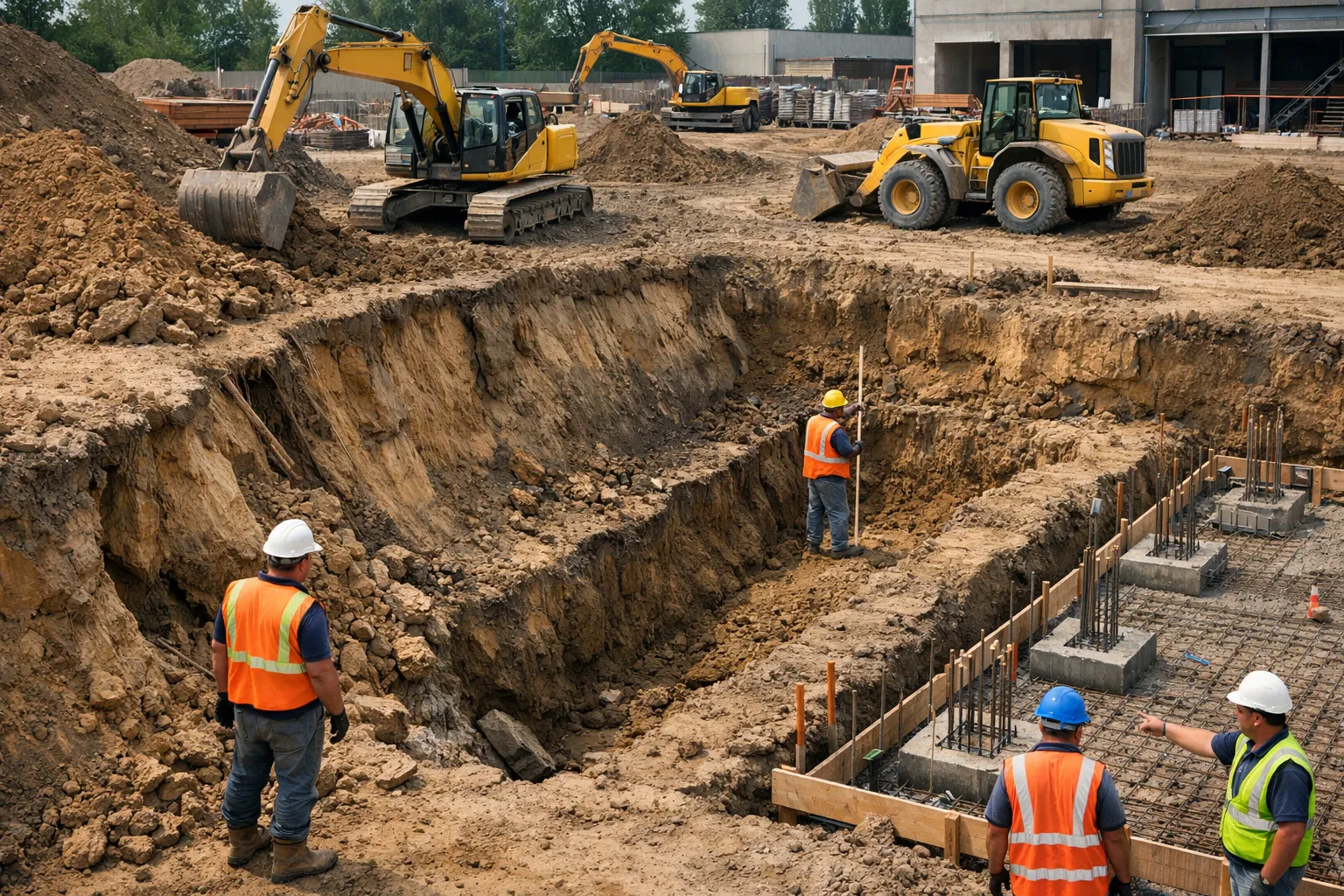
Excavation is the first process that occurs when building or making improvements to land for a house, business, or utility. Because of this, it needs to be done carefully, safely, and on schedule. However, excavation work doesn’t always go as planned. Unexpected commercial excavation issues can arise that lead to structural problems, project delays, higher costs, and even safety risks. So what are the common mistakes that occur once the digging begins? In this blog, we’ll walk through some of the most common excavation mistakes and practical ways to avoid them. So let’s begin!!!
Key Excavation Errors And Prevention – SnapshotExcavation errors in commercial construction often arise from gaps in planning, coordination, and site assessment. Excavation Problems such as inadequate soil analysis, unverified underground utilities, improper soil placement near trenches, poor drainage preparation, and lack of safety controls can disrupt operations and increase project risks. The blog explains how structured site investigations, proper equipment selection, coordinated communication among teams, and consistent safety monitoring help maintain stable excavation conditions and prevent costly delays or hazards during construction work. |
Common Excavation Mistakes You Might Be Making and How to Avoid Them
Skipping Proper Site Investigation Before Excavation
One common excavation mistake that is often seen on commercial sites is crews starting excavation without really understanding the ground conditions. When soil testing or utility checks are skipped, surprises show up quickly. Like unstable soil, hidden rock, or groundwater. Suddenly equipment slows down, excavation plans change, and the project schedule starts slipping.
How to avoid?
Conduct a proper site investigation. In that:
- Geotechnical engineers should analyze soil conditions,
- Surveyors map the land and locate utilities.
These reports will help plan excavation methods, choose suitable equipment, and prevent unexpected commercial excavation issues once digging starts.
Ignoring Underground Utilities Before Digging Begins
Never start the excavation without confirming what kind of utilities are underground. There can be buried gas lines, water pipes, electrical cables, or communication lines that run through the site. And at the time of digging, one can accidentally strike, and it can
- Immediately stop the work
- damage infrastructure
- create serious safety risks for workers.
How to avoid?
- Utility locating specialists should scan and mark underground services.
- Then, review utility maps and coordinate with local utility providers. It will help crews know exactly where to dig and prevent dangerous and costly accidents.
Handling Excavated Soil the Wrong Way
Safety agencies such as OSHA warn that soil is far heavier than many workers realize. Just one cubic yard of soil can weigh more than 3,000 pounds, roughly the weight of a small car. This makes trench collapses extremely dangerous when excavated soil is placed too close to the trench edges. The pressure created by this extra weight can weaken trench walls and increase the chances of sudden cave-ins.
How to avoid?
- Keep excavated soil at least two feet away from the trench edge. It will keep the excavation stable.
- You can use trench supports or barriers.
Overlooking Drainage Planning on the Site
Have you forgotten to include a drainage system while planning? Now, the rainfall or groundwater may collect in the pit. And due to this, the soil can become muddy and unstable. And how will it create an excavation problem? Well, this will slow down the equipment movement and can even weaken trench walls.
How to avoid?
Plan temporary drainage. Use pumps, drainage channels, or sump pits to control water buildup.
Overlooking Basic Safety Practices on the Excavation Site
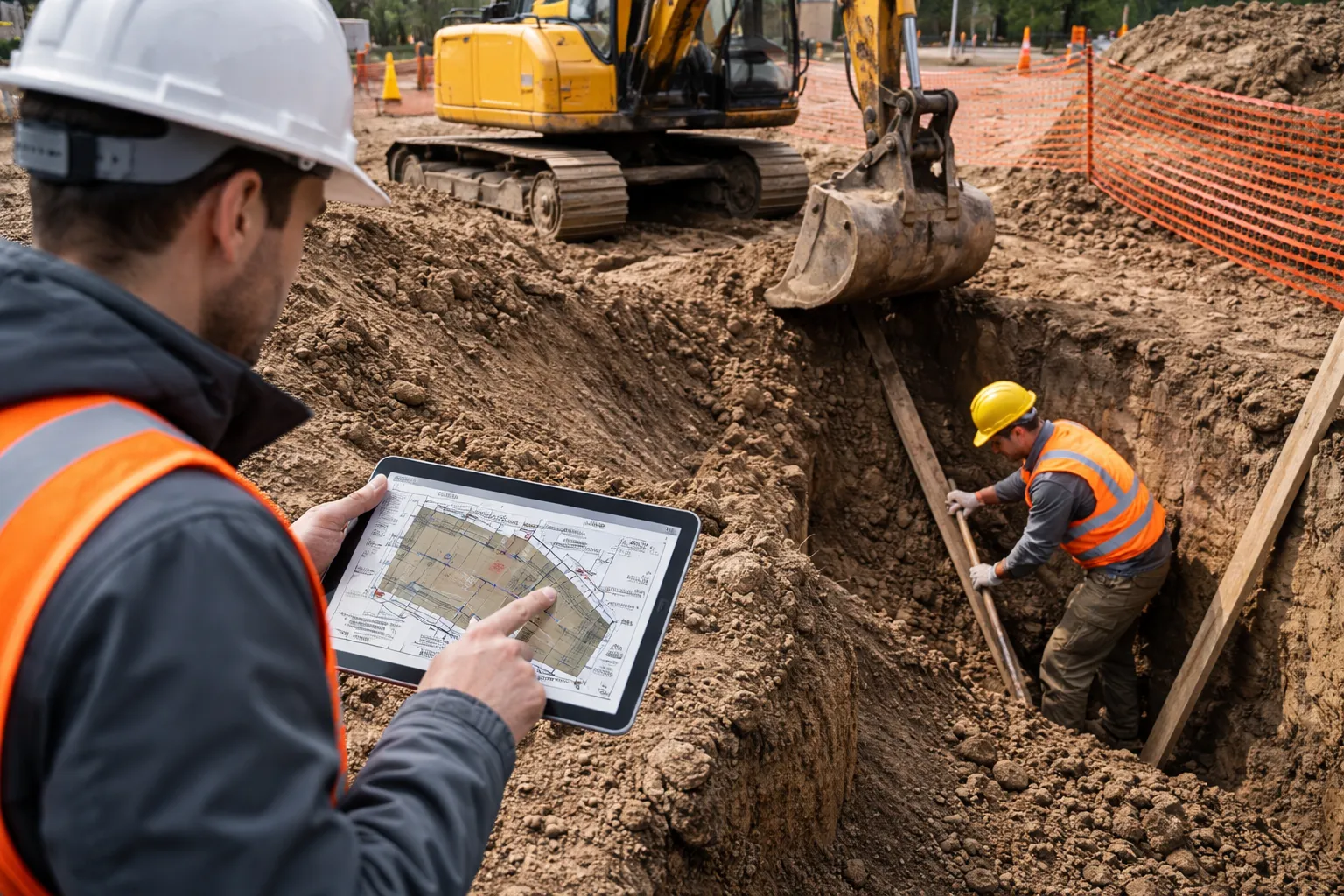
Sometimes, you are taking care of the small safety steps, like:
- missing protective barriers around trenches,
- workers entering excavations without proper access ladders, a
- lack of warning signs, or
- ignoring regular safety inspections
These can quietly increase the risk of falls, cave-ins, or equipment-related accidents, and that is why proper excavation is critical.
How to avoid?
Create a strict daily safety routine.
- Conduct pre-shift inspections,
- Assign a competent person to monitor excavation conditions, and
- Safe entry and exit points are installed.
Letting Miscommunication Slow Down the Entire Excavation Process
Excavation involves several teams: surveyors, engineers, equipment operators, and site supervisors. When communication between them isn’t clear, mistakes can happen easily. For example, incorrect excavation depth or digging in the wrong location can occur simply because instructions or updated plans were not properly shared across the team. And in this situation, the role of technology in modern construction project management becomes important, as digital tools help teams share updated plans and site information quickly.
How to avoid:
- Hold short coordination meetings every day.
- Give clear instructions, and
- Update site drawings
Using the Wrong Equipment for the Excavation Job
Have you ever seen teams trying to dig through hard soil with a small excavator just because it’s available on-site? Situations like this waste time and increase equipment strain. The machine has to work much harder than it is designed for, which can slow down the excavation process. In many cases, it can also lead to faster wear, breakdowns, and unnecessary project delays.
How to avoid:
Select excavation equipment based on soil type, project scale, and site conditions. When the right equipment is used from the start, the work progresses faster and with fewer operational excavation problems.
Conclusion
As you can see, most of the common mistakes committed in commercial construction are preventable with the right planning and coordination. To stay up to date, it is always helpful to review the latest excavation safety guidelines and industry standards. Doing so ensures that no critical step is overlooked and every stage of excavation is carried out with proper planning, safety, and efficiency.
FAQ’s
What Types of Excavation Are Used in Commercial Construction?
Common types include trench excavation, basement excavation, cut-and-fill excavation, dredging, and rock excavation.
What Equipment Is Commonly Used in Commercial Excavation Projects?
Using the right machinery is essential to prevent commercial excavation issues and keep the project running smoothly. Commercial excavation projects typically use excavators, bulldozers, backhoes, dump trucks, loaders, and trenchers.
What Factors Affect the Cost of Commercial Excavation?
Costs are influenced by soil type, excavation depth, site accessibility, presence of underground utilities, equipment requirements, and the amount of material that needs to be removed.
What Permits Are Required for Commercial Excavation Projects?
Most commercial excavation projects require permits from local authorities to ensure the work follows safety, zoning, and environmental regulations and to prevent potential commercial excavation issues before construction begins.
What Methods Are Used To Locate Underground Utilities Before Excavation?
Ground-penetrating radar (GPR), electromagnetic detectors, and utility mapping records are commonly used to locate underground services.
