Author: RAPTAPSEO

  • Pipe Bursting Vs Traditional Excavation In Commercial Sewer Line: Which Is Better?

    Pipe Bursting Vs Traditional Excavation In Commercial Sewer Line: Which Is Better?

    [fusion_builder_container type=”flex” hundred_percent=”no” equal_height_columns=”no” menu_anchor=”” hide_on_mobile=”small-visibility,medium-visibility,large-visibility” class=”” id=”” background_color=”” background_image=”” background_position=”center center” background_repeat=”no-repeat” fade=”no” background_parallax=”none” parallax_speed=”0.3″ video_mp4=”” video_webm=”” video_ogv=”” video_url=”” video_aspect_ratio=”16:9″ video_loop=”yes” video_mute=”yes” overlay_color=”” video_preview_image=”” border_color=”” border_style=”solid” padding_top=”” padding_bottom=”” padding_left=”” padding_right=””][fusion_builder_row][fusion_builder_column type=”1_1″ layout=”1_1″ background_position=”left top” background_color=”” border_color=”” border_style=”solid” border_position=”all” spacing=”yes” background_image=”” background_repeat=”no-repeat” padding_top=”” padding_right=”” padding_bottom=”” padding_left=”” margin_top=”0px” margin_bottom=”0px” class=”” id=”” animation_type=”” animation_speed=”0.3″ animation_direction=”left” hide_on_mobile=”small-visibility,medium-visibility,large-visibility” center_content=”no” last=”true” min_height=”” hover_type=”none” link=”” border_sizes_top=”” border_sizes_bottom=”” border_sizes_left=”” border_sizes_right=”” first=”true”][fusion_text admin_label=”” awb-switch-editor-focus=”” columns=”” column_min_width=”” column_spacing=”” rule_style=”” rule_size=”” rule_color=”” hue=”” saturation=”” lightness=”” alpha=”” user_select=”” content_alignment_medium=”” content_alignment_small=”” content_alignment=”” disable_idd=”no” hide_on_mobile=”small-visibility,medium-visibility,large-visibility” sticky_display=”normal,sticky” class=”” id=”” html_attributes=”W10=” width_medium=”” width_small=”” width=”” min_width_medium=”” min_width_small=”” min_width=”” max_width_medium=”” max_width_small=”” max_width=”” margin_top_medium=”” margin_right_medium=”” margin_bottom_medium=”” margin_left_medium=”” margin_top_small=”” margin_right_small=”” margin_bottom_small=”” margin_left_small=”” margin_top=”” margin_right=”” margin_bottom=”” margin_left=”” fusion_font_family_text_font=”” fusion_font_variant_text_font=”” font_size=”” line_height=”” letter_spacing=”” text_transform=”” text_color=”” render_logics=”” logics=”” animation_type=”” animation_direction=”left” animation_color=”” animation_speed=”0.3″ animation_delay=”0″ animation_offset=””]By far, the two most common methods for commercial sewer line repair are pipe bursting and traditional excavation. Well, this is exactly why so many commercial property owners get confused about which one to go for. As they either heard from someone or saw that poor excavation can lead to many issues, such as cracks in sewer pipes, tree root intrusion, foul smell around the property, and slow wastewater drainage throughout the building. Moreover, there is no doubt that both approaches get the job done, but in terms of cost, timeline, and long-term value, they differ a lot. Hence, this blog breaks down pipe bursting vs. traditional excavation methods side by side so that you are aware of which one best fits your situation. Let’s get into it. 

    Understanding: Commercial Sewer Line Repair Methods

    Pipe bursting is generally the better option for commercial sewer line replacement when minimizing surface disruption, reducing downtime, and preserving parking lots or landscaping are priorities. Traditional excavation is still necessary for fully collapsed pipes, highly unstable soil conditions, or projects requiring complete infrastructure replacement, making the right choice dependent on pipe condition, property layout, and long-term repair goals. 

    What Is Pipe Bursting Technique?

    • What it is: 

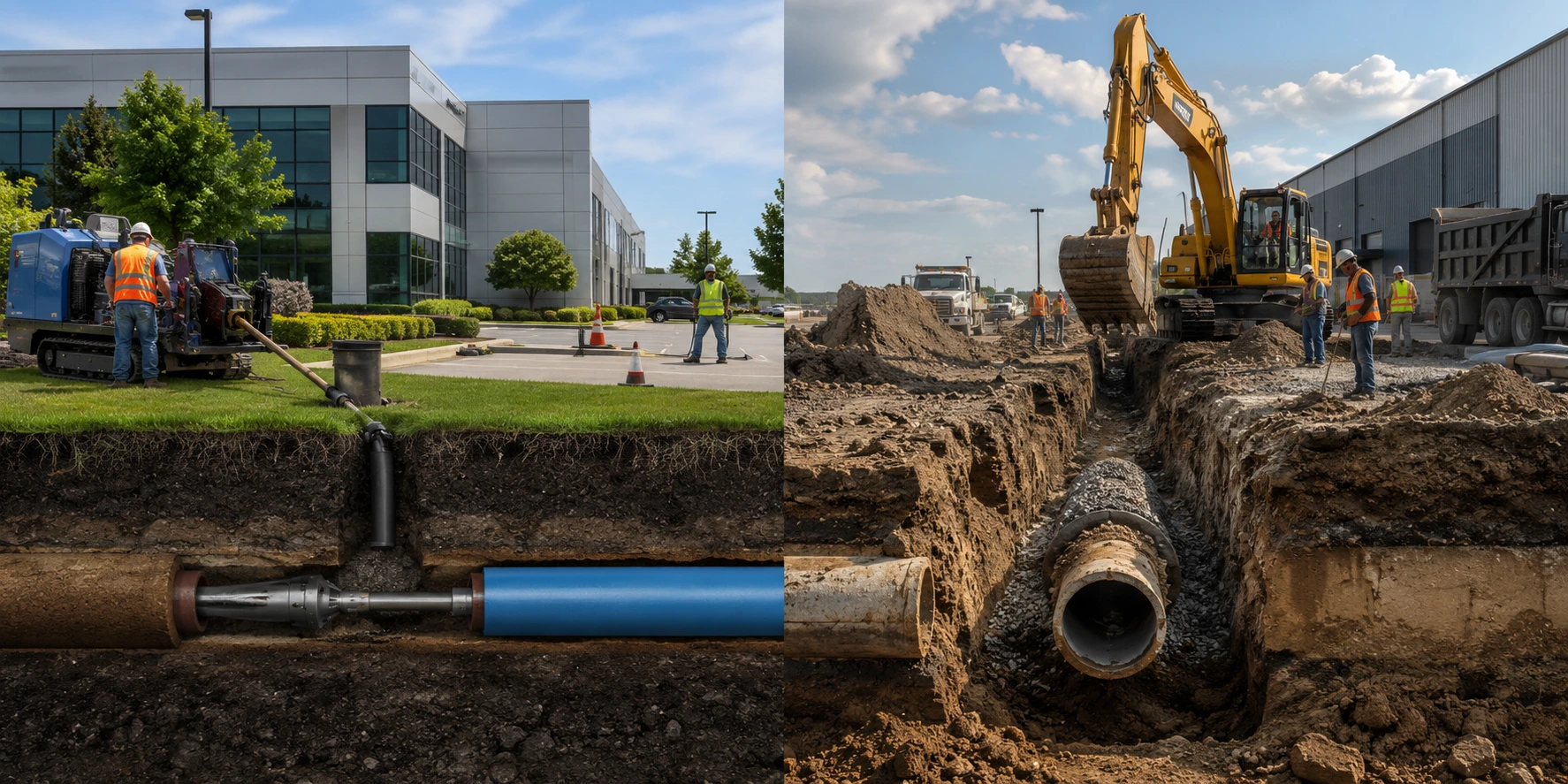
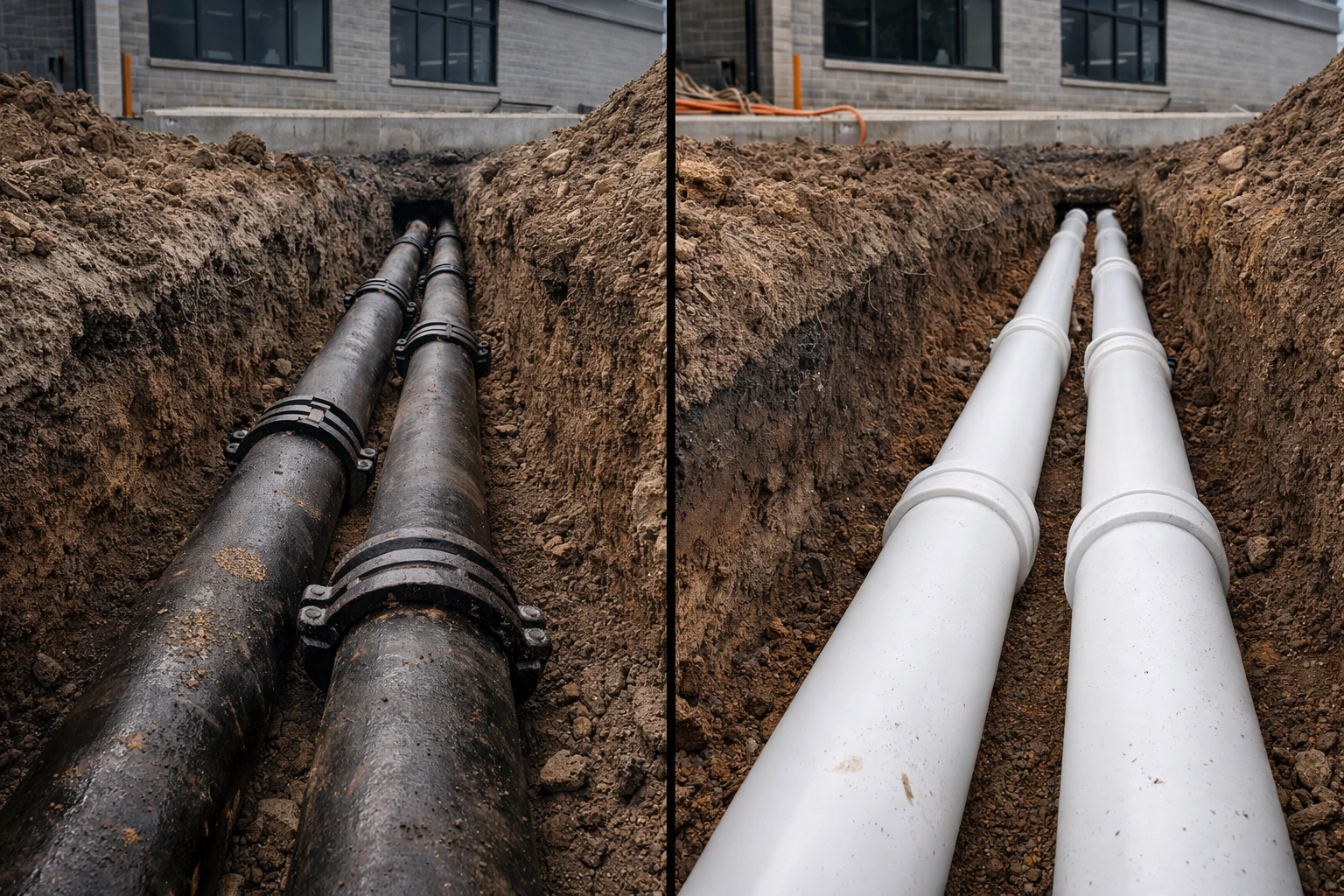
    The method of pipe bursting means a trenchless way of replacing damaged underground sewer lines without the need for a full excavation along the pipe’s length. Instead of creating a long trench across your property, the process uses the existing damaged pipe path to install a new pipe underground. Your contractors will only need small access points, such as manholes or small entry pits, which help reduce disruption to the surrounding area, such as landscaping or parking lots.

    • How it works:

    A hydraulic or pneumatic expansion head is pulled through the existing pipeline via a cable and winch. As it moves, it pushes the old pipe outward until it fractures, while simultaneously pulling the new pipe behind it to immediately fill the void left by the burst pipe. This is important to understand when dealing with congested underground networks, and it is a key reason why underground utility installation is crucial for commercial developments. 

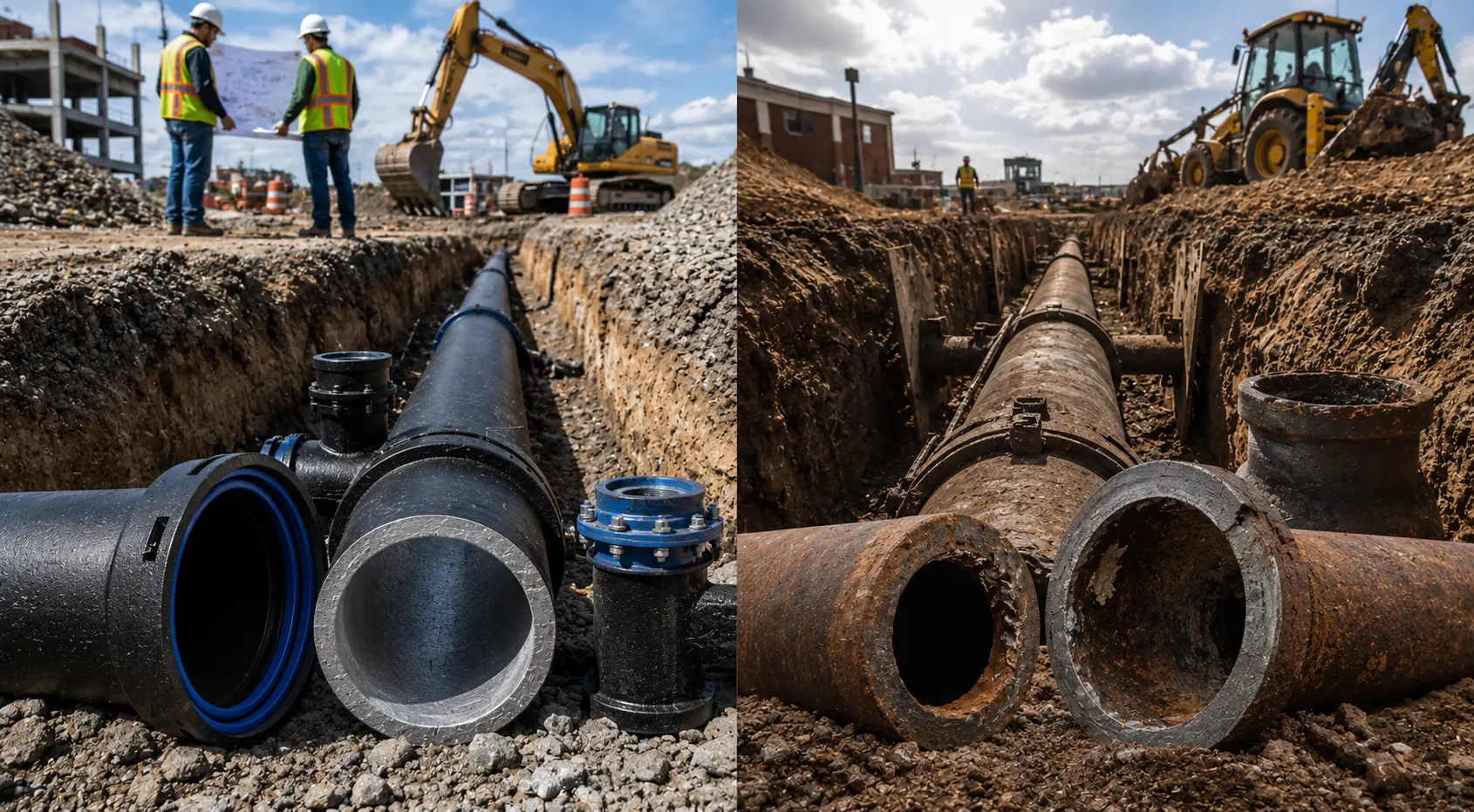
    Pipe Bursting Technique

    What Is Traditional Excavation Technique?

    • What it is: 

    It is also known as open-cut or dig-and-replace. This is the conventional method of repairing or replacing underground sewer lines by physically digging a trench along the full length of the damaged pipe to access and remove it. In this, heavy machinery is also required to break through surface layers, like concrete, asphalt, or soil, before the damaged pipe can even be reached. For commercial properties, that often means tearing up parking lots or driveways, which is exactly why proper excavation is critical, as well as the repair itself. 

    • How it works:

    Under this method, a replacement sewer line is constructed by digging along the entire length of the existing pipeline. Then the old pipe is removed, and a new pipe is installed, requiring extensive surface restoration once the work is complete.

    Traditional Excavation Technique

    Comparing Pipe Bursting and Traditional Excavation

    The common factors between these commercial pipe replacement methods are: 

    Factor Pipe Bursting Traditional Excavation
    Surface Disruption Very little, as only small entry/exit pits are required. It is extensive, as a full trench has been dug across the property.
    Project Timeline Most commercial jobs are completed within a week; many in 1–2 days. Can take days to weeks, depending on pipe depth and length.
    Cost Cuts costs by 30–50% compared to traditional dig-and-replace in many scenarios. Higher includes excavation, labor, and full site restoration.
    Pipe Upsizing You can replace the existing pipe with a similarly sized or larger one to increase hydraulic capacity. It is possible, but it requires full re-excavation and increases the cost.
    Disruption to Business Operations It is low. The minimal surface activity keeps your property functional. High due to heavy machinery, open trenches, and road/parking closures.
    Soil Limitations It is not ideal for densely compacted soils or soils below the water table. This method works in most soil conditions.
    Collapsed Pipes Not suitable if your existing pipe has fully collapsed. The most preferred method for completely collapsed or severely deformed pipes.
    Environmental Impact Less disturbance, economic impact, and environmental degradation than the dig-and-replace method. Significant ground disturbance and debris disposal required.
    Best For
    • Active commercial properties with driveways, parking, or landscaping to protect.
    • Pipes needing upsizing.
    • Urban environments with tight utility corridors.
    • Severely collapsed pipes.
    • Sites with highly problematic soil conditions.
    • Older infrastructure requires a full system overhaul.

    No matter which method your property calls for, understanding commercial construction risk management is what separates a smooth project from an expensive one! 

    Conclusion

    All you have to do now is quickly make a proper decision before any of the issues escalate into something major. When that decision is made, and you are looking to hire a contractor, Dub-L-EE is the one you should consider. With more than 13 years of experience, we specialize in full-service commercial construction as well as underground utility repairs, giving you quality outcomes across Albuquerque.

    Your sewer line won’t fix itself on its own, so let us help you with it. Reach out now! 

    FAQs

    How do I know which method my commercial property needs? 

    The pipe bursting vs traditional excavation decision starts with a CCTV sewer camera inspection. It will tell the condition of your pipe, blockage type, collapse risk, and the proximity of surrounding utilities before any method is chosen. 

    Does traditional excavation always cost more than pipe bursting? 

    Not always. For short, easily accessible pipe sections with no paving overhead, it can act as a more economical option. 

    Can pipe bursting be used on all commercial pipe materials? 

    Many materials, like clay, cast iron, and PVC, can be burst. However, HDPE and some reinforced concrete or ductile iron pipes may not be suitable candidates. 

    During sewer line repair, do I have to shut down my commercial property?

    During pipe bursting, you can continue as usual. But in traditional excavation, you may need partial or full shutdowns depending on the trench location and access disruption. 

    How long does a commercial pipe bursting project usually take?

    Generally the commercial pipe bursting projects are completed within one to three days, depending on pipe length and site conditions.[/fusion_text][/fusion_builder_column][/fusion_builder_row][/fusion_builder_container]

  • Consequences Of Poor Soil Compaction In Commercial Construction

    Consequences Of Poor Soil Compaction In Commercial Construction

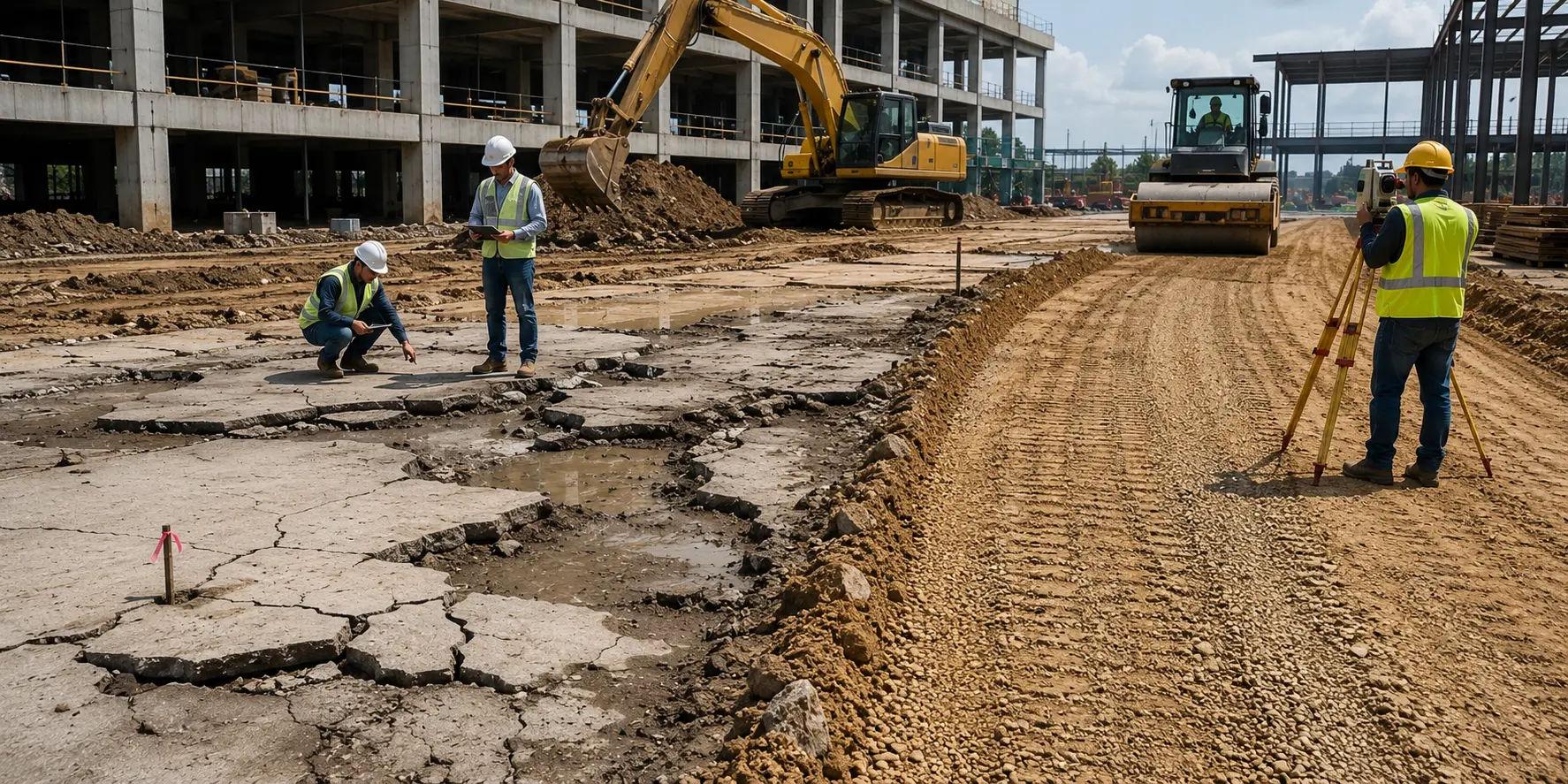
    Even the most well-planned commercial construction projects can fail if the ground beneath them isn’t properly prepared. One common reason behind this is inadequate soil compaction: a critical step that involves the mechanical densification of soil to form a firm foundation that will support structures. 

    Poorly compacted soil may not exhibit any signs of failure immediately; rather, such signs emerge gradually: a microscopic crack on the concrete surface, a door that cannot be shut, or an area of road surface beginning to sink.

    In this blog, we break down the very causes behind these consequences of poor soil compaction and the right approach to preventing it, so you know exactly what to watch out for on your next commercial project!

    Understanding Uneven Soil Compaction in Commercial Builds

    Poor soil compaction in commercial construction occurs when soil isn’t adequately densified before building begins. Common causes include incorrect equipment, improper moisture levels, and insufficient compaction passes. Over time, this leads to foundation settlement, slab failure, drainage issues, and costly legal liability. Prevention starts with proper site investigation, layered compaction, and verified density testing throughout the process.

    What Does Soil Compaction Mean?

    Picture the soil as a sponge packed with tiny air pockets. On its own, those gaps keep the ground soft, unstable, and likely to shift the moment any real pressure is applied. Soil compaction is the process of closing those gaps, pressing the particles together until the ground is dense and solid enough to actually hold what’s being built on top of it.

    What does it do?

    Once those air pockets collapse and the particles lock into place, the ground transforms. It ceases to be a flexible material that is hard to predict and begins to behave like a stable foundation for other building materials, such as foundations, slabs, and pavements. It offers resistance to movement, distributes loads evenly on the surface, and maintains its shape. On top of all that, it avoids any future problems associated with uneven settling and moisture intrusion.

    Causes of Poor Soil Compaction

    Poor soil compaction is usually the result of improper timing, unsuitable soil conditions, poor equipment use, or lack of site-specific planning. When these issues are ignored during early site preparation, the ground may fail to reach the density needed to support heavy commercial structures, pavement, utilities, and drainage systems.

    Compaction of Wet Soil

    It is not advisable to perform compaction when the soil is moistened. This is because operating equipment on wet soil will displace the particles instead of compressing them. Ultimately, due to excessive water content, wet soil particles will not adhere to one another.

    Too Few Passes

    Compaction isn’t a one-pass job. Operators who don’t make enough passes over the same piece of soil leave air voids behind that aren’t visible on the surface but will absolutely show up later, in the form of settling, cracking, and shifting. 

    Low Organic Content in Soil

    Soil with high organic content has a built-in structural integrity. The organic material binds all the elements together without being compressed. In soil lacking in organic content, there is no cohesive substance holding it up, thus making the soil highly susceptible to bad compaction right off the bat.

    Ignoring Soil Variability Across the Site

    Most commercial sites don’t have uniform soil throughout. Pockets of clay, sand, or fill material all behave differently under compaction from varied equipment, as different soils require different types of rollers. Whereas soils such as gravel and sand can readily yield to the vibrations used in soil compaction, soils such as clay and silt need much more labor-intensive methods.

    In addition, the effectiveness of the compaction depends on the proper excavation of construction project and preparation of the site.

    soil compaction needs

    What are the Consequences of Poor Soil Compaction?

    Poor soil compaction can create serious structural, operational, and financial problems long after construction is complete. From foundation movement to pavement failure and drainage issues, weak soil support can compromise the safety, performance, and lifespan of a commercial property.

    Uneven Foundation Settlement

    The condition of poor soil compaction creates an uneven subsurface, meaning different sections of the ground respond differently under load. Areas with loosely compacted or higher air-void content compress more under pressure, while denser sections remain relatively stable. Because of this differential stress, cracks form, sloping floors occur, and once tightly fitting doors no longer close!

    Cracks and Buckles in Concrete Slabs

    A major part of soil compaction problems is that the movement of unstable soils causes concrete to pull away from the ground. Cracks develop, the slab sags, and the structure becomes a danger rather than serving as a durable surface for commercial activity. 

    Failure of the Drainage System

    Water drains differently when the underlying soil is unstable. Instead of flowing where you want it to go, it goes somewhere else or settles in spots where you do not want it. Poor soil conditions are one of the leading reasons underground utility installation requires careful planning on commercial sites.

    Pavement and Parking Lot Wear

    In commercial spaces, parking lots and access roads take constant traffic. When the base isn’t properly compacted, these surfaces start to deform under repeated use, leading to uneven areas, tire ruts, and a noticeably rough driving surface much sooner than expected. 

    Legal and Financial Fallout

    Structural failures that trace back to poor ground preparation don’t stay quiet. They turn into lawsuits, insurance claims, and reputations that take years to rebuild. The fix always costs more after the fact than it ever would have upfront. 

    Construction decisions made early in a project carry their own long-term consequences, as outlined in our breakdown of the pros and cons of prefabrication in modern construction!

    How to Prevent Poor Soil Compaction?

    Preventing poor soil compaction starts with proper testing, planning, equipment selection, and continuous site supervision. By verifying soil conditions and compacting each layer correctly, commercial construction teams can reduce settlement risks and build a stronger foundation for long-term performance.

    Have a Soil Test Prior to Starting Work

    Prior to using any piece of machinery, a geological survey should have been conducted on the land already. This provides an understanding of the nature of the soil and its moisture content. This will form the basis of planning the process and type of equipment need for soil compaction.

    Compact the Soil in Layers

    It is recommended that soil be compacted in layers not exceeding a thickness of 6 to 8 inches at one go. Filling a large area in one go will result in loosely compacted soil underneath. Also, make sure the systems beneath the structure are just as solid as the structure itself, including avoiding common failures in commercial gas piping systems.

    Test and Verify

    Commercial construction typically requires 95-98% compaction of maximum dry density, verified through the Proctor compaction test. To prevent soil compaction problems, regular field density tests are conducted throughout the process.

    On-Site Inspection and Supervision 

    Even if there is an appropriate plan in place, the process may not be successful without sufficient supervision during its implementation. Site inspections are necessary to verify that the lifts, water content, and equipment usage are carried out appropriately. 

    Conclusion

    Soil compaction isn’t the most visible part of a commercial construction project, but it’s easily one of the most consequential. Getting it right the first time takes a team that understands the ground they’re building on!

    That’s exactly what Dub-L-EE brings to every commercial project in Albuquerque and across New Mexico. As construction partners, you can count on our experienced team members and their ability to deliver exceptional service!

    Need help planning your commercial project? Contact Dub-L-EE today for a free consultation!

    FAQs

    How deep does soil compaction need to go on a commercial site?

    It needs to be at least 3 to 4 feet below foundation level.

    Can compaction issues be identified before any visual signs are seen?

    Yes, compaction voids can be detected via ground penetrating radar and geotechnical studies before any visual signs are present.

    What is a Proctor compaction test, and why is it significant?

    It is a lab test that determines your soil’s maximum achievable density: the benchmark all field compaction is measured against.

    How can poor compaction of soils affect plumbing or electrical installations inside a building?

    Soil movements may cause cracking of the buried pipes or conduits.

    What questions do you recommend asking a contractor regarding earthmoving work?

    Do they self-perform compaction, their testing protocol, and whether there will be a geotechnical study performed?

  • Key Equipment Required in Earthmoving Construction Services

    Key Equipment Required in Earthmoving Construction Services

    [fusion_builder_container type=”flex” hundred_percent=”no” equal_height_columns=”no” menu_anchor=”” hide_on_mobile=”small-visibility,medium-visibility,large-visibility” class=”” id=”” background_color=”” background_image=”” background_position=”center center” background_repeat=”no-repeat” fade=”no” background_parallax=”none” parallax_speed=”0.3″ video_mp4=”” video_webm=”” video_ogv=”” video_url=”” video_aspect_ratio=”16:9″ video_loop=”yes” video_mute=”yes” overlay_color=”” video_preview_image=”” border_color=”” border_style=”solid” padding_top=”” padding_bottom=”” padding_left=”” padding_right=””][fusion_builder_row][fusion_builder_column type=”1_1″ layout=”1_1″ background_position=”left top” background_color=”” border_color=”” border_style=”solid” border_position=”all” spacing=”yes” background_image=”” background_repeat=”no-repeat” padding_top=”” padding_right=”” padding_bottom=”” padding_left=”” margin_top=”0px” margin_bottom=”0px” class=”” id=”” animation_type=”” animation_speed=”0.3″ animation_direction=”left” hide_on_mobile=”small-visibility,medium-visibility,large-visibility” center_content=”no” last=”true” min_height=”” hover_type=”none” link=”” border_sizes_top=”” border_sizes_bottom=”” border_sizes_left=”” border_sizes_right=”” first=”true”][fusion_text]

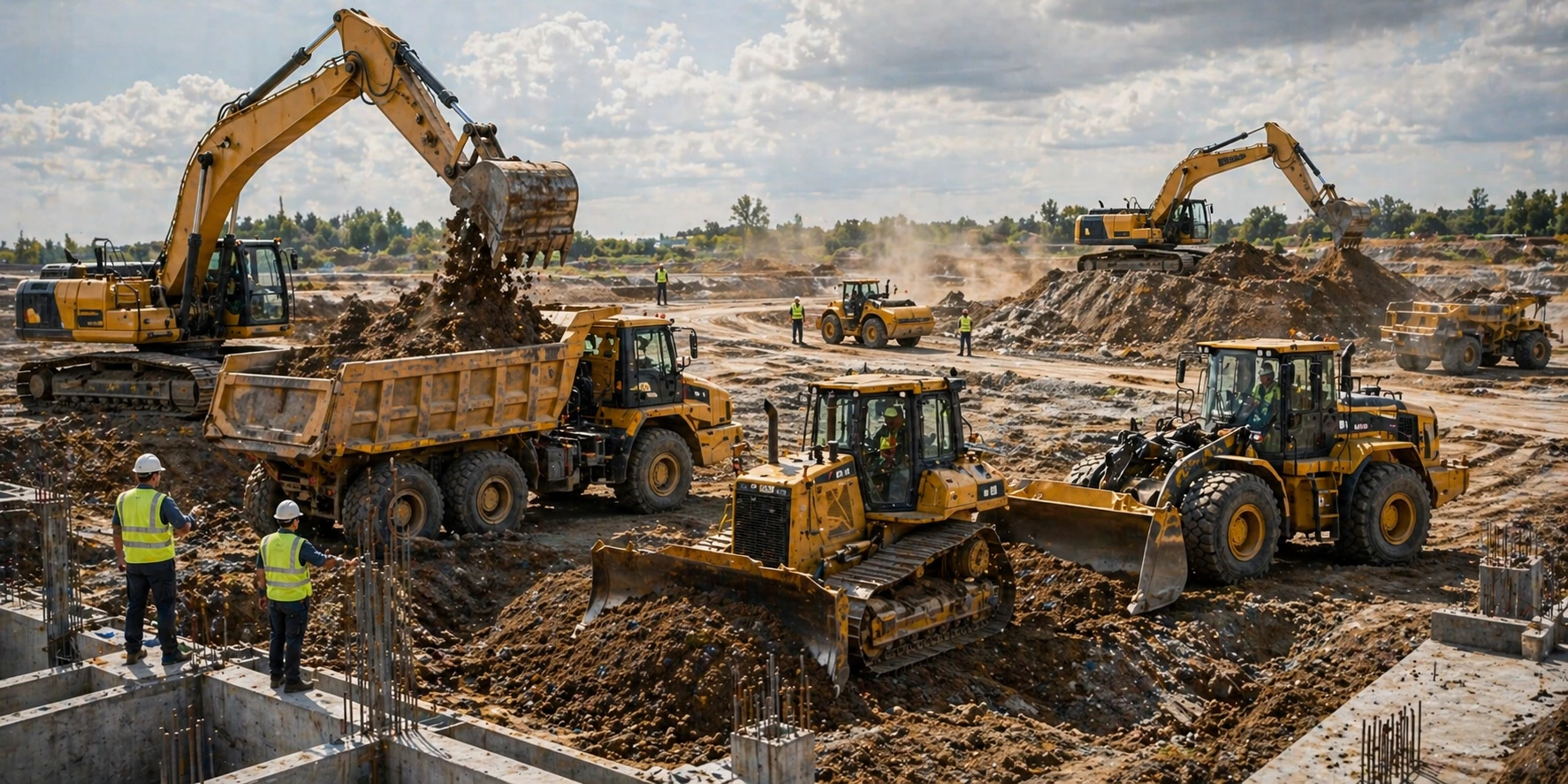
    Earthmoving construction services involve using appropriate equipment to handle various construction tasks effectively. Each task, such as digging, leveling, and clearing the land, requires many different types of earthmoving equipment to be used. 

    These machines help make the work process faster, safer, and more efficient, and help builders and other construction professionals plan a project that requires effective, efficient services. So, in this guide, we will help you to get a clear understanding of the equipment required in construction work. 

    Earthmoving Equipment Overview and Key Insights

    Earthmoving projects require the right machines for tasks like digging, leveling, and material handling to ensure smooth progress. Equipment such as excavators, bulldozers, loaders, graders, and rollers each serves specific purposes. Choosing suitable machinery depends on factors like project type, site conditions, size, load capacity, fuel usage, and operator skill. Proper selection improves efficiency, reduces errors, and ensures safe, cost-effective construction outcomes.

    Essential Earthmoving Equipment and Its Uses

    Essential earthmoving equipment helps with digging, leveling, moving materials, and preparing land. It makes construction work easier, faster, and more accurate. Below are the main types and their uses.

    Excavators

    Excavators are usually machines that are used for digging deep into the ground. They are very helpful in making foundational pits, trenches, and drainage line systems. Their long arms can reach the difficult areas and can break hard surfaces with special attachments such as a hydraulic breaker, grapple, or ripper very easily. Excavators work well on harsh land and are commonly used at the starting of any project. 

    Bulldozers

    These are earth moving construction machines used to push heavy materials like soil and rocks. Their wide front blade helps them clear the land, remove tree roots, and spread the soil evenly. Bulldozers are especially useful for cutting slopes and preparing rough ground before any construction work begins. 

    Backhoe Loaders

    Backhoe loaders are very useful machines that can perform both digging and material handling. They have a bucket in front of it and a digging arm at the back. It is great for small jobs, such as digging pits, moving soil, and cleaning sites. 

    Wheel Loaders

    This earth mover construction equipment is especially useful for handling and moving materials, soil, and sand with ease. They use a large bucket to quickly load the truck and shift it around the site. Wheel loaders are usually used for cleaning work and transporting materials on construction sites. Their strong wheels allow them to move smoothly on solid ground. 

    Motor Graders

    Used mainly for making the ground smoother and even. They help in leveling the land and shaping it properly. Their long blades can be adjusted to create slopes so that the water can easily flow. They also spread soil and gravel evenly to fix the defected areas, and help to prepare a strong and stable foundation. 

    Rollers

    Soil compactors or rollers are the earth mover construction equipment that are used for pressing the soil or gravel tightly in the ground so that it can become strong. They work by pressing the materials down with the heavy weight to remove any air gaps between them. It helps to keep the surface firm and stable so that buildings can be built on it carefully. 

    Earthmoving Equipments

    Which Factors to Consider When Selecting Earthmoving Equipment?

    Choosing the right earthmoving equipment depends on factors like project size, soil type, site conditions, budget, and required efficiency. Considering these helps ensure smooth, safe, and cost-effective work.

    Construction Work Type

    The type of work to be performed is the most fundamental factor in selecting earthmoving equipment. Different machines are designed for specific operations such as excavation, hauling, grading, or compaction. For example, excavators are ideal for digging and trenching, while bulldozers are better suited for pushing and leveling. Choosing equipment that does not match the task leads to inefficiency, increased cycle time, and higher operational costs. 

    Material Characteristics

    Another critical factor is the type and characteristics of the material being handled when selecting. Soil properties such as density, moisture content, and hardness directly affect equipment performance. Loose, dry soil can be handled easily with loaders, while wet clay or rocky ground may need heavy-duty machines with special attachments. Choosing the wrong equipment can reduce productivity and increase wear and tear. 

    Site Conditions and Terrain

    Terrain characteristics such as slope, ground stability, and surface condition play a critical role in equipment selection. Tracked machines provide better traction on soft or uneven ground, while wheeled machines are more efficient on firm and flat surfaces. Site constraints like limited space or obstacles may also restrict equipment size.

    Project Size and Duration

    The size and duration of the project also matter, as they determine how many earth mover construction equipment will be needed and how long it will take to complete the project. Large projects require large machines that can work for longer hours, while the smaller projects need small machines. If you ignore these factors, it can lead to very common excavation mistakes, such as using the wrong machine for the project. 

    Load Capacity

    The distance between the excavation site and the dumping area significantly influences equipment choice. Short distances are best handled by bulldozers or loaders, medium distances by scrapers, and long distances by dump trucks or articulated hauliers. Using unsuitable equipment for a given haul distance reduces efficiency and increases fuel consumption.

    Machine Fuel Usage and Cost

    It shows how a machine will consume the fuel during a project and what the overall cost will be. Machines with high fuel consumption can increase your daily expenses, especially if you are working on a longer project. So make sure to choose the fuel-efficient earth moving construction equipment to reduce your costs and re-fuel time for continuous work. 

    Machine Handling Skill Requirements

    For these machines, skilled operators are needed who have the level of training to use these equipment. These skilled workers know how to control machines and follow the safety rules on the site. This is very important, especially in commercial and government construction, where each work should be done with strict rules and regulations and high accuracy.

    To make it easier to choose the right equipment for your project, seeking professional assistance can be a smart decision. To help you identify a dependable service provider, here are some useful tips for finding the best commercial plumbing company.

    Conclusion

    Getting the right equipment and expertise in a project can help you make your construction process much more efficient and stress-free. Each project needs specific construction equipment, and also working with the right and experienced team can make a lot of difference. Dub-L-EE Construction provides reliable construction services using the right machines for excavation, land clearing, grading, and efficient site preparation across all project types. 

    FAQs

    Can one machine be used for multiple tasks on a construction site?

    Yes, machines like backhoe loaders are designed to handle both digging and material handling, making them a versatile choice for sites where budget or space limits the number of machines used.

    What is the difference between a wheel loader and a bulldozer?

    A wheel loader is primarily used for picking up and transporting materials like sand and soil, while a bulldozer is built to push heavy materials and clear rough terrain using its front blade.

    What type of earthmoving equipment is best suited for soft or unstable ground?

    For soft or waterlogged ground, tracked machines like excavators or tracked bulldozers are preferred over wheeled equipment because their wider tracks distribute weight more evenly and reduce sinking.

    How does improper equipment selection affect project timelines?

    Using an undersized or wrong machine for the job leads to slower progress, more trips, and higher fuel consumption, all of which can delay the project and significantly increase overall costs.

    Do operators need specific certifications to run earthmoving equipment?

    Yes, most earthmoving machines require operators to hold relevant training certifications or licenses, especially on commercial or government projects where safety compliance and regulatory standards are strictly enforced.

    [/fusion_text][fusion_code render_logics=””]PHNjcmlwdCB0eXBlPSJhcHBsaWNhdGlvbi9sZCtqc29uIj4KewogICJAY29udGV4dCI6ICJodHRwczovL3NjaGVtYS5vcmciLAogICJAdHlwZSI6ICJGQVFQYWdlIiwKICAibWFpbkVudGl0eSI6IFsKCiAgICB7CiAgICAgICJAdHlwZSI6ICJRdWVzdGlvbiIsCiAgICAgICJuYW1lIjogIkNhbiBvbmUgbWFjaGluZSBiZSB1c2VkIGZvciBtdWx0aXBsZSB0YXNrcyBvbiBhIGNvbnN0cnVjdGlvbiBzaXRlPyIsCiAgICAgICJhY2NlcHRlZEFuc3dlciI6IHsKICAgICAgICAiQHR5cGUiOiAiQW5zd2VyIiwKICAgICAgICAidGV4dCI6ICJZZXMsIG1hY2hpbmVzIGxpa2UgYmFja2hvZSBsb2FkZXJzIGFyZSBkZXNpZ25lZCB0byBoYW5kbGUgYm90aCBkaWdnaW5nIGFuZCBtYXRlcmlhbCBoYW5kbGluZywgbWFraW5nIHRoZW0gYSB2ZXJzYXRpbGUgY2hvaWNlIGZvciBzaXRlcyB3aGVyZSBidWRnZXQgb3Igc3BhY2UgbGltaXRzIHRoZSBudW1iZXIgb2YgbWFjaGluZXMgdXNlZC4iCiAgICAgIH0KICAgIH0sCgogICAgewogICAgICAiQHR5cGUiOiAiUXVlc3Rpb24iLAogICAgICAibmFtZSI6ICJXaGF0IGlzIHRoZSBkaWZmZXJlbmNlIGJldHdlZW4gYSB3aGVlbCBsb2FkZXIgYW5kIGEgYnVsbGRvemVyPyIsCiAgICAgICJhY2NlcHRlZEFuc3dlciI6IHsKICAgICAgICAiQHR5cGUiOiAiQW5zd2VyIiwKICAgICAgICAidGV4dCI6ICJBIHdoZWVsIGxvYWRlciBpcyBwcmltYXJpbHkgdXNlZCBmb3IgcGlja2luZyB1cCBhbmQgdHJhbnNwb3J0aW5nIG1hdGVyaWFscyBsaWtlIHNhbmQgYW5kIHNvaWwsIHdoaWxlIGEgYnVsbGRvemVyIGlzIGJ1aWx0IHRvIHB1c2ggaGVhdnkgbWF0ZXJpYWxzIGFuZCBjbGVhciByb3VnaCB0ZXJyYWluIHVzaW5nIGl0cyBmcm9udCBibGFkZS4iCiAgICAgIH0KICAgIH0sCgogICAgewogICAgICAiQHR5cGUiOiAiUXVlc3Rpb24iLAogICAgICAibmFtZSI6ICJXaGF0IHR5cGUgb2YgZWFydGhtb3ZpbmcgZXF1aXBtZW50IGlzIGJlc3Qgc3VpdGVkIGZvciBzb2Z0IG9yIHVuc3RhYmxlIGdyb3VuZD8iLAogICAgICAiYWNjZXB0ZWRBbnN3ZXIiOiB7CiAgICAgICAgIkB0eXBlIjogIkFuc3dlciIsCiAgICAgICAgInRleHQiOiAiRm9yIHNvZnQgb3Igd2F0ZXJsb2dnZWQgZ3JvdW5kLCB0cmFja2VkIG1hY2hpbmVzIGxpa2UgZXhjYXZhdG9ycyBvciB0cmFja2VkIGJ1bGxkb3plcnMgYXJlIHByZWZlcnJlZCBvdmVyIHdoZWVsZWQgZXF1aXBtZW50IGJlY2F1c2UgdGhlaXIgd2lkZXIgdHJhY2tzIGRpc3RyaWJ1dGUgd2VpZ2h0IG1vcmUgZXZlbmx5IGFuZCByZWR1Y2Ugc2lua2luZy4iCiAgICAgIH0KICAgIH0sCgogICAgewogICAgICAiQHR5cGUiOiAiUXVlc3Rpb24iLAogICAgICAibmFtZSI6ICJIb3cgZG9lcyBpbXByb3BlciBlcXVpcG1lbnQgc2VsZWN0aW9uIGFmZmVjdCBwcm9qZWN0IHRpbWVsaW5lcz8iLAogICAgICAiYWNjZXB0ZWRBbnN3ZXIiOiB7CiAgICAgICAgIkB0eXBlIjogIkFuc3dlciIsCiAgICAgICAgInRleHQiOiAiVXNpbmcgYW4gdW5kZXJzaXplZCBvciB3cm9uZyBtYWNoaW5lIGZvciB0aGUgam9iIGxlYWRzIHRvIHNsb3dlciBwcm9ncmVzcywgbW9yZSB0cmlwcywgYW5kIGhpZ2hlciBmdWVsIGNvbnN1bXB0aW9uLCBhbGwgb2Ygd2hpY2ggY2FuIGRlbGF5IHRoZSBwcm9qZWN0IGFuZCBzaWduaWZpY2FudGx5IGluY3JlYXNlIG92ZXJhbGwgY29zdHMuIgogICAgICB9CiAgICB9LAoKICAgIHsKICAgICAgIkB0eXBlIjogIlF1ZXN0aW9uIiwKICAgICAgIm5hbWUiOiAiRG8gb3BlcmF0b3JzIG5lZWQgc3BlY2lmaWMgY2VydGlmaWNhdGlvbnMgdG8gcnVuIGVhcnRobW92aW5nIGVxdWlwbWVudD8iLAogICAgICAiYWNjZXB0ZWRBbnN3ZXIiOiB7CiAgICAgICAgIkB0eXBlIjogIkFuc3dlciIsCiAgICAgICAgInRleHQiOiAiWWVzLCBtb3N0IGVhcnRobW92aW5nIG1hY2hpbmVzIHJlcXVpcmUgb3BlcmF0b3JzIHRvIGhvbGQgcmVsZXZhbnQgdHJhaW5pbmcgY2VydGlmaWNhdGlvbnMgb3IgbGljZW5zZXMsIGVzcGVjaWFsbHkgb24gY29tbWVyY2lhbCBvciBnb3Zlcm5tZW50IHByb2plY3RzIHdoZXJlIHNhZmV0eSBjb21wbGlhbmNlIGFuZCByZWd1bGF0b3J5IHN0YW5kYXJkcyBhcmUgc3RyaWN0bHkgZW5mb3JjZWQuIgogICAgICB9CiAgICB9CgogIF0KfQo8L3NjcmlwdD4=[/fusion_code][/fusion_builder_column][/fusion_builder_row][/fusion_builder_container]

  • Common Excavation Mistakes in  Commercial Projects and How to Avoid Them

    Common Excavation Mistakes in Commercial Projects and How to Avoid Them

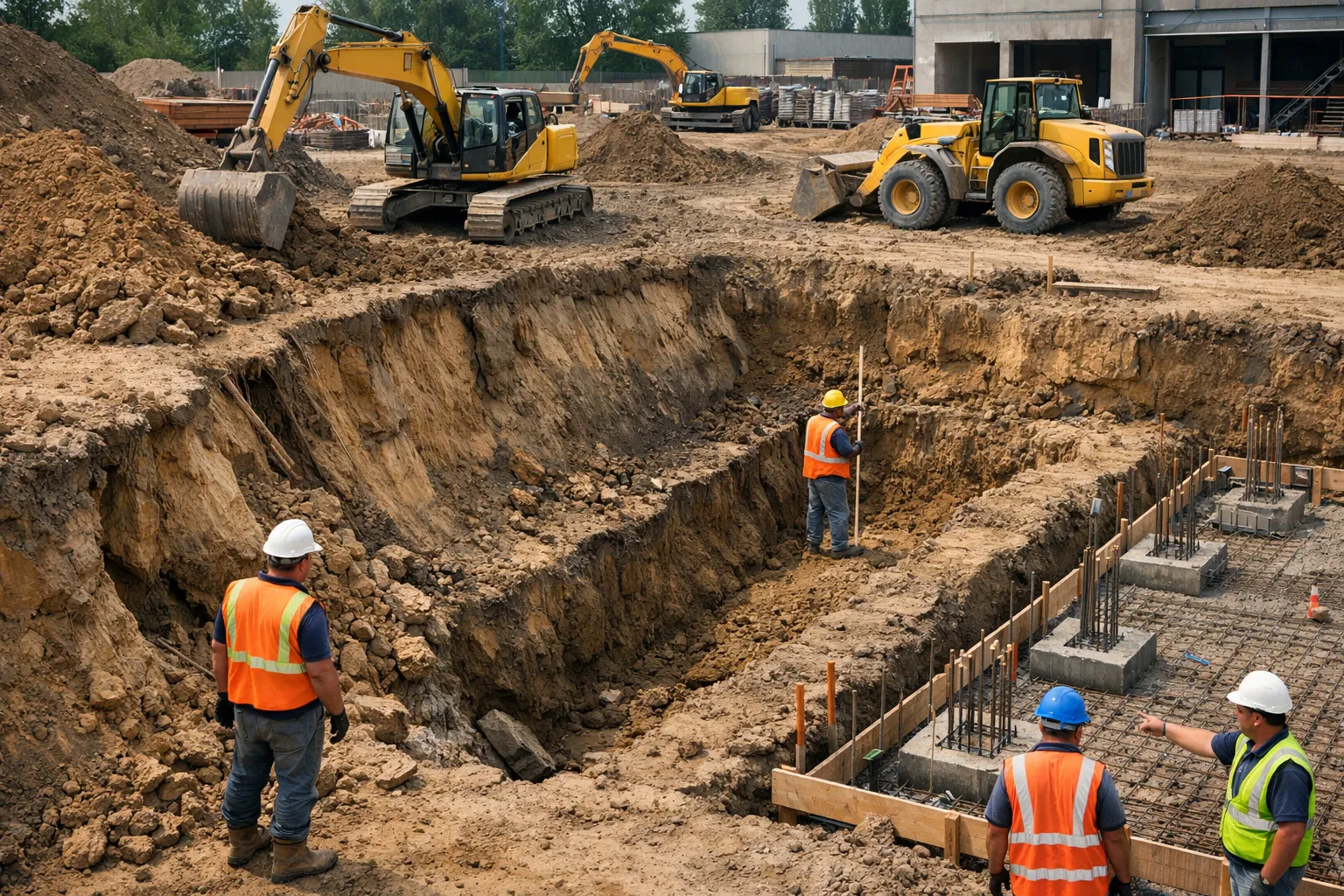
    [fusion_builder_container type=”flex” hundred_percent=”no” equal_height_columns=”no” menu_anchor=”” hide_on_mobile=”small-visibility,medium-visibility,large-visibility” class=”” id=”” background_color=”” background_image=”” background_position=”center center” background_repeat=”no-repeat” fade=”no” background_parallax=”none” parallax_speed=”0.3″ video_mp4=”” video_webm=”” video_ogv=”” video_url=”” video_aspect_ratio=”16:9″ video_loop=”yes” video_mute=”yes” overlay_color=”” video_preview_image=”” border_color=”” border_style=”solid” padding_top=”” padding_bottom=”” padding_left=”” padding_right=””][fusion_builder_row][fusion_builder_column type=”1_1″ layout=”1_1″ background_position=”left top” background_color=”” border_color=”” border_style=”solid” border_position=”all” spacing=”yes” background_image=”” background_repeat=”no-repeat” padding_top=”” padding_right=”” padding_bottom=”” padding_left=”” margin_top=”0px” margin_bottom=”0px” class=”” id=”” animation_type=”” animation_speed=”0.3″ animation_direction=”left” hide_on_mobile=”small-visibility,medium-visibility,large-visibility” center_content=”no” last=”true” min_height=”” hover_type=”none” link=”” border_sizes_top=”” border_sizes_bottom=”” border_sizes_left=”” border_sizes_right=”” first=”true”][fusion_text awb-switch-editor-focus=”” columns=”” column_min_width=”” column_spacing=”” rule_style=”” rule_size=”” rule_color=”” hue=”” saturation=”” lightness=”” alpha=”” user_select=”” content_alignment_medium=”” content_alignment_small=”” content_alignment=”” disable_idd=”no” hide_on_mobile=”small-visibility,medium-visibility,large-visibility” sticky_display=”normal,sticky” class=”” id=”” html_attributes=”W10=” width_medium=”” width_small=”” width=”” min_width_medium=”” min_width_small=”” min_width=”” max_width_medium=”” max_width_small=”” max_width=”” margin_top_medium=”” margin_right_medium=”” margin_bottom_medium=”” margin_left_medium=”” margin_top_small=”” margin_right_small=”” margin_bottom_small=”” margin_left_small=”” margin_top=”” margin_right=”” margin_bottom=”” margin_left=”” fusion_font_family_text_font=”” fusion_font_variant_text_font=”” font_size=”” line_height=”” letter_spacing=”” text_transform=”” text_color=”” render_logics=”” logics=”” animation_type=”” animation_direction=”left” animation_color=”” animation_speed=”0.3″ animation_delay=”0″ animation_offset=””]Excavation is the first process that occurs when building or making improvements to land for a house, business, or utility. Because of this, it needs to be done carefully, safely, and on schedule. However, excavation work doesn’t always go as planned. Unexpected commercial excavation issues can arise that lead to structural problems, project delays, higher costs, and even safety risks. So what are the common mistakes that occur once the digging begins? In this blog, we’ll walk through some of the most common excavation mistakes and practical ways to avoid them. So let’s begin!!!

    Key Excavation Errors And Prevention – Snapshot

    Excavation errors in commercial construction often arise from gaps in planning, coordination, and site assessment. Excavation Problems such as inadequate soil analysis, unverified underground utilities, improper soil placement near trenches, poor drainage preparation, and lack of safety controls can disrupt operations and increase project risks. The blog explains how structured site investigations, proper equipment selection, coordinated communication among teams, and consistent safety monitoring help maintain stable excavation conditions and prevent costly delays or hazards during construction work.

    Common Excavation Mistakes You Might Be Making and How to Avoid Them

    Skipping Proper Site Investigation Before Excavation

    One common excavation mistake that is often seen on commercial sites is crews starting excavation without really understanding the ground conditions. When soil testing or utility checks are skipped, surprises show up quickly. Like unstable soil, hidden rock, or groundwater. Suddenly equipment slows down, excavation plans change, and the project schedule starts slipping.

    How to avoid? 

    Conduct a proper site investigation. In that:

    • Geotechnical engineers should analyze soil conditions, 
    • Surveyors map the land and locate utilities.

    These reports will help plan excavation methods, choose suitable equipment, and prevent unexpected commercial excavation issues once digging starts.

    Ignoring Underground Utilities Before Digging Begins

    Never start the excavation without confirming what kind of utilities are underground. There can be buried gas lines, water pipes, electrical cables, or communication lines that run through the site. And at the time of digging, one can accidentally strike, and it can 

    • Immediately stop the work 
    • damage infrastructure
    • create serious safety risks for workers.

    How to avoid?

    • Utility locating specialists should scan and mark underground services. 
    • Then, review utility maps and coordinate with local utility providers. It will help crews know exactly where to dig and prevent dangerous and costly accidents.

    Handling Excavated Soil the Wrong Way

    Safety agencies such as OSHA warn that soil is far heavier than many workers realize. Just one cubic yard of soil can weigh more than 3,000 pounds, roughly the weight of a small car. This makes trench collapses extremely dangerous when excavated soil is placed too close to the trench edges. The pressure created by this extra weight can weaken trench walls and increase the chances of sudden cave-ins.

    How to avoid?

    • Keep excavated soil at least two feet away from the trench edge. It will keep the excavation stable. 
    • You can use trench supports or barriers.

    Overlooking Drainage Planning on the Site

    Have you forgotten to include a drainage system while planning? Now, the rainfall or groundwater may collect in the pit. And due to this, the soil can become muddy and unstable. And how will it create an excavation problem? Well, this will slow down the equipment movement and can even weaken trench walls.

    How to avoid? 

    Plan temporary drainage. Use pumps, drainage channels, or sump pits to control water buildup.

    How to Avoid Common Excavation

    Overlooking Basic Safety Practices on the Excavation Site

    Sometimes, you are taking care of the small safety steps, like: 

    • missing protective barriers around trenches, 
    • workers entering excavations without proper access ladders, a 
    • lack of warning signs, or 
    • ignoring regular safety inspections

    These can quietly increase the risk of falls, cave-ins, or equipment-related accidents, and that is why proper excavation is critical.

    How to avoid?

    Create a strict daily safety routine. 

    • Conduct pre-shift inspections, 
    • Assign a competent person to monitor excavation conditions, and 
    • Safe entry and exit points are installed. 

    Letting Miscommunication Slow Down the Entire Excavation Process

    Excavation involves several teams: surveyors, engineers, equipment operators, and site supervisors. When communication between them isn’t clear, mistakes can happen easily. For example, incorrect excavation depth or digging in the wrong location can occur simply because instructions or updated plans were not properly shared across the team. And in this situation, the role of technology in modern construction project management becomes important, as digital tools help teams share updated plans and site information quickly.

    How to avoid:

    • Hold short coordination meetings every day. 
    • Give clear instructions, and
    • Update site drawings 

    Using the Wrong Equipment for the Excavation Job

    Have you ever seen teams trying to dig through hard soil with a small excavator just because it’s available on-site? Situations like this waste time and increase equipment strain. The machine has to work much harder than it is designed for, which can slow down the excavation process. In many cases, it can also lead to faster wear, breakdowns, and unnecessary project delays.

    How to avoid:

    Select excavation equipment based on soil type, project scale, and site conditions. When the right equipment is used from the start, the work progresses faster and with fewer operational excavation problems.

    Conclusion

    As you can see, most of the common mistakes committed in commercial construction are preventable with the right planning and coordination. To stay up to date, it is always helpful to review the latest excavation safety guidelines and industry standards. Doing so ensures that no critical step is overlooked and every stage of excavation is carried out with proper planning, safety, and efficiency.

    FAQ’s

    What Types of Excavation Are Used in Commercial Construction?

    Common types include trench excavation, basement excavation, cut-and-fill excavation, dredging, and rock excavation. 

    What Equipment Is Commonly Used in Commercial Excavation Projects?

    Using the right machinery is essential to prevent commercial excavation issues and keep the project running smoothly. Commercial excavation projects typically use excavators, bulldozers, backhoes, dump trucks, loaders, and trenchers. 

    What Factors Affect the Cost of Commercial Excavation?

    Costs are influenced by soil type, excavation depth, site accessibility, presence of underground utilities, equipment requirements, and the amount of material that needs to be removed.

    What Permits Are Required for Commercial Excavation Projects?

    Most commercial excavation projects require permits from local authorities to ensure the work follows safety, zoning, and environmental regulations and to prevent potential commercial excavation issues before construction begins.

    What Methods Are Used To Locate Underground Utilities Before Excavation?

    Ground-penetrating radar (GPR), electromagnetic detectors, and utility mapping records are commonly used to locate underground services.[/fusion_text][fusion_code render_logics=””]PHNjcmlwdCB0eXBlPSJhcHBsaWNhdGlvbi9sZCtqc29uIj4KewogICJAY29udGV4dCI6ICJodHRwczovL3NjaGVtYS5vcmciLAogICJAdHlwZSI6ICJGQVFQYWdlIiwKICAibWFpbkVudGl0eSI6IFsKCiAgICB7CiAgICAgICJAdHlwZSI6ICJRdWVzdGlvbiIsCiAgICAgICJuYW1lIjogIldoYXQgVHlwZXMgb2YgRXhjYXZhdGlvbiBBcmUgVXNlZCBpbiBDb21tZXJjaWFsIENvbnN0cnVjdGlvbj8iLAogICAgICAiYWNjZXB0ZWRBbnN3ZXIiOiB7CiAgICAgICAgIkB0eXBlIjogIkFuc3dlciIsCiAgICAgICAgInRleHQiOiAiQ29tbW9uIHR5cGVzIGluY2x1ZGUgdHJlbmNoIGV4Y2F2YXRpb24sIGJhc2VtZW50IGV4Y2F2YXRpb24sIGN1dC1hbmQtZmlsbCBleGNhdmF0aW9uLCBkcmVkZ2luZywgYW5kIHJvY2sgZXhjYXZhdGlvbi4iCiAgICAgIH0KICAgIH0sCgogICAgewogICAgICAiQHR5cGUiOiAiUXVlc3Rpb24iLAogICAgICAibmFtZSI6ICJXaGF0IEVxdWlwbWVudCBJcyBDb21tb25seSBVc2VkIGluIENvbW1lcmNpYWwgRXhjYXZhdGlvbiBQcm9qZWN0cz8iLAogICAgICAiYWNjZXB0ZWRBbnN3ZXIiOiB7CiAgICAgICAgIkB0eXBlIjogIkFuc3dlciIsCiAgICAgICAgInRleHQiOiAiVXNpbmcgdGhlIHJpZ2h0IG1hY2hpbmVyeSBpcyBlc3NlbnRpYWwgdG8gcHJldmVudCBjb21tZXJjaWFsIGV4Y2F2YXRpb24gaXNzdWVzIGFuZCBrZWVwIHRoZSBwcm9qZWN0IHJ1bm5pbmcgc21vb3RobHkuIENvbW1lcmNpYWwgZXhjYXZhdGlvbiBwcm9qZWN0cyB0eXBpY2FsbHkgdXNlIGV4Y2F2YXRvcnMsIGJ1bGxkb3plcnMsIGJhY2tob2VzLCBkdW1wIHRydWNrcywgbG9hZGVycywgYW5kIHRyZW5jaGVycy4iCiAgICAgIH0KICAgIH0sCgogICAgewogICAgICAiQHR5cGUiOiAiUXVlc3Rpb24iLAogICAgICAibmFtZSI6ICJXaGF0IEZhY3RvcnMgQWZmZWN0IHRoZSBDb3N0IG9mIENvbW1lcmNpYWwgRXhjYXZhdGlvbj8iLAogICAgICAiYWNjZXB0ZWRBbnN3ZXIiOiB7CiAgICAgICAgIkB0eXBlIjogIkFuc3dlciIsCiAgICAgICAgInRleHQiOiAiQ29zdHMgYXJlIGluZmx1ZW5jZWQgYnkgc29pbCB0eXBlLCBleGNhdmF0aW9uIGRlcHRoLCBzaXRlIGFjY2Vzc2liaWxpdHksIHByZXNlbmNlIG9mIHVuZGVyZ3JvdW5kIHV0aWxpdGllcywgZXF1aXBtZW50IHJlcXVpcmVtZW50cywgYW5kIHRoZSBhbW91bnQgb2YgbWF0ZXJpYWwgdGhhdCBuZWVkcyB0byBiZSByZW1vdmVkLiIKICAgICAgfQogICAgfSwKCiAgICB7CiAgICAgICJAdHlwZSI6ICJRdWVzdGlvbiIsCiAgICAgICJuYW1lIjogIldoYXQgUGVybWl0cyBBcmUgUmVxdWlyZWQgZm9yIENvbW1lcmNpYWwgRXhjYXZhdGlvbiBQcm9qZWN0cz8iLAogICAgICAiYWNjZXB0ZWRBbnN3ZXIiOiB7CiAgICAgICAgIkB0eXBlIjogIkFuc3dlciIsCiAgICAgICAgInRleHQiOiAiTW9zdCBjb21tZXJjaWFsIGV4Y2F2YXRpb24gcHJvamVjdHMgcmVxdWlyZSBwZXJtaXRzIGZyb20gbG9jYWwgYXV0aG9yaXRpZXMgdG8gZW5zdXJlIHRoZSB3b3JrIGZvbGxvd3Mgc2FmZXR5LCB6b25pbmcsIGFuZCBlbnZpcm9ubWVudGFsIHJlZ3VsYXRpb25zIGFuZCB0byBwcmV2ZW50IHBvdGVudGlhbCBjb21tZXJjaWFsIGV4Y2F2YXRpb24gaXNzdWVzIGJlZm9yZSBjb25zdHJ1Y3Rpb24gYmVnaW5zLiIKICAgICAgfQogICAgfSwKCiAgICB7CiAgICAgICJAdHlwZSI6ICJRdWVzdGlvbiIsCiAgICAgICJuYW1lIjogIldoYXQgTWV0aG9kcyBBcmUgVXNlZCBUbyBMb2NhdGUgVW5kZXJncm91bmQgVXRpbGl0aWVzIEJlZm9yZSBFeGNhdmF0aW9uPyIsCiAgICAgICJhY2NlcHRlZEFuc3dlciI6IHsKICAgICAgICAiQHR5cGUiOiAiQW5zd2VyIiwKICAgICAgICAidGV4dCI6ICJHcm91bmQtcGVuZXRyYXRpbmcgcmFkYXIgKEdQUiksIGVsZWN0cm9tYWduZXRpYyBkZXRlY3RvcnMsIGFuZCB1dGlsaXR5IG1hcHBpbmcgcmVjb3JkcyBhcmUgY29tbW9ubHkgdXNlZCB0byBsb2NhdGUgdW5kZXJncm91bmQgc2VydmljZXMuIgogICAgICB9CiAgICB9CgogIF0KfQo8L3NjcmlwdD4=[/fusion_code][/fusion_builder_column][/fusion_builder_row][/fusion_builder_container]

  • Commercial and Government Construction | Scope, Methods, Compliance, and Local Project Considerations

    Commercial and Government Construction | Scope, Methods, Compliance, and Local Project Considerations

    [fusion_builder_container type=”flex” hundred_percent=”no” equal_height_columns=”no” menu_anchor=”” hide_on_mobile=”small-visibility,medium-visibility,large-visibility” class=”” id=”” background_color=”” background_image=”” background_position=”center center” background_repeat=”no-repeat” fade=”no” background_parallax=”none” parallax_speed=”0.3″ video_mp4=”” video_webm=”” video_ogv=”” video_url=”” video_aspect_ratio=”16:9″ video_loop=”yes” video_mute=”yes” overlay_color=”” video_preview_image=”” border_color=”” border_style=”solid” padding_top=”” padding_bottom=”” padding_left=”” padding_right=””][fusion_builder_row][fusion_builder_column type=”1_1″ layout=”1_1″ background_position=”left top” background_color=”” border_color=”” border_style=”solid” border_position=”all” spacing=”yes” background_image=”” background_repeat=”no-repeat” padding_top=”” padding_right=”” padding_bottom=”” padding_left=”” margin_top=”0px” margin_bottom=”0px” class=”” id=”” animation_type=”” animation_speed=”0.3″ animation_direction=”left” hide_on_mobile=”small-visibility,medium-visibility,large-visibility” center_content=”no” last=”true” min_height=”” hover_type=”none” link=”” border_sizes_top=”” border_sizes_bottom=”” border_sizes_left=”” border_sizes_right=”” first=”true”][fusion_text awb-switch-editor-focus=”” columns=”” column_min_width=”” column_spacing=”” rule_style=”” rule_size=”” rule_color=”” hue=”” saturation=”” lightness=”” alpha=”” user_select=”” content_alignment_medium=”” content_alignment_small=”” content_alignment=”” disable_idd=”no” hide_on_mobile=”small-visibility,medium-visibility,large-visibility” sticky_display=”normal,sticky” class=”” id=”” html_attributes=”W10=” width_medium=”” width_small=”” width=”” min_width_medium=”” min_width_small=”” min_width=”” max_width_medium=”” max_width_small=”” max_width=”” margin_top_medium=”” margin_right_medium=”” margin_bottom_medium=”” margin_left_medium=”” margin_top_small=”” margin_right_small=”” margin_bottom_small=”” margin_left_small=”” margin_top=”” margin_right=”” margin_bottom=”” margin_left=”” fusion_font_family_text_font=”” fusion_font_variant_text_font=”” font_size=”” line_height=”” letter_spacing=”” text_transform=”” text_color=”” render_logics=”” logics=”” animation_type=”” animation_direction=”left” animation_color=”” animation_speed=”0.3″ animation_delay=”0″ animation_offset=””]When you start a construction project in Albuquerque, you’ll quickly realize that commercial and government construction are two distinct processes. While commercial projects are driven by business timelines and private utility needs, government work is strictly bound by government construction compliance rules. Apart from the paperwork, Albuquerque also has unique site conditions, from high-desert drainage requirements to specific soil compaction standards, that dictate which methods you must use.  You also need access to the right kind of help and builders to avoid any run-ins with the local construction regulatory standards. 

    Thus, to keep track of all these variables as you delve into your next project, we bring you this guide with everything you need to know in one place. Read ahead to make sure your next build stays compliant!

    Key Takeaways

    • Local environmental and structural construction factors
    • Commercial vs government construction differences
    • Core construction service categories
    • The life cycle of the construction process
    • Government construction compliance in Albuquerque, NM
    • Safety and regulatory standards in Albuquerque
    • Public project certification and licensing requirements

    Construction in Albuquerque, NM: What “Local Conditions” Change

    Regional climate considerations 

    People who live in Albuquerque know that the temperature can change from hot in the afternoon to cool at night on the same day. This city also has very different weather patterns from season to season. These conditions affect every part of the building process:

    • Changes in temperature: Rapid changes in temperature need special ways to cure concrete and careful planning for how structural steel will expand.
    • Strong winds in the spring mean that strict Erosion and Sediment Control (ESC) plans are needed. 
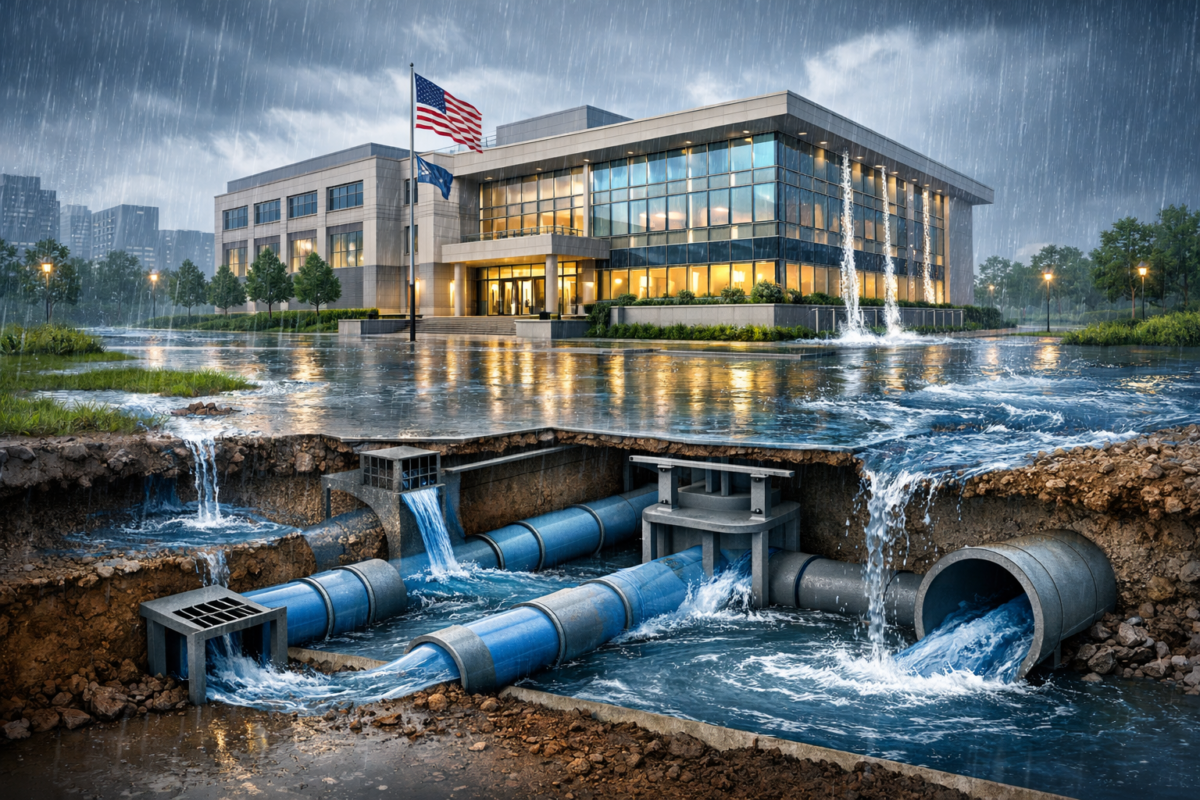
    • Monsoon Season: Heavy rain falls in short bursts, so you need good drainage plans.

    Working with Albuquerque Soils

    The ground in this city is tricky. Most of the area consists of loose, sandy soil that shifts easily and collapses if it gets too wet or too dry. To better understand why underground utility installation is crucial to building something that lasts, take a look at these tips recommended by builders in Albuquerque:

    • The “95% Rule”: You must soak and pack the dirt (moisture conditioning) until it hits 95% density. If you skip this, your foundation or road will eventually sink or crack.
    • Trench Safety: Because the “Type C” sandy soil doesn’t stick together, any trench deeper than 5 feet is prone to collapse. You must use metal shields, shoring, or cut the walls back at a wide angle (1.5:1 slope) to keep workers safe.
    • Water Control: Water is the enemy of stability here. You have to keep rain and runoff out of your excavations, or the walls will turn to mush and cave in.

    Utility coordination realities 

    You must have felt your frustrations rise while dealing with utilities in Albuquerque, because of its underground, congested network of old and active pipes. These are some issues you will likely have to face:

    • Verifying Before You Dig: The blueprints of the city’s underground layout are highly outdated and unreliable. Thus, to be sure of where a particular line is, workers should use potholing through vacuuming tools to physically find and measure the depth of pipes and wires. 
    • Watching the Clock: Moving a major line, especially fiber-optic cable, can take months. If you don’t coordinate this at the very start, this process can end up delaying your project.

    Once the work is done, you have 30 days to submit “as-built” maps, which are further verified by a licensed New Mexico surveyor. 

    Commercial vs Government Construction

    Commercial vs Government Construction in Albuquerque, NM

    To get a better mental picture of the local differences between commercial and government construction, take a look at the table below: 

    Category Commercial Construction Government (Public / Federal) Construction
    Procurement & Bidding Direct negotiation or private competitive bids focused on speed and cost-efficiency. Formal RFP/IFB process under FAR or City Procurement rules; highly structured and documentation-heavy.
    Regulatory Compliance Must follow local codes (IDO, NM Commercial Building Code, zoning). Must meet local codes plus federal requirements (Buy American Act, enhanced safety standards, cybersecurity compliance).
    Labor Wages Market-based wages. Subject to the Davis-Bacon Act with prevailing wages and certified payroll reporting.
    Timeline & Flexibility Faster decision-making and flexible scope changes. Rigid milestone schedules; change orders are tightly restricted and highly regulated.
    Inspections & Oversight City inspections under standard building codes. Additional federal or agency oversight, making inspections more rigorous.
    Environmental Review Standard local environmental and zoning compliance. More extensive and formally documented environmental assessments.


    Once you’ve locked in the project type, your first big move is choosing between design-build vs traditional build. This sets the DNA for the entire project, defining whether you’ll be managing technical disputes yourself or holding a single entity accountable for the final result.

    Core Construction Service Categories 

    Site Preparation and Earthwork

    • What It Includes: The team of workers handles clearing, grading, and cut/fill operations, alongside precise excavation and trenching for utilities. This includes backfill, subgrade prep for stable building pads, and strict dust and erosion control.
    • Albuquerque-Specific Considerations: To account for the monsoon runoff, advanced drainage planning is used. The major focus is on moisture-conditioned compaction and mandatory density testing to prevent the ground from sinking and loose dust from blowing. 

    Structural Construction and Building Systems

    • Core Scope: This phase starts with reinforced foundations and slabs to transfer loads to the subgrade, followed by structural framing (steel, masonry, or wood) for the building’s primary skeleton. Workers then install the building envelope, consisting of walls, roofing, and moisture barriers, to create a weather-tight seal for final interior build-outs.
    • This is how builders handle performance factors: 
    1. Thermal Efficiency: Using high-thermal-mass materials to stop energy loss during 40-degree daily temperature swings.
    2.  UV/Weather Protection: Installing specialized barriers to defend against high-altitude UV and wind-driven dust.
    3.  Structural Integrity: Engineering-specific bracing and seals for extreme seasonal variations.

    Underground Utility Systems

    • Water, Sewer, and Storm: Installation involves distribution lines and sanitary systems using slope-accurate trenching to ensure consistent gravity flow. Runoff management utilizes inlets, culverts, and detention systems engineered to meet the city’s municipal flood standards.
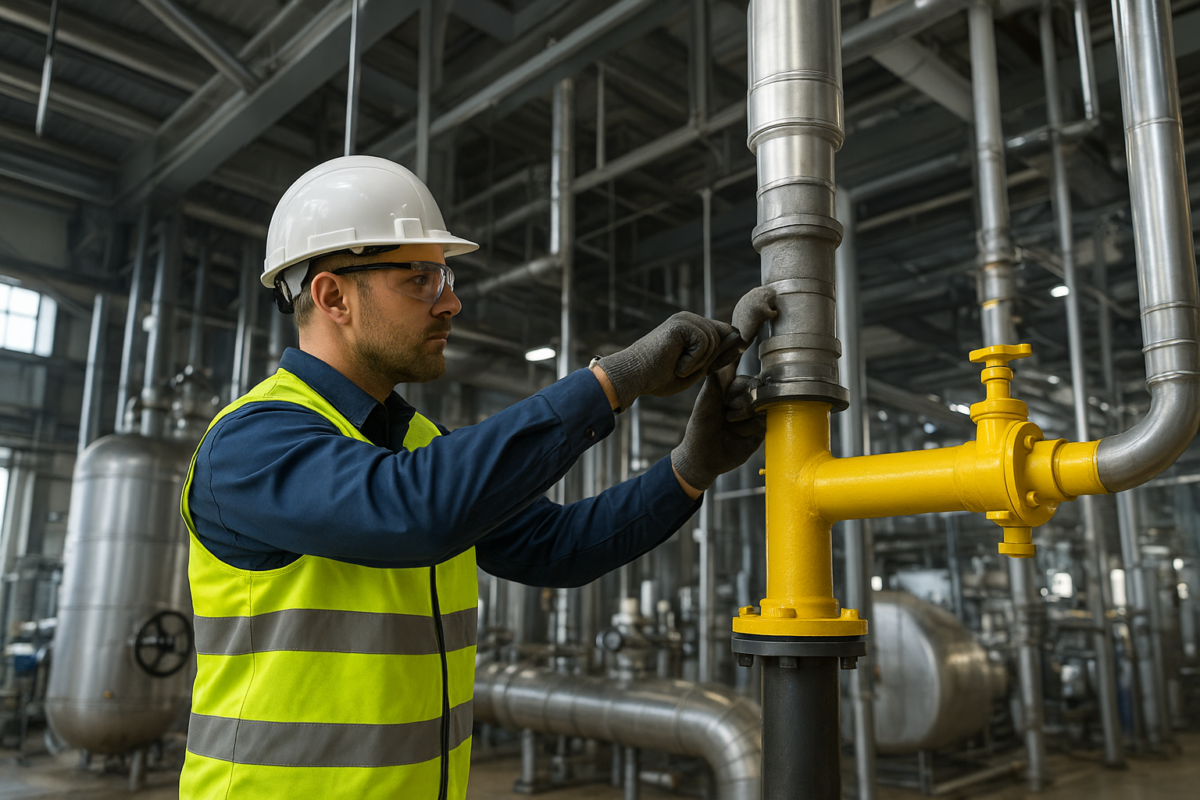
    • Gas Infrastructure: In both commercial and government construction, the crews lay Polyethylene (PE) and steel piping for main-line gas distribution. This includes the installation of regulator stations, master meters, and pressure-rated valves that are compliant with safety standards to avoid common failures in commercial gas piping systems.

    Commercial Utility Installation and Repair

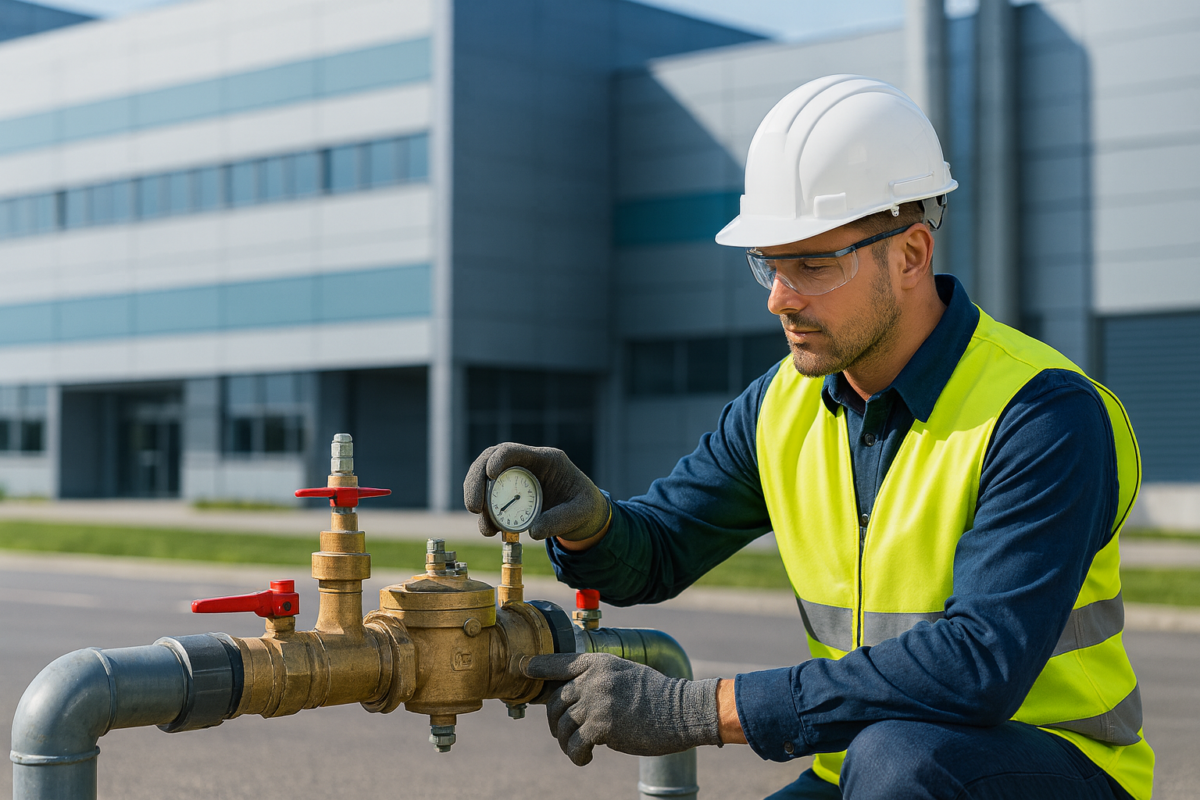
    • Active Facility Maintenance: Crew members repair and install valves, pumps, and controls with minimal disruption.  This includes specialized backflow prevention on commercial properties to protect your facility from cross-contamination with the municipal supply. Plus, for active upgrades, they also use hot taps and bypassing to keep your business running during construction.
    • Infrastructure Rehabilitation: Failing pipelines are replaced using pipe bursting to swap cast iron or steel for modern materials with minimal excavation. In high-traffic or tight urban corridors, trenchless re-lining and directional drilling are used to restore or install infrastructure where open-cut trenching is not feasible.

    Mechanical, Piping, and Gas Systems

    • Structural Integrity & Flow: Installation of mechanical piping designed for high-pressure conditions, incorporating regulators and components for facility fluid and energy distribution.
    • Verification Protocol: Every installation in commercial and government construction undergoes strict pressure testing to verify seal integrity, documentation of welding records for compliance, and safety inspections at every milestone.

    Concrete Work

    • Common Applications: The team pours 4,000 PSI foundations, structural slabs, and site flatwork engineered for heavy equipment and local silt loads.
    • Performance Factors: To prevent “flash setting” and “map cracking,” we use strategic jointing and chemical curing agents that withstand Albuquerque’s extreme heat and 40-degree temperature swings.
    • Quality Controls: We enforce mandatory 95% Proctor density testing on subgrades and utilize air-entrained mix designs to survive winter freeze-thaw cycles.

    If you want to better streamline large-scale commercial construction projects, commercial construction with HCSS HeavyJob Software will help you with real-time tracking and management.

    What Are The Major Steps In A Construction Project In Albuquerque?

    Government Construction in Albuquerque, NM

    What Government Work Typically Covers Locally

    • Public Infrastructure and Utility Upgrades: Maintenance of roadways and the installation of traffic signals and streetlights. This includes accessibility improvements like sidewalks, ADA-compliant ramps, and bike lanes to enhance city-wide mobility.
    • Facility Upgrades for Public Buildings: Modernizing older public structures to improve comfort and sustainability. Key tasks involve installing solar energy systems, LED lighting, and updating aging mechanical, electrical, and plumbing (MEP) systems.
    • Right-of-Way and Corridor-Adjacent Construction: Managing infrastructure changes that occur between private property lines. These projects focus on the Public Right-of-Way (ROW) to ensure seamless transitions between private developments and public corridors.
    • Agency-Driven Site Remediation or Improvement Work: Projects led by public agencies to facilitate regional redevelopment. This includes critical work such as flood control, habitat restoration, and wildfire mitigation to protect the local environment.

    Procurement and Compliance For Transparency

    To ensure strict government construction compliance, Albuquerque construction follows strict city ordinances and state procurement codes:

    • Competitive Bidding Norms: Projects are awarded to the lowest responsible bidder via sealed bids or qualification-based RFPs. Contractors must provide 5% bid security and 100% Performance and Payment Bonds.
    • Documentation and Submittal Expectations: Bids must use the city’s e-Procurement System. Change orders are capped at 35% and require rigorous justification for unforeseen conditions.
    • Solid supply chain management strategies ensure lead times and vendor vetting are handled months in advance. This prevents ‘last-minute’ material substitutions that could fail inspections later.

    Local Stakeholders and Jurisdiction Layers You  Must Keep In Mind

    There is a very delicate balance that you’ll need to find between the varying needs of the city, county, and federal jurisdictions. This will become clearer when you read the following:

    • City-Level Requirements: Inside city limits, the Integrated Development Ordinance (IDO) is your rulebook. You’ll work with the DMD for street access and Building Safety for electrical or plumbing permits. Also, remember that any major infrastructure or site plans must first pass through the Development Review Board (DRB).
    • County-Level Involvement: When working on the city’s edge or in unincorporated areas, Bernalillo County Planning takes the lead on zoning. Regardless of location, the ABCWUA must sign off on all water and sewer connections to ensure the regional grid can handle the new load.
    • State and Federal Overlays: If the project involves state highways or federal money, the stakes get higher. NMDOT sets the standards for roads and bridges, while the EPA and Army Corps of Engineers (USACE) enforce environmental and stormwater protections to keep the project compliant with federal law.

    Safety, Quality, and Regulatory Rules in Albuquerque, NM

    Topics about safety

    When you build in Albuquerque, prioritising crew safety is your best defense against the various construction regulatory rules. You need to remember these important things:

    • The Basics of OSHA Compliance: Make sure that workers have 10-hour OSHA certifications and supervisors have 30-hour certifications. To avoid NMED fines of more than $16,000 for each violation, make sure you follow the rules for Fall Protection and Excavation.
    • Site-Specific Safety Plans (SSSP): You need a plan that shows the specific dangers on your site, like deep trenches or things that could fall on you from above. Include emergency routes that are specific to your area and fire safety rules.
    • Preventing Incidents: Set up a system for reporting “near-misses” right away to stop more accidents from happening. Make sure that daily inspections and standard PPE, like hard hats and safety glasses, are always followed.

    Topics about quality

    Keep these things in mind to make sure your work in commercial and government construction  is always up to the local code:

    • QA/QC Plans: You need to make a three-step control process that includes having planning meetings, doing initial inspections, and checking in on a regular basis. Use Non-Conformance Reports (NCR) right away to fix problems before they get too big and costly to fix.

    Commercial Construction QA

    • Testing Records: You need an Inspection and Test Plan (ITP) that outlines how often samples will be taken and what qualifications the testers must have. Keep your daily Site Observation Reports (SOR) up to date so that you can keep track of all the tests.
    • Use Material Inspection Requests (MIR) to check and verify all deliveries before they are made. You can also put parts together somewhere else. Even though prefabrication has its pros and cons in modern construction, it helps keep quality standards high by keeping the site clean.

    Layer of Local Compliance

    Lastly, you need to get through the local compliance layer to avoid expensive shutdowns in commercial and government construction:

    • Requirements for a permit: You need permits that have been approved for everything from solar panels and roofs to walls that are more than 6 feet high. Before you start building, send the Building Safety Division detailed plans for review.
    • Public Safety and Access:  for safety reasons, it’s best to secure areas near schools and businesses, and keep strict records of safety and injury prevention to minimize chances of accidents occurring in these city-owned or adjacent spaces.
    • ROW and Traffic Control: Get Excavation/Barricade permits for any work that will affect public streets. To keep traffic moving safely, you must follow Manual on Uniform Traffic Control Devices (MUTCD) rules.

    Requirements for Certifications and Eligibility for Public Projects

    To show that you can handle a public project, you need to check these boxes: 

    • Bonding and Insurance: You usually need a bond of at least $10,000, and you must be registered as an official city vendor.
    • Safety of the workforce: You have to show that your team has been trained for specialized tasks such as scaffolding, crane operation, or confined space entry through certifications.
    • Small Business Administration (SBA) Programs: If you own a small, local, or disadvantaged business, you can get “set-aside” preferences that give you a better chance of winning the bid.
    • Audit Readiness: Because you’re using money from taxpayers, your records (like receipts, payroll, and safety logs) need to be ready for a city inspection at any time.

    Why This Is Important

    • Guaranteed Results: Bonding is like an insurance policy for the city; if a contractor doesn’t finish the work, the city doesn’t lose any money.
    • Fair Play: These rules make sure that all businesses follow the same safety and legal rules, and the city is assured that you have the finances to handle the expenditure load without risking bankruptcy. 

    Conclusion

    Now that you’ve reached the end of this detailed guide, you know that commercial and government construction projects don’t become successful just at the ribbon-cutting. Instead, you need builders who can actually follow construction KPIs to improve project profitability. That is where we at DUB-L-EE come in! Our team has been delivering commercial and government projects since 2012, including work for NASA and the Santa Fe Opera Community. 

    So, are you ready to move your next Albuquerque project forward with our expertise? Contact us today to get started!

    FAQs 

    How does permitting typically work for commercial construction in Albuquerque? 

    You submit plans through the online ABQ-PLAN portal; they are reviewed by zoning, fire, and building departments simultaneously (usually taking 3–12 weeks), and once approved, you pay fees to get your permit.

    What’s different about government construction documentation in New Mexico projects? 

    For public projects or those valued over $600,000, New Mexico requires “Multiple Seals,” meaning both a registered architect and a professional engineer must officially stamp the plans.

    What causes delays most often in Albuquerque construction projects? 

    Delays are typically caused by skilled labor shortages, lengthy permit approval cycles, and unforeseen site conditions like hitting unmapped utility lines in older parts of the city.

    When is trenchless utility work preferred in Albuquerque? 

    It is preferred when installing lines under major roads (like Central Ave), existing buildings, or historic areas where digging an open trench would be too expensive or cause too much traffic disruption.

    What inspection documentation is typically required for public projects? 

    You must maintain a “plans-on-site” log, daily activity reports, material testing results, and signed-off Inspection Request Forms for every major phase to prove the work matches the city-approved design. [/fusion_text][fusion_code render_logics=””]PHNjcmlwdCB0eXBlPSJhcHBsaWNhdGlvbi9sZCtqc29uIj4KewogICJAY29udGV4dCI6ICJodHRwczovL3NjaGVtYS5vcmciLAogICJAdHlwZSI6ICJGQVFQYWdlIiwKICAibWFpbkVudGl0eSI6IFsKCiAgICB7CiAgICAgICJAdHlwZSI6ICJRdWVzdGlvbiIsCiAgICAgICJuYW1lIjogIkhvdyBkb2VzIHBlcm1pdHRpbmcgdHlwaWNhbGx5IHdvcmsgZm9yIGNvbW1lcmNpYWwgY29uc3RydWN0aW9uIGluIEFsYnVxdWVycXVlPyIsCiAgICAgICJhY2NlcHRlZEFuc3dlciI6IHsKICAgICAgICAiQHR5cGUiOiAiQW5zd2VyIiwKICAgICAgICAidGV4dCI6ICJZb3Ugc3VibWl0IHBsYW5zIHRocm91Z2ggdGhlIG9ubGluZSBBQlEtUExBTiBwb3J0YWw7IHRoZXkgYXJlIHJldmlld2VkIGJ5IHpvbmluZywgZmlyZSwgYW5kIGJ1aWxkaW5nIGRlcGFydG1lbnRzIHNpbXVsdGFuZW91c2x5ICh1c3VhbGx5IHRha2luZyAz4oCTMTIgd2Vla3MpLCBhbmQgb25jZSBhcHByb3ZlZCwgeW91IHBheSBmZWVzIHRvIGdldCB5b3VyIHBlcm1pdC4iCiAgICAgIH0KICAgIH0sCgogICAgewogICAgICAiQHR5cGUiOiAiUXVlc3Rpb24iLAogICAgICAibmFtZSI6ICJXaGF04oCZcyBkaWZmZXJlbnQgYWJvdXQgZ292ZXJubWVudCBjb25zdHJ1Y3Rpb24gZG9jdW1lbnRhdGlvbiBpbiBOZXcgTWV4aWNvIHByb2plY3RzPyIsCiAgICAgICJhY2NlcHRlZEFuc3dlciI6IHsKICAgICAgICAiQHR5cGUiOiAiQW5zd2VyIiwKICAgICAgICAidGV4dCI6ICJGb3IgcHVibGljIHByb2plY3RzIG9yIHRob3NlIHZhbHVlZCBvdmVyICQ2MDAsMDAwLCBOZXcgTWV4aWNvIHJlcXVpcmVzIOKAnE11bHRpcGxlIFNlYWxzLOKAnSBtZWFuaW5nIGJvdGggYSByZWdpc3RlcmVkIGFyY2hpdGVjdCBhbmQgYSBwcm9mZXNzaW9uYWwgZW5naW5lZXIgbXVzdCBvZmZpY2lhbGx5IHN0YW1wIHRoZSBwbGFucy4iCiAgICAgIH0KICAgIH0sCgogICAgewogICAgICAiQHR5cGUiOiAiUXVlc3Rpb24iLAogICAgICAibmFtZSI6ICJXaGF0IGNhdXNlcyBkZWxheXMgbW9zdCBvZnRlbiBpbiBBbGJ1cXVlcnF1ZSBjb25zdHJ1Y3Rpb24gcHJvamVjdHM/IiwKICAgICAgImFjY2VwdGVkQW5zd2VyIjogewogICAgICAgICJAdHlwZSI6ICJBbnN3ZXIiLAogICAgICAgICJ0ZXh0IjogIkRlbGF5cyBhcmUgdHlwaWNhbGx5IGNhdXNlZCBieSBza2lsbGVkIGxhYm9yIHNob3J0YWdlcywgbGVuZ3RoeSBwZXJtaXQgYXBwcm92YWwgY3ljbGVzLCBhbmQgdW5mb3Jlc2VlbiBzaXRlIGNvbmRpdGlvbnMgbGlrZSBoaXR0aW5nIHVubWFwcGVkIHV0aWxpdHkgbGluZXMgaW4gb2xkZXIgcGFydHMgb2YgdGhlIGNpdHkuIgogICAgICB9CiAgICB9LAoKICAgIHsKICAgICAgIkB0eXBlIjogIlF1ZXN0aW9uIiwKICAgICAgIm5hbWUiOiAiV2hlbiBpcyB0cmVuY2hsZXNzIHV0aWxpdHkgd29yayBwcmVmZXJyZWQgaW4gQWxidXF1ZXJxdWU/IiwKICAgICAgImFjY2VwdGVkQW5zd2VyIjogewogICAgICAgICJAdHlwZSI6ICJBbnN3ZXIiLAogICAgICAgICJ0ZXh0IjogIkl0IGlzIHByZWZlcnJlZCB3aGVuIGluc3RhbGxpbmcgbGluZXMgdW5kZXIgbWFqb3Igcm9hZHMgKGxpa2UgQ2VudHJhbCBBdmUpLCBleGlzdGluZyBidWlsZGluZ3MsIG9yIGhpc3RvcmljIGFyZWFzIHdoZXJlIGRpZ2dpbmcgYW4gb3BlbiB0cmVuY2ggd291bGQgYmUgdG9vIGV4cGVuc2l2ZSBvciBjYXVzZSB0b28gbXVjaCB0cmFmZmljIGRpc3J1cHRpb24uIgogICAgICB9CiAgICB9LAoKICAgIHsKICAgICAgIkB0eXBlIjogIlF1ZXN0aW9uIiwKICAgICAgIm5hbWUiOiAiV2hhdCBpbnNwZWN0aW9uIGRvY3VtZW50YXRpb24gaXMgdHlwaWNhbGx5IHJlcXVpcmVkIGZvciBwdWJsaWMgcHJvamVjdHM/IiwKICAgICAgImFjY2VwdGVkQW5zd2VyIjogewogICAgICAgICJAdHlwZSI6ICJBbnN3ZXIiLAogICAgICAgICJ0ZXh0IjogIllvdSBtdXN0IG1haW50YWluIGEg4oCccGxhbnMtb24tc2l0ZeKAnSBsb2csIGRhaWx5IGFjdGl2aXR5IHJlcG9ydHMsIG1hdGVyaWFsIHRlc3RpbmcgcmVzdWx0cywgYW5kIHNpZ25lZC1vZmYgSW5zcGVjdGlvbiBSZXF1ZXN0IEZvcm1zIGZvciBldmVyeSBtYWpvciBwaGFzZSB0byBwcm92ZSB0aGUgd29yayBtYXRjaGVzIHRoZSBjaXR5LWFwcHJvdmVkIGRlc2lnbi4iCiAgICAgIH0KICAgIH0KCiAgXQp9Cjwvc2NyaXB0Pg==[/fusion_code][/fusion_builder_column][/fusion_builder_row][/fusion_builder_container]

  • Cast Iron Or PVC: Selecting The Right Pipe For Commercial Underground Drainage

    Cast Iron Or PVC: Selecting The Right Pipe For Commercial Underground Drainage

    [fusion_builder_container type=”flex” hundred_percent=”no” equal_height_columns=”no” menu_anchor=”” hide_on_mobile=”small-visibility,medium-visibility,large-visibility” class=”” id=”” background_color=”” background_image=”” background_position=”center center” background_repeat=”no-repeat” fade=”no” background_parallax=”none” parallax_speed=”0.3″ video_mp4=”” video_webm=”” video_ogv=”” video_url=”” video_aspect_ratio=”16:9″ video_loop=”yes” video_mute=”yes” overlay_color=”” video_preview_image=”” border_color=”” border_style=”solid” padding_top=”” padding_bottom=”” padding_left=”” padding_right=””][fusion_builder_row][fusion_builder_column type=”1_1″ layout=”1_1″ background_position=”left top” background_color=”” border_color=”” border_style=”solid” border_position=”all” spacing=”yes” background_image=”” background_repeat=”no-repeat” padding_top=”” padding_right=”” padding_bottom=”” padding_left=”” margin_top=”0px” margin_bottom=”0px” class=”” id=”” animation_type=”” animation_speed=”0.3″ animation_direction=”left” hide_on_mobile=”small-visibility,medium-visibility,large-visibility” center_content=”no” last=”true” min_height=”” hover_type=”none” link=”” border_sizes_top=”” border_sizes_bottom=”” border_sizes_left=”” border_sizes_right=”” first=”true”][fusion_text columns=”” column_min_width=”” column_spacing=”” rule_style=”” rule_size=”” rule_color=”” hue=”” saturation=”” lightness=”” alpha=”” user_select=”” awb-switch-editor-focus=”” content_alignment_medium=”” content_alignment_small=”” content_alignment=”” disable_idd=”no” hide_on_mobile=”small-visibility,medium-visibility,large-visibility” sticky_display=”normal,sticky” class=”” id=”” width_medium=”” width_small=”” width=”” min_width_medium=”” min_width_small=”” min_width=”” max_width_medium=”” max_width_small=”” max_width=”” margin_top_medium=”” margin_right_medium=”” margin_bottom_medium=”” margin_left_medium=”” margin_top_small=”” margin_right_small=”” margin_bottom_small=”” margin_left_small=”” margin_top=”” margin_right=”” margin_bottom=”” margin_left=”” fusion_font_family_text_font=”” fusion_font_variant_text_font=”” font_size=”” line_height=”” letter_spacing=”” text_transform=”” text_color=”” render_logics=”” logics=”” animation_type=”” animation_direction=”left” animation_color=”” animation_speed=”0.3″ animation_delay=”0″ animation_offset=””]

    Cast iron or PVC are the two most commonly specified options, each offering distinct advantages depending on soil conditions, load requirements, noise control, and project scope. While one material is valued for its strength and durability, the other is favored for corrosion resistance and installation efficiency. Understanding these differences helps engineers, contractors, and property owners avoid costly repairs, premature failures, and unnecessary maintenance. 

    Hence, to help you make a confident decision, the sections ahead break down why material choice matters in commercial drainage and outline the key differences between PVC and cast iron, showing exactly where each option performs best and where it may fall short.

    Cast Iron Vs PVC Drainage Overview

    Commercial underground drainage performance depends heavily on proper pipe material selection. Cast iron and PVC offer distinct advantages based on load demands, corrosion exposure, noise control, temperature tolerance, and installation conditions. Structural strength, lifespan, flow efficiency, maintenance requirements, and code compliance all influence material suitability. Evaluating these factors early helps reduce long-term maintenance risks, prevent system failure, and ensure reliable drainage performance across diverse commercial environments. 

    Why Material Choice Matters In Commercial Drainage

    The role of technology in modern construction has made it clear that material selection is a defining factor in commercial drainage performance, influencing multiple factors. Let’s check them below: 

    Durability & Load Resistance

    Commercial drainage pipes must withstand constant pressure. Heavy water flow, foot traffic, and equipment weight all push against the system. If the material isn’t strong enough, it will bend or fail. That’s why choosing a tough, load-bearing material is essential.

    Corrosion & Chemical Resistance

    The drainage systems at many commercial environments regularly encounters detergents, industrial chemicals, and fluctuating pH levels. Some materials react badly to these substances, weakening over time. When you use a corrosion-resistant material, the pipes stay intact longer, maintain smooth flow, and reduce maintenance needs.

    Flow Efficiency

    When commercial underground drainage pipes have smooth internal surfaces, wastewater moves faster and more consistently. This reduces resistance inside the system, limits debris accumulation, and significantly lowers the chances of blockages, an important factor for reliable performance in commercial facilities.

    Compliance & Safety

    In the United States, commercial drainage materials must comply with codes such as the International Building Code (IBC), International Plumbing Code (IPC), or the Uniform Plumbing Code (UPC). Approved materials meeting ASTM International and NSF International standards ensure safe wastewater handling, prevent contamination, reduce liability risks, and protect occupants from health hazards, flooding, and structural damage. 

    Temperature Tolerance

    Systems frequently carry high-temperature wastewater from sources such as commercial kitchens, dishwashers, boilers, laundries, and industrial cleaning processes. Repeated exposure to hot discharge can cause low-grade materials to soften, expand, or lose structural integrity, leading to joint failure or pipe deformation. So it’s important to choose materials with high temperature tolerance that can maintain dimensional stability, resist thermal shock, and ensure long-term reliability even under continuous heavy-duty use.

    Noise Reduction

    In high-flow commercial drainage systems, wastewater movement can generate significant noise due to turbulence, vibration, and impact against pipe walls. The choice of material directly affects how much sound is transmitted through the building structure. Dense or acoustically engineered materials absorb vibration and reduce sound transfer through walls and floors, making them especially important in hotels, hospitals, offices, and multi-story commercial buildings where noise control is critical.

    What Are The Key Differences Between Cast Iron Vs PVC Drainage Pipes

    Below, we have mentioned the key differences between cast iron vs PVC drainage pipes in detail:

    Comparison Factor Cast Iron Drainage Pipes PVC Drainage Pipes
    Material Composition Cast iron pipes are made from iron alloys. They are rigid, dense, and robust to sustain heavy loads and external impacts, preventing distortion or deflection.  PVC pipes, produced from polyvinyl chloride plastic, are flexible and lightweight, and can withstand dampness and chemicals, but not physical stress.
    Structural Strength It has a high resistance to compressive stress, which is why cast iron can withstand the entire stack of a multi-story building. PVC is not as impact-resistant and relies on proper support spacings to avoid sagging, particularly in longer horizontal applications.
    Durability & Lifespan When maintained, these systems can last several decades to a century, but internal rust and scaling constrain their hydraulic capacity with time. PVC maintains smooth internal walls throughout its life, offering consistent performance for 40–70 years without corrosion-related deterioration.
    Noise Control Steel with a dense metal finish effectively damps vibrations, reducing noise from wastewater movement within walls and ceiling areas. Plastic construction transfers vibration more easily, making water flow and discharge sounds more noticeable indoors.
    Corrosion Resistance Prone to rust, oxidation, and exposure to acidic waste. These can result in pitting and leaks. Completely corrosion-resistant, unaffected by rust, moisture, or most household and commercial chemicals.
    Installation Complexity Requires heavy lifting, cutting tools, couplings, and skilled labor, increasing installation time and effort. Easily cut, solvent-welded, and assembled for faster installation with less labor.
    Weight & Handling Very heavy, requiring additional structural support and careful handling during installation. These are lightweight. So they reduce strain on building structures and simplify transport and installation.
    Maintenance Requirements Periodic inspections are necessary to monitor corrosion, scaling, and joint integrity over time, highlighting the importance of treating sewer line repairs early to prevent material deterioration from affecting overall drainage performance. Minimal maintenance due to smooth interiors and resistance to buildup and corrosion.
    Cost Factors Higher material and labor costs are associated with weight, installation complexity, and the long-term needs for maintenance. Lower upfront and installation costs make it a cost-effective solution for most projects.

    Right Pipe For Commercial Underground Drainage

    Best Applications For Each Material

    Best Commercial Uses For Cast Iron Drainage Pipes

    • High-Rise Commercial Buildings: Ideal for multi-floor structures requiring strong, fire-resistant drainage systems that handle heavy loads.
    • Acoustically Sensitive Facilities: Reduces drainage noise in hospitals, hotels, offices, and other occupied commercial spaces.
    • Heavy-traffic commercial zones: Can be used in heavy-traffic commercial areas with high parking, loading docks, and other vehicle-accessible zones.
    • Legacy Infrastructure & Retrofit Projects: Ensures compatibility with the existing commercial systems for renovation or partial upgrades.

    Best Commercial Uses For PVC Drainage Pipes

    • Retail, Office Parks, and Commercial Plazas: Suited for long horizontal underground runs serving restrooms and shared commercial utilities.
    • Food Service & Light Industrial Facilities: Supports consistent wastewater flow in kitchens, food prep, and light processing operations, where drainage performance must safely coexist with heat-producing equipment and adjacent commercial gas systems used for cooking and process applications.
    • Large-Scale Commercial Developments: Allow quicker installations on the vast underground networks of warehouses and facilities.
    • New Commercial Construction Projects: Allows flexible system design and efficient routing in modern commercial drainage layouts.

    Conclusion

    With the guidance above, selecting between cast iron and PVC becomes a more informed decision aligned with a project’s functional and operational needs. Thoughtful material selection during the design stage supports efficient installation, consistent system performance, and reduced disruptions over the life of a commercial facility. When these factors are overlooked, it reinforces why underground utility installation is crucial in new commercial developments. Partnering with experienced professionals such as DUB-L-EE helps evaluate site-specific conditions early, ensuring drainage systems are planned for long-term reliability, compliance, and reduced risk.

    FAQ’s

    Does Soil Type Affect The Choice Between Cast Iron and PVC Pipes? 

    Yes, aggressive soils could affect the lifespan of cast iron, and in unstable soils, the techniques of installing reinforced PVC could be required.

    How Does Pipe Material Affect the Accuracy of CCTV Inspection and Leak Detection?

    The pipe material also determines the visibility and accuracy of leak detection during inspections. In contrast, while cast iron has a more rugged surface topography, its corroded surface can hide joints, defects, and developing leaks.

    Are There Differences In Failure Warning Signs Between Cast Iron And PVC Pipes? 

    Yes. Cast iron usually presents some predictive symptoms of failure in the form of corrosion scaling, leaks, rust staining, or a decrease in flow rate. The PVC usually manifests very minimal predictive symptoms and may fail due to cracking, separation, or deformation under load. 

    Can Pipe Material Influence Storm water Or Grease Management Compliance? 

    Material properties of pipes provide compliance as they are related to grease resistance, joint sealing, and sediment growth. These materials include cast iron, which withstands high temperatures and is amenable to impact, and PVC, which is resistant to corrosion and grease adhesion.

    [/fusion_text][fusion_code render_logics=””]PHNjcmlwdCB0eXBlPSJhcHBsaWNhdGlvbi9sZCtqc29uIj4KewogICJAY29udGV4dCI6ICJodHRwczovL3NjaGVtYS5vcmciLAogICJAdHlwZSI6ICJGQVFQYWdlIiwKICAibWFpbkVudGl0eSI6IFsKCiAgICB7CiAgICAgICJAdHlwZSI6ICJRdWVzdGlvbiIsCiAgICAgICJuYW1lIjogIkRvZXMgU29pbCBUeXBlIEFmZmVjdCBUaGUgQ2hvaWNlIEJldHdlZW4gQ2FzdCBJcm9uIGFuZCBQVkMgUGlwZXM/IiwKICAgICAgImFjY2VwdGVkQW5zd2VyIjogewogICAgICAgICJAdHlwZSI6ICJBbnN3ZXIiLAogICAgICAgICJ0ZXh0IjogIlllcywgYWdncmVzc2l2ZSBzb2lscyBjb3VsZCBhZmZlY3QgdGhlIGxpZmVzcGFuIG9mIGNhc3QgaXJvbiwgYW5kIGluIHVuc3RhYmxlIHNvaWxzLCB0aGUgdGVjaG5pcXVlcyBvZiBpbnN0YWxsaW5nIHJlaW5mb3JjZWQgUFZDIGNvdWxkIGJlIHJlcXVpcmVkLiIKICAgICAgfQogICAgfSwKCiAgICB7CiAgICAgICJAdHlwZSI6ICJRdWVzdGlvbiIsCiAgICAgICJuYW1lIjogIkhvdyBEb2VzIFBpcGUgTWF0ZXJpYWwgQWZmZWN0IHRoZSBBY2N1cmFjeSBvZiBDQ1RWIEluc3BlY3Rpb24gYW5kIExlYWsgRGV0ZWN0aW9uPyIsCiAgICAgICJhY2NlcHRlZEFuc3dlciI6IHsKICAgICAgICAiQHR5cGUiOiAiQW5zd2VyIiwKICAgICAgICAidGV4dCI6ICJUaGUgcGlwZSBtYXRlcmlhbCBhbHNvIGRldGVybWluZXMgdGhlIHZpc2liaWxpdHkgYW5kIGFjY3VyYWN5IG9mIGxlYWsgZGV0ZWN0aW9uIGR1cmluZyBpbnNwZWN0aW9ucy4gSW4gY29udHJhc3QsIHdoaWxlIGNhc3QgaXJvbiBoYXMgYSBtb3JlIHJ1Z2dlZCBzdXJmYWNlIHRvcG9ncmFwaHksIGl0cyBjb3Jyb2RlZCBzdXJmYWNlIGNhbiBoaWRlIGpvaW50cywgZGVmZWN0cywgYW5kIGRldmVsb3BpbmcgbGVha3MuIgogICAgICB9CiAgICB9LAoKICAgIHsKICAgICAgIkB0eXBlIjogIlF1ZXN0aW9uIiwKICAgICAgIm5hbWUiOiAiQXJlIFRoZXJlIERpZmZlcmVuY2VzIEluIEZhaWx1cmUgV2FybmluZyBTaWducyBCZXR3ZWVuIENhc3QgSXJvbiBBbmQgUFZDIFBpcGVzPyIsCiAgICAgICJhY2NlcHRlZEFuc3dlciI6IHsKICAgICAgICAiQHR5cGUiOiAiQW5zd2VyIiwKICAgICAgICAidGV4dCI6ICJZZXMuIENhc3QgaXJvbiB1c3VhbGx5IHByZXNlbnRzIHNvbWUgcHJlZGljdGl2ZSBzeW1wdG9tcyBvZiBmYWlsdXJlIGluIHRoZSBmb3JtIG9mIGNvcnJvc2lvbiBzY2FsaW5nLCBsZWFrcywgcnVzdCBzdGFpbmluZywgb3IgYSBkZWNyZWFzZSBpbiBmbG93IHJhdGUuIFRoZSBQVkMgdXN1YWxseSBtYW5pZmVzdHMgdmVyeSBtaW5pbWFsIHByZWRpY3RpdmUgc3ltcHRvbXMgYW5kIG1heSBmYWlsIGR1ZSB0byBjcmFja2luZywgc2VwYXJhdGlvbiwgb3IgZGVmb3JtYXRpb24gdW5kZXIgbG9hZC4iCiAgICAgIH0KICAgIH0sCgogICAgewogICAgICAiQHR5cGUiOiAiUXVlc3Rpb24iLAogICAgICAibmFtZSI6ICJDYW4gUGlwZSBNYXRlcmlhbCBJbmZsdWVuY2UgU3Rvcm0gd2F0ZXIgT3IgR3JlYXNlIE1hbmFnZW1lbnQgQ29tcGxpYW5jZT8iLAogICAgICAiYWNjZXB0ZWRBbnN3ZXIiOiB7CiAgICAgICAgIkB0eXBlIjogIkFuc3dlciIsCiAgICAgICAgInRleHQiOiAiTWF0ZXJpYWwgcHJvcGVydGllcyBvZiBwaXBlcyBwcm92aWRlIGNvbXBsaWFuY2UgYXMgdGhleSBhcmUgcmVsYXRlZCB0byBncmVhc2UgcmVzaXN0YW5jZSwgam9pbnQgc2VhbGluZywgYW5kIHNlZGltZW50IGdyb3d0aC4gVGhlc2UgbWF0ZXJpYWxzIGluY2x1ZGUgY2FzdCBpcm9uLCB3aGljaCB3aXRoc3RhbmRzIGhpZ2ggdGVtcGVyYXR1cmVzIGFuZCBpcyBhbWVuYWJsZSB0byBpbXBhY3QsIGFuZCBQVkMsIHdoaWNoIGlzIHJlc2lzdGFudCB0byBjb3Jyb3Npb24gYW5kIGdyZWFzZSBhZGhlc2lvbi4iCiAgICAgIH0KICAgIH0KCiAgXQp9Cjwvc2NyaXB0Pg==[/fusion_code][/fusion_builder_column][/fusion_builder_row][/fusion_builder_container]

  • Why Does Your Commercial Property Need Storm Piping?

    Why Does Your Commercial Property Need Storm Piping?

    [fusion_builder_container type=”flex” hundred_percent=”no” equal_height_columns=”no” menu_anchor=”” hide_on_mobile=”small-visibility,medium-visibility,large-visibility” class=”” id=”” background_color=”” background_image=”” background_position=”center center” background_repeat=”no-repeat” fade=”no” background_parallax=”none” parallax_speed=”0.3″ video_mp4=”” video_webm=”” video_ogv=”” video_url=”” video_aspect_ratio=”16:9″ video_loop=”yes” video_mute=”yes” overlay_color=”” video_preview_image=”” border_color=”” border_style=”solid” padding_top=”” padding_bottom=”” padding_left=”” padding_right=””][fusion_builder_row][fusion_builder_column type=”1_1″ layout=”1_1″ background_position=”left top” background_color=”” border_color=”” border_style=”solid” border_position=”all” spacing=”yes” background_image=”” background_repeat=”no-repeat” padding_top=”” padding_right=”” padding_bottom=”” padding_left=”” margin_top=”0px” margin_bottom=”0px” class=”” id=”” animation_type=”” animation_speed=”0.3″ animation_direction=”left” hide_on_mobile=”small-visibility,medium-visibility,large-visibility” center_content=”no” last=”true” min_height=”” hover_type=”none” link=”” border_sizes_top=”” border_sizes_bottom=”” border_sizes_left=”” border_sizes_right=”” first=”true”][fusion_text]

    Stormwater management is a very important aspect of a commercial building, especially when considering the impact of heavy rainfall and weather conditions on building infrastructure. If stormwater is not managed and regulated properly, it results in flooding, foundation damage, surface erosion, and operational disruptions.

    This is where storm piping becomes essential. It prevents large volumes of water from accumulating around buildings, parking areas, and underground infrastructure quickly and safely. Understanding why your commercial property needs storm piping is the first step toward safeguarding your investment against the growing impact of severe weather, and that’s exactly what this blog will explore.

    Key Insights On Commercial Stormwater Piping

    Storm piping is a critical stormwater management solution for commercial properties with large impervious areas. It controls runoff, reduces flooding risks, protects structural integrity, improves safety, supports uninterrupted operations, limits landscape and pavement damage, and helps properties meet U.S. stormwater regulations through controlled drainage and compliant discharge systems.

    Understanding Storm Piping Systems

    A​‍​‌‍​‍‌​‍​‌‍​‍‌ storm piping system is a series of underground large-diameter pipes made of either concrete, steel, HDPE, or PVC that are designed to collect and carry stormwater. The system collects water that falls on the streets, roofs, roads, and driveways. When it rains, water is collected from the surface through surface drains and catch basins and then flows downhill by gravity. The water is then discharged into safety outlets such as ponds, drainage channels, or rivers that are close by. Also, this system helps prevent flooding and water buildup in cities and works separately from sanitary sewer systems.

    What Is The Importance Of Storm Piping For Commercial Properties?

    This section explains why underground utility installation is crucial when managing stormwater on commercial properties:

    Flood Prevention

    Commercial properties generate high runoff due to large impervious areas such as roofs, parking lots, and service roads. Storm piping captures this runoff at collection points and conveys it through engineered pipe networks sized for peak rainfall events. This controlled stormwater drainage system prevents surface ponding, water intrusion into buildings, and flooding of access routes, loading docks, and below-grade spaces, protecting commercial operations and site functionality during heavy storms.

    Structural Protection

    When the stormwater remains for a long time near the building, it changes the soil behavior gradually under and around the foundation. Over a period, this can cause settlement issues, slab cracking, and loss of subgrade support. Fitting a well-planned storm piping system discharges the overloaded water from the load-bearing zones, stabilizes subsurface conditions, and reduces hydrostatic pressure against walls and footings. The regulated drainage area, thus, serves as a reservoir of the building’s frame and lessens the chances of expensive repair works of the structural system in the ​‍​‌‍​‍‌​‍​‌‍​‍‌future. 

    Improves Safety For Customers And Staff

    From a site safety perspective, surface water is a liability risk. How? Pooled runoff on parking lots, sidewalks, and entry points increases the chances of slipping, vehicle skidding, and pedestrian accidents. Storm piping takes away the runoff that keeps the areas dry and usable during and after a rain. So, commercial sites become safer for employees, visitors, and delivery traffic.

    Supports Business Continuity

    Business dependability is strongly influenced by site availability and interior conditions during bad weather. In the same operational context, the commercial gas system pipes’ role supports an uninterrupted energy supply for heating, cooking, and critical processes, making infrastructure reliability essential for commercial facilities. Flooded service drives, loading zones, or entrances can stop operations, damage the inventory, and cause sudden shutdowns.

    Enhances Property Value And Longevity

    The properly designed storm piping systems on commercial properties are much more resistant to damage from weather and natural forces than those that do not have storm piping. This is one of the many reasons why buyers, tenants, and investors view effective storm drainage systems as a sign of responsible property management. Storm piping will reduce the risk of property damage; it will also reduce continuing maintenance costs, and future repair needs, which all contribute to increasing the property value and extending the life of the Property.

    Compliance With Local Regulations

    Commercial​‍​‌‍​‍‌​‍​‌‍​‍‌ properties in the United States have to follow the federal stormwater regulations:

    • According to the Clean Water Act (33 U.S.C. §1251), implemented through the EPA’s National Pollutant Discharge Elimination System (NPDES).
    • As per the EPA rules (40 CFR Parts 122 and 123), numerous commercial establishments linked to Municipal Separate Storm Sewer Systems (MS4s) have the obligation to handle their stormwater runoff and to refrain from discharging pollutants into those waterways that are accessible to the ​‍​‌‍​‍‌​‍​‌‍​‍‌public.

    Incorporating​‍​‌‍​‍‌​‍​‌‍​‍‌ stormwater management at the initial stage of a project will help you avoid common mistakes in commercial construction building codes when you coordinate the drainage layout with the regulations. To be in line with these requirements, storm piping systems should handle flow rates, facilitate the release of the discharge to the authorized outlets, and be in accordance with the conditions of the permit, local stormwater regulations, and post-construction runoff control standards established by state and municipal ​‍​‌‍​‍‌​‍​‌‍​‍‌authorities.

    Key Components Of An Effective Storm Piping System

    • Catch Basins and Inlets: These are the areas where the water is intercepted from the roofs, parking lots, roads, and landscaping surfaces. The appropriate spacing between the two and the correct location of the structure will help ensure that the water is intercepted before the formation of puddles or flows towards structures.
    • Underground Storm Pipes: As we have discussed earlier, storm pipes transmit runoff from inlets to discharge points using gravity or controlled slopes. Pipes are made from reinforced concrete, HDPE, or PVC, depending on load and site conditions. And they are hydraulically sized based on rainfall intensity, drainage area, and design storm criteria.
    • Manholes and Access Structures: Through manholes, you can inspect, clean, and maintain the commercial storm piping network. These are placed at changes in direction, slope, or pipe size to provide system stability and ease of maintenance for a long period of time.
    • Detention and Retention Facilities: These facilities temporarily store stormwater runoff, thereby controlling the discharge of the peak flow and lessening the chances of flooding in the downstream areas. 
    • Outfall Structures: It is the final discharge point that safely releases water into approved locations like municipal systems, channels, or natural water bodies. Proper energy dissipation and erosion control measures are employed so that no damage occurs to the downstream area.

    Conclusion

    To​‍​‌‍​‍‌​‍​‌‍​‍‌ get the best outcome, commercial property owners and project teams should consider drainage and utility planning as a part of their initial design stage. In case you require assistance in planning or installing storm piping for a commercial project, you may get in touch with Dub-L-EE Construction. We are a reliable commercial utility contractor offering underground utility installation services that are customized to site conditions, regulatory requirements, and long-term performance needs. 

    FAQ’s

    What is the Difference Between Storm Piping and Sanitary Sewer Systems? 

    The storm piping takes care of rainwater as well as surface runoff. Sanitary sewerage carries the wastewater from toilets, kitchen sinks, and similar locations. Both remain distinct in order to keep everything clean and avoid loading one of these drainage lines.

    Does Every Commercial Property Need A Storm Piping System?

    Most commercial properties require storm piping, especially those with large roofs, parking areas, or strict local drainage regulations. Requirements depend on site size, zoning rules, and regional rainfall patterns.

    How Is A Storm Piping System Designed On A Commercial Property?

    The design phase of the storm piping system includes runoff calculations, determining pipe size, slope planning, placing inlets, and, most importantly, coordinating with other utilities below ground to ensure the long-term efficiency of the storm piping system.

    When Should A Commercial Storm Pipe System Be Inspected?

    Most commercial storm piping systems should be inspected on an annual basis, as well as immediately following major rainstorms, for the discovery of blockages, sediment buildup, or structural problems in the piping system.

    [/fusion_text][fusion_code render_logics=””]PHNjcmlwdCB0eXBlPSJhcHBsaWNhdGlvbi9sZCtqc29uIj4KewogICJAY29udGV4dCI6ICJodHRwczovL3NjaGVtYS5vcmciLAogICJAdHlwZSI6ICJGQVFQYWdlIiwKICAibWFpbkVudGl0eSI6IFsKCiAgICB7CiAgICAgICJAdHlwZSI6ICJRdWVzdGlvbiIsCiAgICAgICJuYW1lIjogIldoYXQgaXMgdGhlIERpZmZlcmVuY2UgQmV0d2VlbiBTdG9ybSBQaXBpbmcgYW5kIFNhbml0YXJ5IFNld2VyIFN5c3RlbXM/IiwKICAgICAgImFjY2VwdGVkQW5zd2VyIjogewogICAgICAgICJAdHlwZSI6ICJBbnN3ZXIiLAogICAgICAgICJ0ZXh0IjogIlRoZSBzdG9ybSBwaXBpbmcgdGFrZXMgY2FyZSBvZiByYWlud2F0ZXIgYXMgd2VsbCBhcyBzdXJmYWNlIHJ1bm9mZi4gU2FuaXRhcnkgc2V3ZXJhZ2UgY2FycmllcyB0aGUgd2FzdGV3YXRlciBmcm9tIHRvaWxldHMsIGtpdGNoZW4gc2lua3MsIGFuZCBzaW1pbGFyIGxvY2F0aW9ucy4gQm90aCByZW1haW4gZGlzdGluY3QgaW4gb3JkZXIgdG8ga2VlcCBldmVyeXRoaW5nIGNsZWFuIGFuZCBhdm9pZCBsb2FkaW5nIG9uZSBvZiB0aGVzZSBkcmFpbmFnZSBsaW5lcy4iCiAgICAgIH0KICAgIH0sCgogICAgewogICAgICAiQHR5cGUiOiAiUXVlc3Rpb24iLAogICAgICAibmFtZSI6ICJEb2VzIEV2ZXJ5IENvbW1lcmNpYWwgUHJvcGVydHkgTmVlZCBBIFN0b3JtIFBpcGluZyBTeXN0ZW0/IiwKICAgICAgImFjY2VwdGVkQW5zd2VyIjogewogICAgICAgICJAdHlwZSI6ICJBbnN3ZXIiLAogICAgICAgICJ0ZXh0IjogIk1vc3QgY29tbWVyY2lhbCBwcm9wZXJ0aWVzIHJlcXVpcmUgc3Rvcm0gcGlwaW5nLCBlc3BlY2lhbGx5IHRob3NlIHdpdGggbGFyZ2Ugcm9vZnMsIHBhcmtpbmcgYXJlYXMsIG9yIHN0cmljdCBsb2NhbCBkcmFpbmFnZSByZWd1bGF0aW9ucy4gUmVxdWlyZW1lbnRzIGRlcGVuZCBvbiBzaXRlIHNpemUsIHpvbmluZyBydWxlcywgYW5kIHJlZ2lvbmFsIHJhaW5mYWxsIHBhdHRlcm5zLiIKICAgICAgfQogICAgfSwKCiAgICB7CiAgICAgICJAdHlwZSI6ICJRdWVzdGlvbiIsCiAgICAgICJuYW1lIjogIkhvdyBJcyBBIFN0b3JtIFBpcGluZyBTeXN0ZW0gRGVzaWduZWQgT24gQSBDb21tZXJjaWFsIFByb3BlcnR5PyIsCiAgICAgICJhY2NlcHRlZEFuc3dlciI6IHsKICAgICAgICAiQHR5cGUiOiAiQW5zd2VyIiwKICAgICAgICAidGV4dCI6ICJUaGUgZGVzaWduIHBoYXNlIG9mIHRoZSBzdG9ybSBwaXBpbmcgc3lzdGVtIGluY2x1ZGVzIHJ1bm9mZiBjYWxjdWxhdGlvbnMsIGRldGVybWluaW5nIHBpcGUgc2l6ZSwgc2xvcGUgcGxhbm5pbmcsIHBsYWNpbmcgaW5sZXRzLCBhbmQsIG1vc3QgaW1wb3J0YW50bHksIGNvb3JkaW5hdGluZyB3aXRoIG90aGVyIHV0aWxpdGllcyBiZWxvdyBncm91bmQgdG8gZW5zdXJlIHRoZSBsb25nLXRlcm0gZWZmaWNpZW5jeSBvZiB0aGUgc3Rvcm0gcGlwaW5nIHN5c3RlbS4iCiAgICAgIH0KICAgIH0sCgogICAgewogICAgICAiQHR5cGUiOiAiUXVlc3Rpb24iLAogICAgICAibmFtZSI6ICJXaGVuIFNob3VsZCBBIENvbW1lcmNpYWwgU3Rvcm0gUGlwZSBTeXN0ZW0gQmUgSW5zcGVjdGVkPyIsCiAgICAgICJhY2NlcHRlZEFuc3dlciI6IHsKICAgICAgICAiQHR5cGUiOiAiQW5zd2VyIiwKICAgICAgICAidGV4dCI6ICJNb3N0IGNvbW1lcmNpYWwgc3Rvcm0gcGlwaW5nIHN5c3RlbXMgc2hvdWxkIGJlIGluc3BlY3RlZCBvbiBhbiBhbm51YWwgYmFzaXMsIGFzIHdlbGwgYXMgaW1tZWRpYXRlbHkgZm9sbG93aW5nIG1ham9yIHJhaW5zdG9ybXMsIGZvciB0aGUgZGlzY292ZXJ5IG9mIGJsb2NrYWdlcywgc2VkaW1lbnQgYnVpbGR1cCwgb3Igc3RydWN0dXJhbCBwcm9ibGVtcyBpbiB0aGUgcGlwaW5nIHN5c3RlbS4iCiAgICAgIH0KICAgIH0KCiAgXQp9Cjwvc2NyaXB0Pg==[/fusion_code][/fusion_builder_column][/fusion_builder_row][/fusion_builder_container]

  • Importance of Backflow Prevention on Commercial Properties

    Importance of Backflow Prevention on Commercial Properties

    [fusion_builder_container type=”flex” hundred_percent=”no” equal_height_columns=”no” menu_anchor=”” hide_on_mobile=”small-visibility,medium-visibility,large-visibility” class=”” id=”” background_color=”” background_image=”” background_position=”center center” background_repeat=”no-repeat” fade=”no” background_parallax=”none” parallax_speed=”0.3″ video_mp4=”” video_webm=”” video_ogv=”” video_url=”” video_aspect_ratio=”16:9″ video_loop=”yes” video_mute=”yes” overlay_color=”” video_preview_image=”” border_color=”” border_style=”solid” padding_top=”” padding_bottom=”” padding_left=”” padding_right=””][fusion_builder_row][fusion_builder_column type=”1_1″ layout=”1_1″ background_position=”left top” background_color=”” border_color=”” border_style=”solid” border_position=”all” spacing=”yes” background_image=”” background_repeat=”no-repeat” padding_top=”” padding_right=”” padding_bottom=”” padding_left=”” margin_top=”0px” margin_bottom=”0px” class=”” id=”” animation_type=”” animation_speed=”0.3″ animation_direction=”left” hide_on_mobile=”small-visibility,medium-visibility,large-visibility” center_content=”no” last=”true” min_height=”” hover_type=”none” link=”” border_sizes_top=”” border_sizes_bottom=”” border_sizes_left=”” border_sizes_right=”” first=”true”][fusion_text]In commercial construction and property management, maintaining a safe and compliant water system is essential to protecting both occupants and infrastructure. One of the most important yet often underestimated components of that responsibility is practical backflow prevention. Commercial properties rely on complex plumbing networks, multiple water entry points, and high-demand systems that can make them more vulnerable to sudden pressure changes. 

    When these fluctuations occur, contaminated water can reverse direction and enter the clean water supply, leading to public health, building operations, and regulatory compliance risks. In the sections ahead, we will discuss how effective commercial backflow protection addresses these challenges while strengthening safety, compliance, and long-term system performance.

    AI Summary

    Backflow prevention is essential for commercial properties because it safeguards potable water from contamination caused by pressure imbalances, cross-connections, and system failures. By installing certified backflow prevention systems and performing routine testing, facilities maintain commercial plumbing safety, meet regulatory requirements, and protect building occupants. Effective commercial backflow prevention also supports long-term infrastructure reliability and operational continuity.

    What Is Backflow

    Backflow refers to the unwanted reversal of water flow within a plumbing system, allowing used, contaminated, or non-potable water to enter the clean water supply. It occurs when the normal pressure within a potable water line is disrupted, causing water to move in the opposite direction of its intended path. This reversal typically results from two main conditions: backpressure and backsiphonage.

    Backflow poses significant risks because it can introduce chemicals, industrial fluids, irrigation runoff, or biological contaminants directly into a building’s water system. Proper prevention devices, testing, and adherence to building codes in commercial construction are essential to maintaining system integrity.

    How Does Backflow Occur In Commercial Properties?

    Backpressure Generated by On-Site Mechanical Equipment

    Backpressure develops when downstream (system-side) pressure exceeds incoming supply pressure. In commercial facilities, this is commonly caused by:

    • Pressurized boilers and hydronic heating loops
    • Pressure-boosting pump assemblies
    • Elevated water storage vessels
    • Industrial processing equipment

    When these components generate pressure above the municipal feed pressure, contaminated or chemically altered water can be forced backward into potable lines.

    Backsiphonage Due to Sudden Supply Pressure Drops

    Backsiphonage occurs when negative pressure develops in the supply line, drawing water from connected systems toward the source. Commercial properties frequently encounter this condition during:

    • Fire suppression system activation
    • Large-scale irrigation cycles
    • High-volume commercial kitchen drawdowns
    • Municipal main breaks or maintenance shutdowns

    These pressure reductions create a vacuum that draws contaminants into the potable distribution network, reinforcing the importance of commercial plumbing safety protocols.

    Unprotected Cross-Connections Throughout the Facility

    Commercial buildings contain numerous cross-connection points where potable and non-potable water interface. Common examples include:

    • Cooling towers and HVAC make-up lines
    • Chemical injection or dilution stations
    • Commercial laundry systems
    • Janitorial and maintenance washdown stations
    • Landscape irrigation manifolds

    Without properly installed backflow prevention systems, these cross-connections become high-risk entry points for industrial chemicals, sediment, fertilizers, and biological contaminants.

    Aging Infrastructure and Deferred Maintenance

    Deteriorated valves, compromised seals, malfunctioning regulators, outdated plumbing configurations, and a lack of water systems utility upgrades can undermine pressure control. Renovations or system expansions may also introduce unprotected cross-connections if not designed in strict compliance with code.

    Seasonal and Peak-Load Operational Conditions

    During periods of intensive demand, such as summer irrigation, peak occupancy, or heightened equipment use, commercial plumbing systems experience greater pressure fluctuations, increasing the likelihood of backflow events.

    Why Backflow Prevention Is Critical For Commercial Properties

    Protecting Potable Water Integrity Across High-Demand Systems

    Without certified commercial backflow prevention assemblies, pressure fluctuations can allow contaminants to infiltrate potable lines. These contaminants may include industrial solvents, cleaning agents, microbiological hazards, or stagnant water from auxiliary piping systems. Ensuring backflow protection maintains the integrity of the potable supply across all service zones.

    Mitigating Operational and Business Continuity Risks

    A backflow event can trigger immediate system shutdowns, equipment contamination, or full-building water service interruptions. For facilities such as hotels, healthcare centers, manufacturing plants, and commercial kitchens, even a minor disruption can halt operations, compromise hygiene standards, or damage sensitive equipment. Backflow prevention ensures continuity of water-dependent operations and reduces the likelihood of costly emergency remediation. Preventing these incidents forms a key part of commercial construction risk management.

    Ensuring Compliance with Municipal Codes and Regulatory Standards

    Building codes, plumbing ordinances, and water authority regulations require commercial properties to install and maintain approved backflow prevention devices. Non-compliance can lead to penalties, termination of water service, and liability exposure. Routine certification and annual inspections are mandated in most jurisdictions, making backflow prevention not only a technical necessity but also a legal obligation for property owners and facility managers.

    Reducing Liability Exposure and Public Health Risks

    A single contamination incident can result in significant liability claims, especially when employees, tenants, or customers are affected. Commercial properties often house chemicals, fertilizers, fuels, and industrial byproducts that pose high contamination risks if introduced into the potable supply. Proper backflow prevention safeguards against cross-connection failures, reducing potential public health hazards and limiting legal and financial exposure. 

    Extending Lifespan of Plumbing and Mechanical Systems

    Contaminants entering the distribution network can corrode piping, damage valves, and compromise mechanical equipment such as water heaters, cooling towers, and boilers. By preventing backflow, properties maintain cleaner internal systems, improve equipment performance, and extend long-term infrastructure reliability. 

    Conclusion

    Effective commercial backflow prevention is essential for maintaining safe water systems, regulatory compliance, and uninterrupted operations in commercial properties. As part of broader infrastructure planning, including the critical work outlined in Why Underground Utility Installation Is Crucial, having a trusted contractor becomes even more important. Dub-L-EE brings the technical expertise, code-compliant solutions, and dependable service that commercial facilities need to protect their infrastructure. For reliable backflow prevention support and comprehensive commercial construction services, Dub-L-EE is the contractor you can confidently trust.

    Frequently Asked Questions 

    Which types of commercial properties are required to install backflow prevention assemblies?

    Properties with high-risk systems such as fire sprinkler mains, irrigation systems, elevated storage tanks, boiler feed systems, beverage dispensers, laboratories, commercial kitchens, and multi-tenant buildings often fall under regulatory requirements for commercial backflow prevention.

    What classifications of backflow prevention assemblies are commonly used in commercial settings?

    Typical devices include air gaps, atmospheric vacuum breakers, pressure vacuum breakers, double-check valve assemblies (DCVA), and reduced-pressure principle assemblies (RPZA), depending on the hazard level and regulatory requirements.

    What happens if a backflow prevention assembly fails its certification test?

    If the device fails testing, it must be repaired or replaced, retested by a certified tester, and the result reported to the authority. Failure to comply can result in fines, service termination, or disconnection of the water supply.

    Can backflow incidents be prevented with regular facility audits?

    Yes. Annual water system audits, cross-connection surveys, and preventive maintenance programs significantly reduce the risk of unseen vulnerabilities, especially in older or multi-wing commercial facilities. [/fusion_text][fusion_code render_logics=””]PHNjcmlwdCB0eXBlPSJhcHBsaWNhdGlvbi9sZCtqc29uIj4KewogICJAY29udGV4dCI6ICJodHRwczovL3NjaGVtYS5vcmciLAogICJAdHlwZSI6ICJGQVFQYWdlIiwKICAibWFpbkVudGl0eSI6IFsKCiAgICB7CiAgICAgICJAdHlwZSI6ICJRdWVzdGlvbiIsCiAgICAgICJuYW1lIjogIldoaWNoIHR5cGVzIG9mIGNvbW1lcmNpYWwgcHJvcGVydGllcyBhcmUgcmVxdWlyZWQgdG8gaW5zdGFsbCBiYWNrZmxvdyBwcmV2ZW50aW9uIGFzc2VtYmxpZXM/IiwKICAgICAgImFjY2VwdGVkQW5zd2VyIjogewogICAgICAgICJAdHlwZSI6ICJBbnN3ZXIiLAogICAgICAgICJ0ZXh0IjogIlByb3BlcnRpZXMgd2l0aCBoaWdoLXJpc2sgc3lzdGVtcyBzdWNoIGFzIGZpcmUgc3ByaW5rbGVyIG1haW5zLCBpcnJpZ2F0aW9uIHN5c3RlbXMsIGVsZXZhdGVkIHN0b3JhZ2UgdGFua3MsIGJvaWxlciBmZWVkIHN5c3RlbXMsIGJldmVyYWdlIGRpc3BlbnNlcnMsIGxhYm9yYXRvcmllcywgY29tbWVyY2lhbCBraXRjaGVucywgYW5kIG11bHRpLXRlbmFudCBidWlsZGluZ3Mgb2Z0ZW4gZmFsbCB1bmRlciByZWd1bGF0b3J5IHJlcXVpcmVtZW50cyBmb3IgY29tbWVyY2lhbCBiYWNrZmxvdyBwcmV2ZW50aW9uLiIKICAgICAgfQogICAgfSwKCiAgICB7CiAgICAgICJAdHlwZSI6ICJRdWVzdGlvbiIsCiAgICAgICJuYW1lIjogIldoYXQgY2xhc3NpZmljYXRpb25zIG9mIGJhY2tmbG93IHByZXZlbnRpb24gYXNzZW1ibGllcyBhcmUgY29tbW9ubHkgdXNlZCBpbiBjb21tZXJjaWFsIHNldHRpbmdzPyIsCiAgICAgICJhY2NlcHRlZEFuc3dlciI6IHsKICAgICAgICAiQHR5cGUiOiAiQW5zd2VyIiwKICAgICAgICAidGV4dCI6ICJUeXBpY2FsIGRldmljZXMgaW5jbHVkZSBhaXIgZ2FwcywgYXRtb3NwaGVyaWMgdmFjdXVtIGJyZWFrZXJzLCBwcmVzc3VyZSB2YWN1dW0gYnJlYWtlcnMsIGRvdWJsZS1jaGVjayB2YWx2ZSBhc3NlbWJsaWVzIChEQ1ZBKSwgYW5kIHJlZHVjZWQtcHJlc3N1cmUgcHJpbmNpcGxlIGFzc2VtYmxpZXMgKFJQWkEpLCBkZXBlbmRpbmcgb24gdGhlIGhhemFyZCBsZXZlbCBhbmQgcmVndWxhdG9yeSByZXF1aXJlbWVudHMuIgogICAgICB9CiAgICB9LAoKICAgIHsKICAgICAgIkB0eXBlIjogIlF1ZXN0aW9uIiwKICAgICAgIm5hbWUiOiAiV2hhdCBoYXBwZW5zIGlmIGEgYmFja2Zsb3cgcHJldmVudGlvbiBhc3NlbWJseSBmYWlscyBpdHMgY2VydGlmaWNhdGlvbiB0ZXN0PyIsCiAgICAgICJhY2NlcHRlZEFuc3dlciI6IHsKICAgICAgICAiQHR5cGUiOiAiQW5zd2VyIiwKICAgICAgICAidGV4dCI6ICJJZiB0aGUgZGV2aWNlIGZhaWxzIHRlc3RpbmcsIGl0IG11c3QgYmUgcmVwYWlyZWQgb3IgcmVwbGFjZWQsIHJldGVzdGVkIGJ5IGEgY2VydGlmaWVkIHRlc3RlciwgYW5kIHRoZSByZXN1bHQgcmVwb3J0ZWQgdG8gdGhlIGF1dGhvcml0eS4gRmFpbHVyZSB0byBjb21wbHkgY2FuIHJlc3VsdCBpbiBmaW5lcywgc2VydmljZSB0ZXJtaW5hdGlvbiwgb3IgZGlzY29ubmVjdGlvbiBvZiB0aGUgd2F0ZXIgc3VwcGx5LiIKICAgICAgfQogICAgfSwKCiAgICB7CiAgICAgICJAdHlwZSI6ICJRdWVzdGlvbiIsCiAgICAgICJuYW1lIjogIkNhbiBiYWNrZmxvdyBpbmNpZGVudHMgYmUgcHJldmVudGVkIHdpdGggcmVndWxhciBmYWNpbGl0eSBhdWRpdHM/IiwKICAgICAgImFjY2VwdGVkQW5zd2VyIjogewogICAgICAgICJAdHlwZSI6ICJBbnN3ZXIiLAogICAgICAgICJ0ZXh0IjogIlllcy4gQW5udWFsIHdhdGVyIHN5c3RlbSBhdWRpdHMsIGNyb3NzLWNvbm5lY3Rpb24gc3VydmV5cywgYW5kIHByZXZlbnRpdmUgbWFpbnRlbmFuY2UgcHJvZ3JhbXMgc2lnbmlmaWNhbnRseSByZWR1Y2UgdGhlIHJpc2sgb2YgdW5zZWVuIHZ1bG5lcmFiaWxpdGllcywgZXNwZWNpYWxseSBpbiBvbGRlciBvciBtdWx0aS13aW5nIGNvbW1lcmNpYWwgZmFjaWxpdGllcy4iCiAgICAgIH0KICAgIH0KCiAgXQp9Cjwvc2NyaXB0Pg==[/fusion_code][/fusion_builder_column][/fusion_builder_row][/fusion_builder_container]

  • Common Failures in Commercial Gas Piping Systems & How to Prevent Them

    Common Failures in Commercial Gas Piping Systems & How to Prevent Them

    [fusion_builder_container type=”flex” hundred_percent=”no” equal_height_columns=”no” menu_anchor=”” hide_on_mobile=”small-visibility,medium-visibility,large-visibility” class=”” id=”” background_color=”” background_image=”” background_position=”center center” background_repeat=”no-repeat” fade=”no” background_parallax=”none” parallax_speed=”0.3″ video_mp4=”” video_webm=”” video_ogv=”” video_url=”” video_aspect_ratio=”16:9″ video_loop=”yes” video_mute=”yes” overlay_color=”” video_preview_image=”” border_color=”” border_style=”solid” padding_top=”” padding_bottom=”” padding_left=”” padding_right=””][fusion_builder_row][fusion_builder_column type=”1_1″ layout=”1_1″ background_position=”left top” background_color=”” border_color=”” border_style=”solid” border_position=”all” spacing=”yes” background_image=”” background_repeat=”no-repeat” padding_top=”” padding_right=”” padding_bottom=”” padding_left=”” margin_top=”0px” margin_bottom=”0px” class=”” id=”” animation_type=”” animation_speed=”0.3″ animation_direction=”left” hide_on_mobile=”small-visibility,medium-visibility,large-visibility” center_content=”no” last=”true” min_height=”” hover_type=”none” link=”” border_sizes_top=”” border_sizes_bottom=”” border_sizes_left=”” border_sizes_right=”” first=”true”][fusion_text]

    Commercial-gas piping systems are engineered for reliability, but in real life, even well-designed systems often run into trouble. According to the Pipeline and Hazardous Materials Safety Administration (PHMSA), over the period 1998–2020, roughly 18 % of “significant” pipeline incidents (those causing injury, fatality, or major property damage) were due to corrosion. Other major contributors include material defects, improper installation, aging pipe segments, and external forces like construction damage or ground movement, which is common in commercial settings. These failures often appear as leaks, ruptures, or deterioration in welds and pipe materials. 

    In this blog, we’ll examine these most frequent failure modes in commercial gas piping and share practical strategies that operators and facility managers can adopt to prevent leaks and hazards before they occur.

    AI Summary


    Commercial gas piping systems are critical for safe, reliable building operations, yet failures often arise from aging materials, corrosion, poor installation, incorrect sizing, and neglected maintenance. These issues can cause leaks, equipment malfunction, and safety hazards. Preventing failures requires proactive inspections, proper component selection, NFPA 54–compliant sizing, and routine system monitoring. With expert maintenance and timely upgrades, facility owners can ensure long-term safety, efficiency, and regulatory compliance.

    Common Failures &  Their Reasons in Commercial Gas Piping Systems 

    Corrosion

    Reasons:

    • Black Steel Oxidation: Black iron (common in U.S. commercial gas systems) corrodes internally when exposed to moisture or hydrogen sulfide.
    • Soil Corrosion (Underground): U.S. codes require corrosion protection for buried metallic lines (NFPA 54 §7.1.5); failures often occur when:
      • Protective wrapping deteriorates
      • Soil is highly acidic or poorly drained
      • Cathodic protection is missing or damaged
    • Kitchen Environments: High humidity, salt, and cleaning chemicals accelerate corrosion around commercial cooking equipment.

    Mechanical Joint Leaks (Threaded, Flanged, Welded)

    Reasons:

    According to FM Global loss data, joint leakage is one of the highest-frequency failure sources.

    • Improper Assembly: NFPA 54 requires proper thread sealants; failures occur when commercial gas pipe installation is done correctly:
      • Non-approved sealants are used
      • Threads are overtightened or undertightened
    • Vibration: Rooftop units, commercial dryers, generators, and high-capacity appliances impart vibration that loosens joints.
    • Thermal Cycling: Gas lines connected to commercial appliances experience large temperature variations, causing expansion/contraction stresses.

    Regulator Malfunction

    Reasons:

    • Regulator Vent Blockage: A known failure for commercial gas lines cited in NFPA 54 Annex G.
      Caused by:

      • Insects (mud daubers, wasps)
      • Construction debris
      • Snow or ice
    • Incorrect Orientation: Many U.S. regulator models require upright commercial gas pipe installation for proper venting.
    • Diaphragm Aging: Over time, rubber diaphragms lose elasticity, especially in high-temperature mechanical rooms.

    Incorrect Pipe Sizing 

    Reasons:

    • Failure to Recalculate Demand: NFPA 54 requires sizing based on cumulative BTU load; many failures stem from adding new appliances without reassessing system capacity.
    • Underestimating Pressure Loss: Especially in:
      • Large warehouses
      • Restaurants with multiple appliances
      • Long rooftop gas runs
    • Mixing Pressure Zones: Combining low-pressure (≤14 in. w.c.) and medium-pressure lines without proper regulators. Incorrect sizing affects both natural gas and propane supply lines, which have different pressure requirements.

    Material Fatigue & Stress Cracking

    Reasons:

    • Unsupported Piping: NFPA 54 specifies support spacing; improper supports cause sagging and stress.
    • Building Shifts & Seismic Movement:
      States like California, Washington, and Utah require seismic gas shutoff valves due to common movement-related failures that directly impact commercial gas system pipes’ roles.
    • Thermal Stress: High-output appliances heat nearby piping beyond design assumptions.

    Flexible Connector Failures

    Reasons:

    • Kinking During Appliance Movement: Common in kitchens where equipment is moved to clean behind units.
    • Over-bending commercial gas piping past manufacturer limits
    • Connector Fatigue: Especially in older brass or stainless-steel corrugated connectors.
    • Not using ANSI Z21.69 certified connectors

    Damage from Other Building Trades

    OSHA accident investigations frequently cite secondary construction activity as a cause of gas line compromise.

    Reasons:

    • Accidental Penetration: Drill bits, screws, or nails used during renovations.
    • HVAC Retrofits: Rooftop work sometimes damages adjacent gas piping.
    • Unsupported Spacer Removal: Contractors sometimes remove temporary supports, leaving piping stressed.

    Faulty Valves & Safety Shutoff Devices

    Reasons:

    • Valve Wear: Frequently cycled valves (e.g., in commercial kitchens or mechanical rooms) wear internally.
    • Incorrect Valve Ratings: Using valves not rated per ANSI B16.33 or B16.38 for gas service.
    • Failure of Excess Flow Valves: EVFs mis-sized too small or too large won’t trip properly.

    Testing, Commissioning, or Maintenance Deficiencies

    Reasons:

    • Improper Pressure Testing: Using air at pressures that exceed allowable test limits can damage components.
    • Skipping Periodic Inspections: Many U.S. states do not mandate commercial gas line re-inspections, causing long-term degradation to go unnoticed.
    • Inadequate Documentation: Missing as-built drawings make troubleshooting and compliance difficult. This complicates the key elements involved in commercial gas systems repair, slowing diagnosis and increasing risk.

    How to Prevent Gas Piping System Failures 

    Use Code-Compliant Materials and Certified Components

    Preventing failures in commercial gas piping systems begins with using materials that fully comply with U.S. standards such as NFPA 54, the International Fuel Gas Code (IFGC), and relevant ANSI certifications. These codes require that all components, including piping, valves, regulators, and connectors, be listed and tested for fuel gas applications. Using non-listed materials not only increases leak risk but also violates mandatory U.S. safety regulations.

    Implement Robust Corrosion Prevention Measures

    To prevent corrosion-related failures, systems must incorporate proper protective coatings, approved wrapping for underground metallic pipe, and corrosion-resistant materials where applicable. Consistent monitoring for rust, discoloration, and moisture accumulation further strengthens long-term system integrity and safety.

    Ensure Adequate Support, Anchoring, and Seismic Stability

    Proper mechanical support is essential to preventing stress fractures and joint failures. U.S. codes specify the required spacing and type of pipe supports needed to maintain the stability of fuel gas systems under normal and extreme conditions. In seismic regions, additional bracing and seismic shutoff valves are required to protect gas systems from building movement. Ensuring that piping is properly anchored and protected against vibration and shifting helps prevent mechanical strain from developing into hazardous leaks.

    Maintain Clear and Proper Venting of Gas Regulators

    NFPA 54 requires that regulator vents be positioned, screened, and protected according to manufacturer specifications to avoid internal malfunction. Regular professional inspections help identify debris or environmental conditions that may compromise venting performance, thereby preventing over-pressurization incidents that can damage downstream components.

    Schedule Regular Professional Inspections and Maintenance

    A significant number of gas system failures occur in buildings that don’t receive routine professional inspections. That’s why it’s essential to bring in qualified technicians for regular assessment and maintenance. Today, IoT-enabled sensors are transforming how commercial utilities are monitored. These systems include real-time leak detection, pressure tracking, predictive maintenance, and automated shutoffs. IoT’s impact on monitoring and controlling commercial utility is that it now offers smarter, faster, and more reliable protection for commercial gas infrastructure.

    Reassess Gas Load and System Capacity After Any Equipment Changes

    Commercial buildings frequently add or upgrade gas-fired equipment such as boilers, dryers, fryers, and rooftop HVAC units. When the piping or regulators are not properly sized for these new loads, the system can experience unstable pressures, reduced appliance performance, and unnecessary mechanical stress. To prevent this, gas demand should be recalculated whenever equipment changes occur, using NFPA 54 sizing criteria. Regular reassessment ensures the system stays balanced, efficient, and capable of supporting both current and future appliance needs.

    Conclusion

    Preventing gas system failures requires more than compliance; it demands a proactive approach, skilled professionals, and reliable service partners. Dub‑L‑EE brings proven experience in commercial gas systems, welding, piping installation, pressure regulation, and leak detection. With our services, you get professional gas‑system solutions that safeguard performance, minimize risk, and support long‑term building operations. Contact us at 505.292.1684 today for consultation!

    FAQs

    What are the first signs of possible gas-piping system failure that managers or maintenance staff should watch for?

    Warning signs include visible rust or corrosion on above-ground sections, signs of soil or coating deterioration around buried lines, hissing or smell of gas, irregular appliance performance (low flame, poor pressure), pressure drops, or leaks around joints and fittings.

    How often should a commercial gas piping system be inspected?

    Inspection every 1–2 years is recommended for commercial gas systems, though high‑use or older systems may need yearly checks.

    Is it okay to mix gas piping with water or other utility pipes in the same trench or conduit?

    No, combining gas lines with water or sewer lines increases risk. Gas lines need separate routing with proper marking and protection. 

    What kinds of documentation should be maintained for a commercial gas piping system?

    Maintain as‑built drawings, inspection records, pressure‑test results, maintenance logs, and any modification history to support safety audits and future work.

    [/fusion_text][fusion_code render_logics=””]PHNjcmlwdCB0eXBlPSJhcHBsaWNhdGlvbi9sZCtqc29uIj4KewogICJAY29udGV4dCI6ICJodHRwczovL3NjaGVtYS5vcmciLAogICJAdHlwZSI6ICJGQVFQYWdlIiwKICAibWFpbkVudGl0eSI6IFsKCiAgICB7CiAgICAgICJAdHlwZSI6ICJRdWVzdGlvbiIsCiAgICAgICJuYW1lIjogIldoYXQgYXJlIHRoZSBmaXJzdCBzaWducyBvZiBwb3NzaWJsZSBnYXMtcGlwaW5nIHN5c3RlbSBmYWlsdXJlIHRoYXQgbWFuYWdlcnMgb3IgbWFpbnRlbmFuY2Ugc3RhZmYgc2hvdWxkIHdhdGNoIGZvcj8iLAogICAgICAiYWNjZXB0ZWRBbnN3ZXIiOiB7CiAgICAgICAgIkB0eXBlIjogIkFuc3dlciIsCiAgICAgICAgInRleHQiOiAiV2FybmluZyBzaWducyBpbmNsdWRlIHZpc2libGUgcnVzdCBvciBjb3Jyb3Npb24gb24gYWJvdmUtZ3JvdW5kIHNlY3Rpb25zLCBzaWducyBvZiBzb2lsIG9yIGNvYXRpbmcgZGV0ZXJpb3JhdGlvbiBhcm91bmQgYnVyaWVkIGxpbmVzLCBoaXNzaW5nIG9yIHNtZWxsIG9mIGdhcywgaXJyZWd1bGFyIGFwcGxpYW5jZSBwZXJmb3JtYW5jZSAobG93IGZsYW1lLCBwb29yIHByZXNzdXJlKSwgcHJlc3N1cmUgZHJvcHMsIG9yIGxlYWtzIGFyb3VuZCBqb2ludHMgYW5kIGZpdHRpbmdzLiIKICAgICAgfQogICAgfSwKCiAgICB7CiAgICAgICJAdHlwZSI6ICJRdWVzdGlvbiIsCiAgICAgICJuYW1lIjogIkhvdyBvZnRlbiBzaG91bGQgYSBjb21tZXJjaWFsIGdhcyBwaXBpbmcgc3lzdGVtIGJlIGluc3BlY3RlZD8iLAogICAgICAiYWNjZXB0ZWRBbnN3ZXIiOiB7CiAgICAgICAgIkB0eXBlIjogIkFuc3dlciIsCiAgICAgICAgInRleHQiOiAiSW5zcGVjdGlvbiBldmVyeSAx4oCTMiB5ZWFycyBpcyByZWNvbW1lbmRlZCBmb3IgY29tbWVyY2lhbCBnYXMgc3lzdGVtcywgdGhvdWdoIGhpZ2gtdXNlIG9yIG9sZGVyIHN5c3RlbXMgbWF5IG5lZWQgeWVhcmx5IGNoZWNrcy4iCiAgICAgIH0KICAgIH0sCgogICAgewogICAgICAiQHR5cGUiOiAiUXVlc3Rpb24iLAogICAgICAibmFtZSI6ICJJcyBpdCBva2F5IHRvIG1peCBnYXMgcGlwaW5nIHdpdGggd2F0ZXIgb3Igb3RoZXIgdXRpbGl0eSBwaXBlcyBpbiB0aGUgc2FtZSB0cmVuY2ggb3IgY29uZHVpdD8iLAogICAgICAiYWNjZXB0ZWRBbnN3ZXIiOiB7CiAgICAgICAgIkB0eXBlIjogIkFuc3dlciIsCiAgICAgICAgInRleHQiOiAiTm8sIGNvbWJpbmluZyBnYXMgbGluZXMgd2l0aCB3YXRlciBvciBzZXdlciBsaW5lcyBpbmNyZWFzZXMgcmlzay4gR2FzIGxpbmVzIG5lZWQgc2VwYXJhdGUgcm91dGluZyB3aXRoIHByb3BlciBtYXJraW5nIGFuZCBwcm90ZWN0aW9uLiIKICAgICAgfQogICAgfSwKCiAgICB7CiAgICAgICJAdHlwZSI6ICJRdWVzdGlvbiIsCiAgICAgICJuYW1lIjogIldoYXQga2luZHMgb2YgZG9jdW1lbnRhdGlvbiBzaG91bGQgYmUgbWFpbnRhaW5lZCBmb3IgYSBjb21tZXJjaWFsIGdhcyBwaXBpbmcgc3lzdGVtPyIsCiAgICAgICJhY2NlcHRlZEFuc3dlciI6IHsKICAgICAgICAiQHR5cGUiOiAiQW5zd2VyIiwKICAgICAgICAidGV4dCI6ICJNYWludGFpbiBhcy1idWlsdCBkcmF3aW5ncywgaW5zcGVjdGlvbiByZWNvcmRzLCBwcmVzc3VyZS10ZXN0IHJlc3VsdHMsIG1haW50ZW5hbmNlIGxvZ3MsIGFuZCBhbnkgbW9kaWZpY2F0aW9uIGhpc3RvcnkgdG8gc3VwcG9ydCBzYWZldHkgYXVkaXRzIGFuZCBmdXR1cmUgd29yay4iCiAgICAgIH0KICAgIH0KCiAgXQp9Cjwvc2NyaXB0Pg==[/fusion_code][/fusion_builder_column][/fusion_builder_row][/fusion_builder_container]

  • Why Proper Excavation Is Critical for Commercial Construction Projects

    Why Proper Excavation Is Critical for Commercial Construction Projects

    [fusion_builder_container type=”flex” hundred_percent=”no” equal_height_columns=”no” menu_anchor=”” hide_on_mobile=”small-visibility,medium-visibility,large-visibility” class=”” id=”” background_color=”” background_image=”” background_position=”center center” background_repeat=”no-repeat” fade=”no” background_parallax=”none” parallax_speed=”0.3″ video_mp4=”” video_webm=”” video_ogv=”” video_url=”” video_aspect_ratio=”16:9″ video_loop=”yes” video_mute=”yes” overlay_color=”” video_preview_image=”” border_color=”” border_style=”solid” padding_top=”” padding_bottom=”” padding_left=”” padding_right=””][fusion_builder_row][fusion_builder_column type=”1_1″ layout=”1_1″ background_position=”left top” background_color=”” border_color=”” border_style=”solid” border_position=”all” spacing=”yes” background_image=”” background_repeat=”no-repeat” padding_top=”” padding_right=”” padding_bottom=”” padding_left=”” margin_top=”0px” margin_bottom=”0px” class=”” id=”” animation_type=”” animation_speed=”0.3″ animation_direction=”left” hide_on_mobile=”small-visibility,medium-visibility,large-visibility” center_content=”no” last=”true” min_height=”” hover_type=”none” link=”” border_sizes_top=”” border_sizes_bottom=”” border_sizes_left=”” border_sizes_right=”” first=”true”][fusion_text awb-switch-editor-focus=”” columns=”” column_min_width=”” column_spacing=”” rule_style=”” rule_size=”” rule_color=”” hue=”” saturation=”” lightness=”” alpha=”” user_select=”” content_alignment_medium=”” content_alignment_small=”” content_alignment=”” disable_idd=”no” hide_on_mobile=”small-visibility,medium-visibility,large-visibility” sticky_display=”normal,sticky” class=”” id=”” html_attributes=”W10=” width_medium=”” width_small=”” width=”” min_width_medium=”” min_width_small=”” min_width=”” max_width_medium=”” max_width_small=”” max_width=”” margin_top_medium=”” margin_right_medium=”” margin_bottom_medium=”” margin_left_medium=”” margin_top_small=”” margin_right_small=”” margin_bottom_small=”” margin_left_small=”” margin_top=”” margin_right=”” margin_bottom=”” margin_left=”” fusion_font_family_text_font=”” fusion_font_variant_text_font=”” font_size=”” line_height=”” letter_spacing=”” text_transform=”” text_color=”” render_logics=”” logics=”” animation_type=”” animation_direction=”left” animation_color=”” animation_speed=”0.3″ animation_delay=”0″ animation_offset=””]The success of any commercial project begins with excavation, the phase that defines stability, drainage, and long-term structural performance. When excavation is done improperly, costly issues inevitably follow. This blog outlines why this early stage is critical and what a properly executed excavation process should include.

    Foundation cracks, soil movement, and drainage failures rarely appear out of nowhere; they almost always originate from mistakes made before the first footing is even poured. That first phase is excavation, and it determines whether the entire structure will perform as intended or struggle against avoidable issues. 

    When excavation is rushed, poorly planned, or executed without proper geotechnical insight, the building begins to reveal its consequences, leading to costly structural corrections later. This is why understanding the role of proper excavation in building construction is essential. 

    In this blog, we uncover what makes commercial excavation so critical, the risks that arise when it’s done poorly, and the key steps that set a commercial project up for long-term stability and success.

    Importance Of Proper Commercial Excavation – Overview

    Proper excavation in commercial construction establishes the physical conditions required for structural stability, accurate grading, and reliable underground infrastructure placement. The process involves soil evaluation, removal of unsuitable materials, controlled compaction, and precise depth and slope preparation to support building loads and site drainage. Coordinated planning among engineers, contractors, and survey teams ensures that excavation aligns with structural design, safety regulations, and utility requirements, reducing the risk of settlement, water-related damage, and costly corrective work later in the project lifecycle.

    Why Proper Commercial Excavation Matters?

    1. Establishes Long-Term Structural Safety

    Proper excavation prepares the ground by identifying and removing weak soils, organic layers, and hidden debris that could compromise stability. By replacing these materials with compact, engineered fill, the site gains uniform strength capable of supporting heavy commercial loads. This prevents uneven settling, structural misalignment, cracks, and other long-term building failures, ensuring the entire structure rests on a reliable and durable foundation.

    2. Sets Accurate Elevations 

    It determines the precise depths and heights for foundations, parking areas, drainage slopes, and utility routing, with correct slopes, levels, and transitions. Even a slight elevation error can alter how the entire site functions. If incorrect grading causes water to drain toward the building instead of away from it, you end up with foundation stress, moisture intrusion, and recurring site maintenance problems. 

    3. For Proper Drainage and Water Management

    A well-executed commercial excavation plan shapes the land so water moves predictably and safely across the site. This helps prevent water accumulation, erosion, and hydrostatic pressure against foundation walls. When water consistently pools near structural elements, it doesn’t just create surface issues; it slowly weakens the foundation system from the outside in.

    4. Ensures Safe and Accurate Utility Installation

    Utility trenches require exact depths, slopes, and compaction to protect pipelines and conduits. Poor commercial excavation can cause lines to shift, break, or become misaligned, problems that often surface only after the building is occupied. And once utilities fail underground, repairs require excavation through finished spaces, parking lots, or landscaped areas. Read this blog to get a deeper understanding of why underground utility installation is crucial.

    5. Ensures Compliance With Engineering Standards

    Commercial excavation must meet strict geotechnical and safety requirements. Incorrect compaction, improper fill, or non-compliant trench slopes quickly trigger inspection failures. And if a site doesn’t pass inspection, work stops immediately. Re-excavation, retesting, and engineering revisions add significant cost and delay.

    6. Proper Integration of Retaining Walls and Site Structures

    Retaining walls in commercial sites carry significant lateral soil pressure, especially on sloped or multi-level properties. Proper excavation ensures the footing is dug to the correct depth and width so the wall can handle the structural load without shifting. It also prepares the surrounding soil to support the wall at the right angle, preventing collapse or movement over time. 

    Key Steps for Successful Excavation in Commercial Projects

    1. Perform a Full Pre-Construction Site Analysis

    Before breaking ground, commercial projects require detailed geotechnical studies, soil testing, utility mapping, and environmental assessments. It ensures the ground can support large structures, prevents unexpected utility conflicts, and establishes the safest strategy for commercial excavation.

    2. Create a Precise Excavation Blueprint

    A well-defined plan outlines excavation depth, cut-and-fill needs, grading slopes, equipment requirements, and the sequence of operations. This step aligns the excavation in building construction with structural design requirements and minimizes the risk of foundation discrepancies or schedule overruns.

    Precise Excavation Blueprint

    3. Stabilize and Prepare the Soil Correctly

    Commercial foundations depend on load-bearing soil. Proper compaction, moisture control, and soil stabilization help prevent settlement, shifting, or structural cracks later. Strong soil preparation ensures the building has a durable base from day one.

    4. Implement Strong Safety Measures and Compliance Protocols

    These commercial sites involve heavy machinery, large crews, and strict timelines. Ensuring OSHA compliance, trench safety, slope protection, and traffic control reduces accident risks and maintains regulatory approval throughout the commercial excavation phase.

    5. Establish Reliable Drainage and Water Management Systems

    Proper drainage planning, including grading, trenching, and stormwater routing, is essential. Inadequate drainage can cause erosion, pooling, or foundation damage, all of which pose long-term risks to commercial structures.

    6. Maintain Clear Coordination With All Project Stakeholders

    Excavation impacts every downstream trade. Close collaboration with commercial utility contractors, architects, engineers, and general contractors ensures each phase aligns with structural requirements, avoids rework, and keeps the project moving efficiently.

    construction excavation coordination

    Finishing Thoughts 

    Proper commercial excavation is fundamental to commercially sound construction. When done right, it lays a durable, code-compliant foundation that supports building longevity and reduces long-term maintenance costs. 

    For a closer look into how technology is reshaping modern construction, including advanced excavation techniques, check out our next post on the role of technology in modern construction project management.

    Common Questions About Commercial Excavation

    How early should excavation planning begin in a commercial project?

    Planning typically begins months before equipment arrives on-site. Excavation in building construction depends heavily on geotechnical data, environmental clearances, and utility coordination, so early planning helps prevent delays and redesigns during construction.

    How long does excavation usually take for a commercial project?

    Timelines vary by project size, soil condition, weather, and permitting. Small commercial pads may take days, while large multi-story foundations can require several weeks of phased excavation and soil preparation.

    How does excavation affect sustainability goals in commercial construction?

    Sustainable sites require optimized grading, controlled soil erosion, and minimal material waste. Commercial excavation teams now use recycled fill, erosion-control systems, and low-impact equipment to meet green building and ESG requirements.

    Can excavation failures affect commercial insurance or project approvals?

    Absolutely. Structural failure linked to poor commercial excavation can void warranties, increase insurance premiums, and lead to regulatory shutdowns. Insurers now demand documented proof of proper soil compaction and excavation methods.[/fusion_text][fusion_code render_logics=””]PHNjcmlwdCB0eXBlPSJhcHBsaWNhdGlvbi9sZCtqc29uIj4KewogICJAY29udGV4dCI6ICJodHRwczovL3NjaGVtYS5vcmciLAogICJAdHlwZSI6ICJGQVFQYWdlIiwKICAibWFpbkVudGl0eSI6IFsKCiAgICB7CiAgICAgICJAdHlwZSI6ICJRdWVzdGlvbiIsCiAgICAgICJuYW1lIjogIkhvdyBlYXJseSBzaG91bGQgZXhjYXZhdGlvbiBwbGFubmluZyBiZWdpbiBpbiBhIGNvbW1lcmNpYWwgcHJvamVjdD8iLAogICAgICAiYWNjZXB0ZWRBbnN3ZXIiOiB7CiAgICAgICAgIkB0eXBlIjogIkFuc3dlciIsCiAgICAgICAgInRleHQiOiAiUGxhbm5pbmcgdHlwaWNhbGx5IGJlZ2lucyBtb250aHMgYmVmb3JlIGVxdWlwbWVudCBhcnJpdmVzIG9uLXNpdGUuIEV4Y2F2YXRpb24gaW4gYnVpbGRpbmcgY29uc3RydWN0aW9uIGRlcGVuZHMgaGVhdmlseSBvbiBnZW90ZWNobmljYWwgZGF0YSwgZW52aXJvbm1lbnRhbCBjbGVhcmFuY2VzLCBhbmQgdXRpbGl0eSBjb29yZGluYXRpb24sIHNvIGVhcmx5IHBsYW5uaW5nIGhlbHBzIHByZXZlbnQgZGVsYXlzIGFuZCByZWRlc2lnbnMgZHVyaW5nIGNvbnN0cnVjdGlvbi4iCiAgICAgIH0KICAgIH0sCgogICAgewogICAgICAiQHR5cGUiOiAiUXVlc3Rpb24iLAogICAgICAibmFtZSI6ICJIb3cgbG9uZyBkb2VzIGV4Y2F2YXRpb24gdXN1YWxseSB0YWtlIGZvciBhIGNvbW1lcmNpYWwgcHJvamVjdD8iLAogICAgICAiYWNjZXB0ZWRBbnN3ZXIiOiB7CiAgICAgICAgIkB0eXBlIjogIkFuc3dlciIsCiAgICAgICAgInRleHQiOiAiVGltZWxpbmVzIHZhcnkgYnkgcHJvamVjdCBzaXplLCBzb2lsIGNvbmRpdGlvbiwgd2VhdGhlciwgYW5kIHBlcm1pdHRpbmcuIFNtYWxsIGNvbW1lcmNpYWwgcGFkcyBtYXkgdGFrZSBkYXlzLCB3aGlsZSBsYXJnZSBtdWx0aS1zdG9yeSBmb3VuZGF0aW9ucyBjYW4gcmVxdWlyZSBzZXZlcmFsIHdlZWtzIG9mIHBoYXNlZCBleGNhdmF0aW9uIGFuZCBzb2lsIHByZXBhcmF0aW9uLiIKICAgICAgfQogICAgfSwKCiAgICB7CiAgICAgICJAdHlwZSI6ICJRdWVzdGlvbiIsCiAgICAgICJuYW1lIjogIkhvdyBkb2VzIGV4Y2F2YXRpb24gYWZmZWN0IHN1c3RhaW5hYmlsaXR5IGdvYWxzIGluIGNvbW1lcmNpYWwgY29uc3RydWN0aW9uPyIsCiAgICAgICJhY2NlcHRlZEFuc3dlciI6IHsKICAgICAgICAiQHR5cGUiOiAiQW5zd2VyIiwKICAgICAgICAidGV4dCI6ICJTdXN0YWluYWJsZSBzaXRlcyByZXF1aXJlIG9wdGltaXplZCBncmFkaW5nLCBjb250cm9sbGVkIHNvaWwgZXJvc2lvbiwgYW5kIG1pbmltYWwgbWF0ZXJpYWwgd2FzdGUuIENvbW1lcmNpYWwgZXhjYXZhdGlvbiB0ZWFtcyBub3cgdXNlIHJlY3ljbGVkIGZpbGwsIGVyb3Npb24tY29udHJvbCBzeXN0ZW1zLCBhbmQgbG93LWltcGFjdCBlcXVpcG1lbnQgdG8gbWVldCBncmVlbiBidWlsZGluZyBhbmQgRVNHIHJlcXVpcmVtZW50cy4iCiAgICAgIH0KICAgIH0sCgogICAgewogICAgICAiQHR5cGUiOiAiUXVlc3Rpb24iLAogICAgICAibmFtZSI6ICJDYW4gZXhjYXZhdGlvbiBmYWlsdXJlcyBhZmZlY3QgY29tbWVyY2lhbCBpbnN1cmFuY2Ugb3IgcHJvamVjdCBhcHByb3ZhbHM/IiwKICAgICAgImFjY2VwdGVkQW5zd2VyIjogewogICAgICAgICJAdHlwZSI6ICJBbnN3ZXIiLAogICAgICAgICJ0ZXh0IjogIkFic29sdXRlbHkuIFN0cnVjdHVyYWwgZmFpbHVyZSBsaW5rZWQgdG8gcG9vciBjb21tZXJjaWFsIGV4Y2F2YXRpb24gY2FuIHZvaWQgd2FycmFudGllcywgaW5jcmVhc2UgaW5zdXJhbmNlIHByZW1pdW1zLCBhbmQgbGVhZCB0byByZWd1bGF0b3J5IHNodXRkb3ducy4gSW5zdXJlcnMgbm93IGRlbWFuZCBkb2N1bWVudGVkIHByb29mIG9mIHByb3BlciBzb2lsIGNvbXBhY3Rpb24gYW5kIGV4Y2F2YXRpb24gbWV0aG9kcy4iCiAgICAgIH0KICAgIH0KCiAgXQp9Cjwvc2NyaXB0Pg==[/fusion_code][/fusion_builder_column][/fusion_builder_row][/fusion_builder_container]