
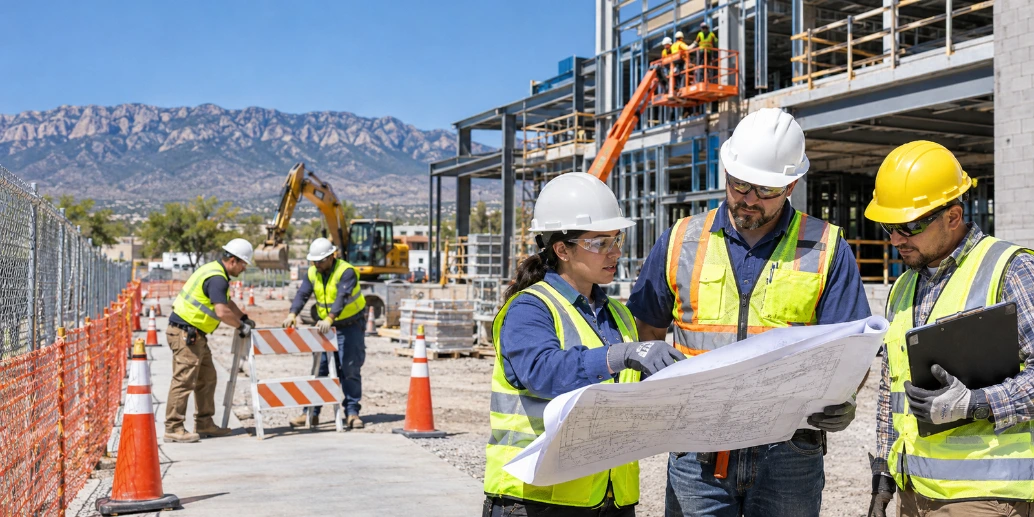
Construction safety often comes down to choices made long before something goes wrong, such as spotting dangers early, choosing the right safety gear, and making sure workers understand the rules for their job. In Albuquerque, contractors have to deal with challenging job-site conditions while also following OSHA, state, and local rules. For project managers, supervisors, and employers, building construction safety isn’t just about knowing the rules; it’s about turning them into easy safety steps that workers can follow every day. This helps reduce risks and creates safer, better-run job sites.
This article covers the main methods and rules for improving construction safety in Albuquerque, along with helpful tips for using them.
Construction Safety in Albuquerque: OverviewConstruction safety in Albuquerque requires proactive hazard assessment, continuous monitoring, advanced technologies, and regulatory compliance. Key risks include falls, struck-by incidents, caught-in hazards, electrocution, and heavy equipment dangers. AI-powered cameras, smart drones, AIoT systems, and autonomous robots can strengthen safety monitoring. Contractors must also follow NM OSHA requirements, OSHA 29 CFR Part 1926, Albuquerque building codes, permits, inspections, and licensing rules while preparing crews and sites before work begins. |
Why Does Building Construction Safety Need Special Consideration?
Job Site Dangers Keep Changing as Work Moves Forward
Building construction safety often depends on how well a job site is monitored, since a site never stays the same. Digging, building, roofing, and finishing work each bring different risks; proper excavation practices and correct soil compaction play a big role in preventing many of these early-stage hazards. OSHA says each site should be assessed for its own hazards, since safety also needs to change as work and the site conditions change.
Construction Sites Face Multiple High-Risk Hazards
Workers on a job site can face serious dangers such as falling, getting hit by objects, getting caught between objects, and electric shocks. OSHA calls these the Focus Four, and they cause most of the severe injuries and deaths in construction.
Heavy Machines and Moving Loads Add to the Risk
Cranes, trucks, loaders, and lifts often work right next to people on site. When machines and workers share tight spaces, falling objects or moving vehicles can become a real danger, and consequences of poor soil compaction can add further risk when heavy equipment is involved. OSHA says trucks and cranes can cause about 75% of these deaths on the worksite.
Safety Checks Must Happen All the Time, Not Just Once
Since workers, equipment, and tasks keep changing during a build, checking safety just once isn’t enough. Using consistent construction safety techniques, like regularly spotting new hazards, involving workers in the process, and updating safety steps as site conditions change, helps keep risks under control.
Technologies to Improve Construction Safety
AI-Powered Cameras for Real-Time Safety Monitoring
AI-powered cameras are becoming a big part of construction safety. These camera systems can look at site images or video to spot unsafe conditions, watch how workers behave, and catch when workers get too close to equipment.
AI-Enabled Drones for Hazard Inspection
Drones aren’t new, but using AI to fly and check areas on their own is a newer idea. Today’s systems can mix drone footage with AI vision and 3D detection to find unsafe work without needing a person to check every spot by hand. Drones are catching unsafe use of mobile lifting platforms, including where workers and equipment were standing.
AIoT Systems for Proactive Safety Monitoring
Mixing AI with connected devices, often called AIoT, is helping safety systems solve problems instead of just reacting to them. Sensors collect data from equipment, workers, and site conditions, and AI looks through that data to spot patterns and flag risks before they turn into real problems.
Autonomous Robots for Safety Inspections
Another new idea is using mobile robots with AI to help with or handle safety checks. Instead of relying on manual walk-throughs, these robots can move through areas, gather visual data, identify hazards, and create safety reports for people to review. Pairing these robots with advanced AI language models enables automatic site safety checks.
|
Explore Dub-L-EE’s full range of commercial construction services and see how we bring safety and quality together! |
Construction Safety Regulations in Albuquerque
Follow New Mexico’s OSHA State Plan Requirements
For construction businesses in Albuquerque, workplace safety oversight generally falls to the New Mexico Occupational Health and Safety Bureau (NM OSHA). New Mexico operates its own State Plan for private employers, built on OSHA’s standards, so the core federal construction rules still apply, just enforced at the state level. On top of that, NM OSHA has its own hazard communication rule specifically for construction work.
Follow OSHA’s Standards for Construction Work
When it comes to construction, OSHA’s 29 CFR Part 1926 lays out the federal safety standards that employers must follow. These rules touch on everything from fall protection and scaffolding to safety gear, excavation, electrical safety, fire protection, and training. At the end of the day, it’s on employers to keep working conditions from putting their crews at risk.
Meet Albuquerque’s Building Code and Permit Requirements
Following safety rules is only part of the picture, though. Albuquerque also requires permits and inspections for commercial, public, private, and residential construction, plus additions and remodeling projects. Right now, the city’s Building Safety Division works from the 2021 New Mexico Commercial Building Code, 2021 Residential Code, and 2021 Existing Building Code.
Use Required Inspections and Approved Construction Plans
Getting a permit isn’t just about filling out forms. Albuquerque’s permit process also includes reviewing applications and inspecting the work itself to confirm it meets the right codes. Contractors and property owners need to secure their permits before any work begins, and depending on the project, commercial builds may also require additional site-plan reviews.
Ensure Contractors Meet Licensing Requirements
Licensing is another factor here: New Mexico’s contractor rules. Albuquerque’s Uniform Administrative Code generally limits permits to people, firms, partnerships, or companies licensed by the New Mexico Construction Industries Division, with a few exceptions. So proper licensing matters just as much as following safety rules on the job, and understanding a general contractor’s role in managing risk and liability can help clarify where that responsibility falls.
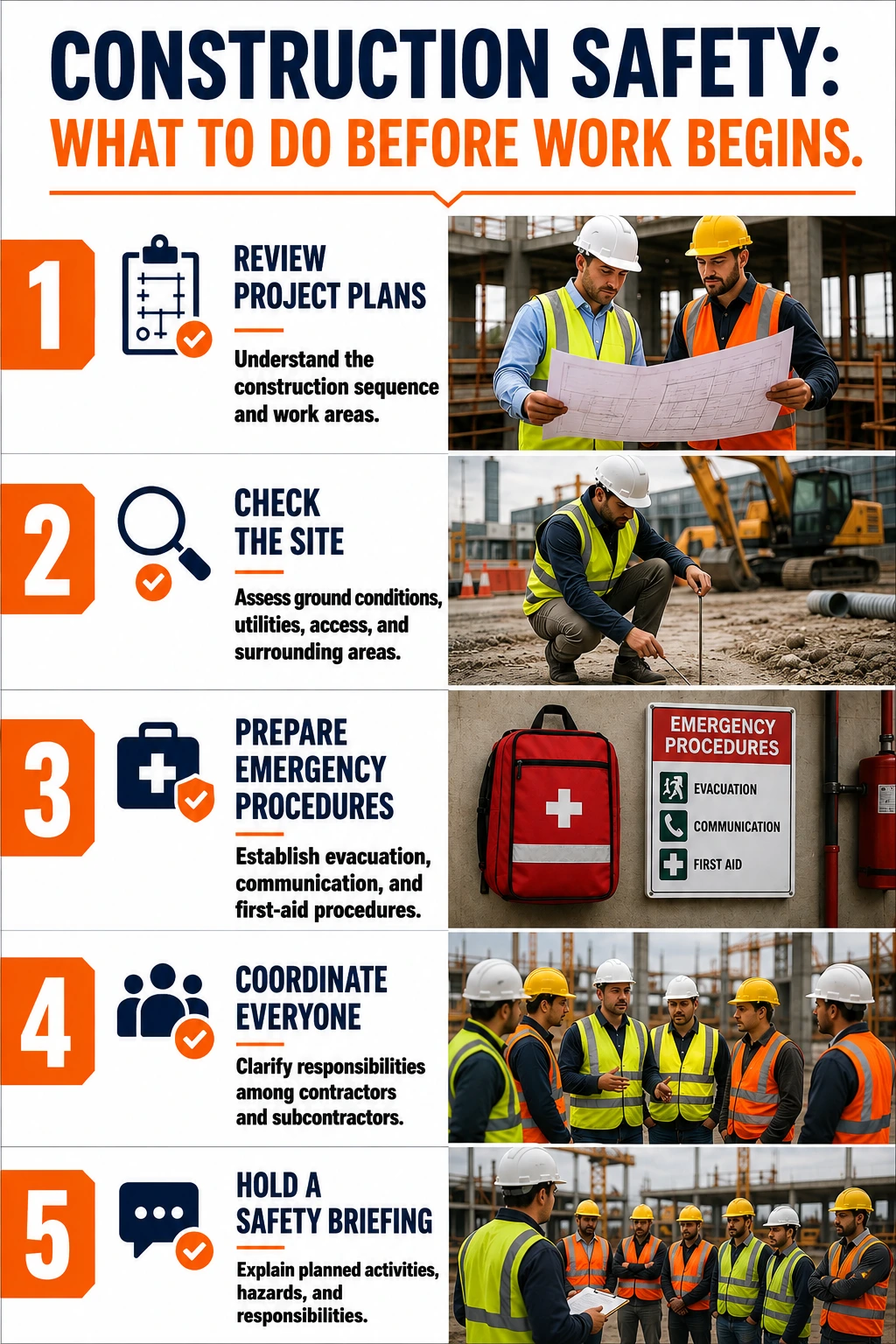
Construction Safety: What to Do Before Work Begins
Construction safety starts before work even begins. Spotting hazards, planning safety steps, and getting crews ready ahead of time can help prevent costly accidents later; it’s part of the broader social responsibilities of a commercial construction company. This article covers key steps to take before starting any job site.
Conclusion
Building a safer, code-compliant construction project doesn’t have to be stressful. At Dub-L-EE, safety comes first in everything we do, backed by proper training, a dedicated Safety Manager, and years of proven work on Albuquerque’s commercial and government projects. As a family-owned, certified contractor, we bring strong skills with a personal, local touch you can trust.
|
Building something in Albuquerque? Let Dub-L-EE help you bring safety, skill, and local know-how to your next project! |
FAQ’s About Construction Safety in Albuquerque
Do I need a permit for small remodeling projects in Albuquerque?
Yes. Albuquerque usually needs permits and inspections for remodeling and additions, not just new builds, so check with the city’s Building Safety Division before you start any work.
Who is responsible for safety when multiple contractors work on the same site?
OSHA says more than one employer can be responsible for the same unsafe condition. So clear communication and teamwork between contractors is important for keeping the site safe.
Who enforces construction safety rules in Albuquerque?
Construction safety in Albuquerque is mostly enforced by the New Mexico Occupational Health and Safety Bureau (NM OSHA), which follows a state plan built on OSHA’s federal rules.
What are the most common OSHA violations found on construction sites?
Fall protection, scaffolding, ladders, and hazard communication are some of the most common OSHA violations in construction, often caused by missing guardrails, wrong setup, or not enough training.
Are subcontractors required to follow the same safety standards as general contractors?
Yes. Subcontractors on a job site usually need to follow the same OSHA and NM OSHA safety rules as the general contractor, even though each one has its own duties.