
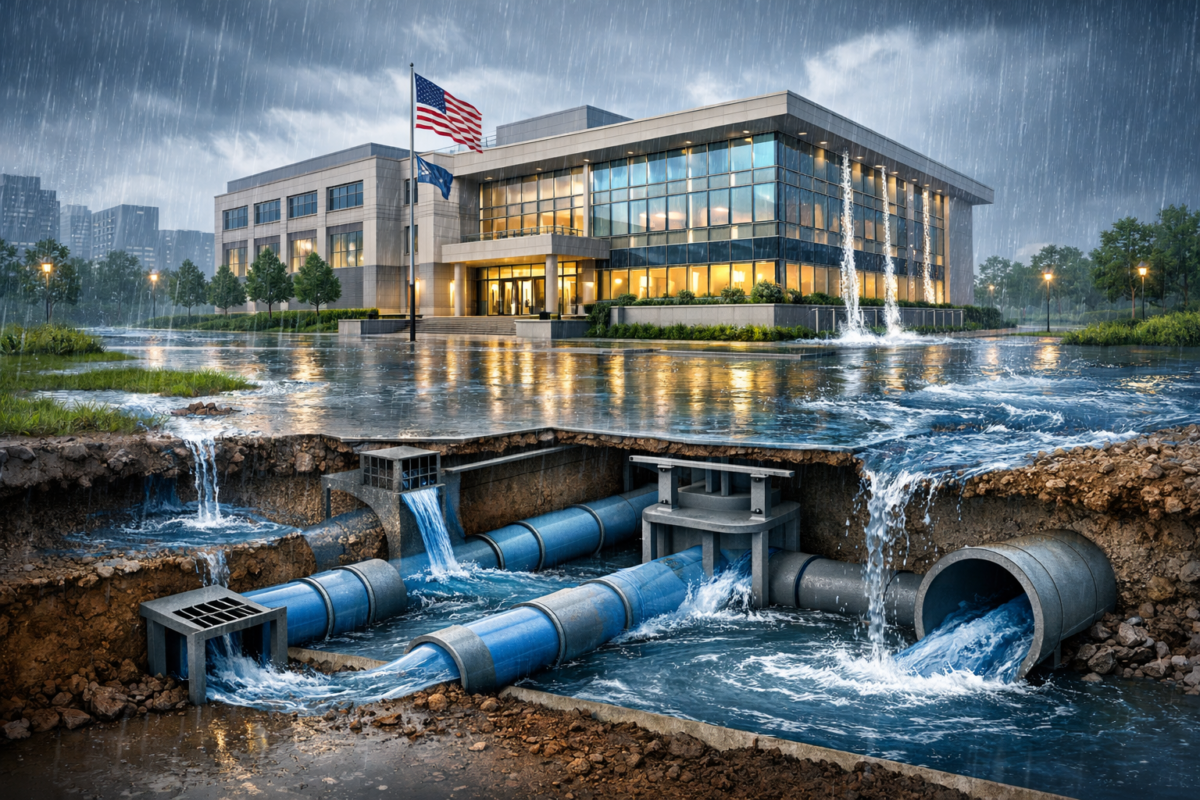
Stormwater management is a very important aspect of a commercial building, especially when considering the impact of heavy rainfall and weather conditions on building infrastructure. If stormwater is not managed and regulated properly, it results in flooding, foundation damage, surface erosion, and operational disruptions.
This is where storm piping becomes essential. It prevents large volumes of water from accumulating around buildings, parking areas, and underground infrastructure quickly and safely. Understanding why your commercial property needs storm piping is the first step toward safeguarding your investment against the growing impact of severe weather, and that’s exactly what this blog will explore.
Key Insights On Commercial Stormwater PipingStorm piping is a critical stormwater management solution for commercial properties with large impervious areas. It controls runoff, reduces flooding risks, protects structural integrity, improves safety, supports uninterrupted operations, limits landscape and pavement damage, and helps properties meet U.S. stormwater regulations through controlled drainage and compliant discharge systems. |
Understanding Storm Piping Systems
A storm piping system is a series of underground large-diameter pipes made of either concrete, steel, HDPE, or PVC that are designed to collect and carry stormwater. The system collects water that falls on the streets, roofs, roads, and driveways. When it rains, water is collected from the surface through surface drains and catch basins and then flows downhill by gravity. The water is then discharged into safety outlets such as ponds, drainage channels, or rivers that are close by. Also, this system helps prevent flooding and water buildup in cities and works separately from sanitary sewer systems.
What Is The Importance Of Storm Piping For Commercial Properties?
This section explains why underground utility installation is crucial when managing stormwater on commercial properties:
Flood Prevention
Commercial properties generate high runoff due to large impervious areas such as roofs, parking lots, and service roads. Storm piping captures this runoff at collection points and conveys it through engineered pipe networks sized for peak rainfall events. This controlled stormwater drainage system prevents surface ponding, water intrusion into buildings, and flooding of access routes, loading docks, and below-grade spaces, protecting commercial operations and site functionality during heavy storms.
Structural Protection
When the stormwater remains for a long time near the building, it changes the soil behavior gradually under and around the foundation. Over a period, this can cause settlement issues, slab cracking, and loss of subgrade support. Fitting a well-planned storm piping system discharges the overloaded water from the load-bearing zones, stabilizes subsurface conditions, and reduces hydrostatic pressure against walls and footings. The regulated drainage area, thus, serves as a reservoir of the building’s frame and lessens the chances of expensive repair works of the structural system in the future.
Improves Safety For Customers And Staff
From a site safety perspective, surface water is a liability risk. How? Pooled runoff on parking lots, sidewalks, and entry points increases the chances of slipping, vehicle skidding, and pedestrian accidents. Storm piping takes away the runoff that keeps the areas dry and usable during and after a rain. So, commercial sites become safer for employees, visitors, and delivery traffic.
Supports Business Continuity
Business dependability is strongly influenced by site availability and interior conditions during bad weather. In the same operational context, the commercial gas system pipes’ role supports an uninterrupted energy supply for heating, cooking, and critical processes, making infrastructure reliability essential for commercial facilities. Flooded service drives, loading zones, or entrances can stop operations, damage the inventory, and cause sudden shutdowns.
Enhances Property Value And Longevity
The properly designed storm piping systems on commercial properties are much more resistant to damage from weather and natural forces than those that do not have storm piping. This is one of the many reasons why buyers, tenants, and investors view effective storm drainage systems as a sign of responsible property management. Storm piping will reduce the risk of property damage; it will also reduce continuing maintenance costs, and future repair needs, which all contribute to increasing the property value and extending the life of the Property.
Compliance With Local Regulations
Commercial properties in the United States have to follow the federal stormwater regulations:
- According to the Clean Water Act (33 U.S.C. §1251), implemented through the EPA’s National Pollutant Discharge Elimination System (NPDES).
- As per the EPA rules (40 CFR Parts 122 and 123), numerous commercial establishments linked to Municipal Separate Storm Sewer Systems (MS4s) have the obligation to handle their stormwater runoff and to refrain from discharging pollutants into those waterways that are accessible to the public.
Incorporating stormwater management at the initial stage of a project will help you avoid common mistakes in commercial construction building codes when you coordinate the drainage layout with the regulations. To be in line with these requirements, storm piping systems should handle flow rates, facilitate the release of the discharge to the authorized outlets, and be in accordance with the conditions of the permit, local stormwater regulations, and post-construction runoff control standards established by state and municipal authorities.
Key Components Of An Effective Storm Piping System
- Catch Basins and Inlets: These are the areas where the water is intercepted from the roofs, parking lots, roads, and landscaping surfaces. The appropriate spacing between the two and the correct location of the structure will help ensure that the water is intercepted before the formation of puddles or flows towards structures.
- Underground Storm Pipes: As we have discussed earlier, storm pipes transmit runoff from inlets to discharge points using gravity or controlled slopes. Pipes are made from reinforced concrete, HDPE, or PVC, depending on load and site conditions. And they are hydraulically sized based on rainfall intensity, drainage area, and design storm criteria.
- Manholes and Access Structures: Through manholes, you can inspect, clean, and maintain the commercial storm piping network. These are placed at changes in direction, slope, or pipe size to provide system stability and ease of maintenance for a long period of time.
- Detention and Retention Facilities: These facilities temporarily store stormwater runoff, thereby controlling the discharge of the peak flow and lessening the chances of flooding in the downstream areas.
- Outfall Structures: It is the final discharge point that safely releases water into approved locations like municipal systems, channels, or natural water bodies. Proper energy dissipation and erosion control measures are employed so that no damage occurs to the downstream area.
Conclusion
To get the best outcome, commercial property owners and project teams should consider drainage and utility planning as a part of their initial design stage. In case you require assistance in planning or installing storm piping for a commercial project, you may get in touch with Dub-L-EE Construction. We are a reliable commercial utility contractor offering underground utility installation services that are customized to site conditions, regulatory requirements, and long-term performance needs.
FAQ’s
What is the Difference Between Storm Piping and Sanitary Sewer Systems?
The storm piping takes care of rainwater as well as surface runoff. Sanitary sewerage carries the wastewater from toilets, kitchen sinks, and similar locations. Both remain distinct in order to keep everything clean and avoid loading one of these drainage lines.
Does Every Commercial Property Need A Storm Piping System?
Most commercial properties require storm piping, especially those with large roofs, parking areas, or strict local drainage regulations. Requirements depend on site size, zoning rules, and regional rainfall patterns.
How Is A Storm Piping System Designed On A Commercial Property?
The design phase of the storm piping system includes runoff calculations, determining pipe size, slope planning, placing inlets, and, most importantly, coordinating with other utilities below ground to ensure the long-term efficiency of the storm piping system.
When Should A Commercial Storm Pipe System Be Inspected?
Most commercial storm piping systems should be inspected on an annual basis, as well as immediately following major rainstorms, for the discovery of blockages, sediment buildup, or structural problems in the piping system.
