
Commercial building projects have complex layouts, specialized mechanical, electrical, and plumbing (MEP) systems, and even need to meet strict local building codes. That is why one of the first and most important decisions you’ll make during such projects is choosing the right project delivery method. Traditionally, projects have followed the design-bid-build approach, where the architect designs the building and contractors bid to construct it in separate phases. In contrast, the modern design build construction method combines design and construction under a single team, offering a more streamlined, collaborative process.
Understanding the differences between these two approaches is crucial. The choice you make can impact everything from project timelines and costs to quality, accountability, and risk management. In this article, we’ll break down design build vs traditional build, helping you determine which method is best suited for your commercial project.
At A Glance: How To Choose Between Design-Build & Traditional Construction MethodsThis blog covers the key differences between design-build and traditional construction methods, focusing on how each approach impacts timelines, cost control, collaboration, and overall project risk. It explores where each method performs best based on project complexity, speed requirements, and level of owner involvement. You’ll also gain clarity on practical decision factors like contractor selection, coordination challenges, and execution efficiency. By the end, it helps you determine which delivery method aligns most effectively with your commercial project goals. |
What Is the Traditional Build Method?
The traditional build method, also known as the design-bid-build (DBB) approach, has been the cornerstone of the construction industry for decades. This method follows a sequential process: each phase must be completed before the next can begin, with the owner coordinating between separate design and construction teams.
What is the sequence of steps taken in the traditional build method?
Here’s how it typically works for a commercial project: first, the owner hires an architect or design team to develop detailed plans and specifications. Once the design is finalized, the project is sent out to multiple general contractors to submit bids. The contractor with the most competitive bid is usually selected to execute the construction. If the bids exceed the owner’s budget, the design may need to be revised and re-bid—a process that can extend timelines.
What is the role of the owner here?
Under this model, the owner acts as the primary intermediary between the designer and the builder, retaining oversight of both parties throughout the project. While this separation can provide a clear structure and accountability, it introduces challenges in meeting construction KPIs to improve project profitability, potential miscommunications, and a lack of collaboration compared to integrated delivery methods like design-build.
Advantages & Risks of the Traditional Method
The traditional Design-Bid-Build method gives commercial project owners a structured and highly controlled approach to planning, designing, bidding, and construction. While this method offers strong design oversight and competitive pricing opportunities, it can also create challenges related to timelines, coordination, and cost changes.
Advantages:
- Comprehensive Design Control: The Design-Bid-Build model allows owners to work directly with architects and engineers, enabling detailed oversight over every aspect of the design. This is especially valuable for complex commercial projects such as multi-tenant office buildings, healthcare facilities, or retail centers with unique brand standards.
- Competitive Cost Transparency: Once the design is finalized, contractors submit competitive bids. This tendering process provides owners with market-based cost comparisons, ensuring that the selected contractor offers the best balance of price and quality.
- Clear Role Demarcation: Architectural and engineering responsibilities are separate from construction. This distinct allocation reduces ambiguity in accountability, making it easier to resolve disputes or claims related to design errors or construction defects.
- Ability to Engage Specialized Consultants: Commercial buildings often require expertise beyond standard construction, such as sustainability certifications (LEED), complex MEP systems, advanced structural engineering, or security. The traditional method allows owners to select consultants or subcontractors tailored to these specialized needs, ensuring compliance with commercial construction building code requirements while also enhancing quality and operational performance.
Risks / Drawbacks:
- Extended Project Timelines: Sequential phases—design completion, bid solicitation, and construction—often result in prolonged schedules. Delays in any stage directly extend the overall timeline.
- Higher Likelihood of Cost Overruns: Because construction expertise is not involved during design, design decisions may inadvertently increase costs. Subsequent change orders or design modifications can escalate budgets. According to a U.S. GAO report on federal construction projects, design changes under traditional delivery were among the leading causes of budget rebaselining, totaling $3.2 billion!
- Fragmented Collaboration: Independent operation of design and construction teams may result in misalignment, miscommunication, or overlooked constructability issues.
- Owner-Borne Risk: Project owners retain substantial responsibility for coordination, commercial construction risk management and mitigation, and dispute resolution between architect and contractor, potentially complicating project management.
What Is the Design Build Method?
The Design Build construction method is a modern construction delivery approach that integrates both design and construction under a single contract with one responsible entity, typically called the Design-Builder. Unlike the traditional Design-Bid-Build method, where the project owner separately hires an architect for design and a contractor for construction, Design-Build streamlines the process by combining these phases. This unified system allows design and construction teams to collaborate from the very beginning, ensuring better communication, fewer disputes, and a more efficient workflow.
What is the role of the contractor here?
In a Design-Build project, the single contractor manages all aspects, from conceptual design to final construction, allowing for overlapping of design and construction phases. Overlapping the design and construction phases reduces project timelines, which is critical for businesses aiming to open retail spaces quickly, minimize office downtime, or meet operational deadlines for warehouses and industrial facilities.
What type of projects is it best suited for?
It is particularly effective for complex or time-sensitive projects, as it encourages collaboration, enhances accountability, and fosters integrated problem-solving.
Advantages & Risks of the Design-Build Method
The Design-Build method creates a more streamlined construction process by combining design and construction responsibilities under one contract. This approach can improve speed, collaboration, and accountability, but owners should also evaluate possible trade-offs in design control, pricing transparency, and flexibility.
Advantages:
- Single Point of Accountability: Design-Build construction consolidates design and construction under one contract, simplifying communication, ensuring integrated decision-making, and reducing conflicts between designer and builder.
- Accelerated Project Delivery: By allowing construction to begin during design, projects benefit from overlapping schedules, reducing the overall timeline compared to sequential methods. In fact, according to a joint study by the Construction Industry Institute (CII) and Penn State University, design-build projects are delivered 102% faster compared to design-bid-build.
- Integrated Cost Management: Early contractor involvement allows for proactive budget monitoring, value engineering, and selection of cost-effective materials, minimizing the risk of overruns.
- Enhanced Collaboration and Innovation: Architects, engineers, and construction teams work as a unified entity, fostering collaborative problem-solving, innovative design solutions, and efficient execution.
- Reduced Owner Risk Exposure: The Design-Builder assumes responsibility for both design integrity and construction quality, relieving owners from disputes and coordination challenges.
Risks / Drawbacks:
- Reduced Owner Influence on Design: Owners may have less control over design details since the Design-Builder balances cost, schedule, and constructability considerations.
- Limited Competitive Pricing: Absence of a separate tendering process may restrict cost comparisons, potentially resulting in higher construction costs.
- Potential Conflict of Interest: Consolidation of design and construction may lead to prioritization of build efficiency or budget over design quality or aesthetics.
- Limited Flexibility Post-Contract: Significant changes after project initiation can be difficult to implement without affecting cost, schedule, or quality, reducing adaptability for evolving requirements.
| Feature / Aspect | Traditional (Design-Bid-Build) | Design-Build |
| Contract Structure | Separate contracts for design and construction; owner acts as intermediary | Single integrated contract covering both design and construction |
| Project Timeline | Sequential process: design → bid → construction; typically longer | Overlapping design and construction phases; faster delivery |
| Design Control | High owner involvement; direct collaboration with architects | Moderate owner involvement; Design-Builder balances efficiency, cost, and design |
| Cost Management | Competitive bidding may lower initial cost but less early budget control; higher risk of overruns | Early contractor involvement enables proactive budgeting and value engineering; fewer unexpected costs |
| Accountability | Responsibilities divided; disputes may require owner mediation | Single point of responsibility; streamlined conflict resolution |
| Collaboration | Separate teams may lead to miscommunication or constructability issues | Integrated team promotes innovation, problem-solving, and efficiency |
| Risk Exposure | Owner bears higher risk for design errors, coordination conflicts, and cost escalation | Design-Builder assumes majority of design and construction risk |
| Flexibility | Easier to make changes in design phase before construction | Limited flexibility post-contract; changes may impact cost and schedule |
| Competitive Bidding | Yes, allows comparison of multiple contractors | No separate bidding; price depends on negotiated Design-Build contract |
| Best Suited For | Complex projects requiring detailed design control, customization, or specialist consultants | Projects with tight timelines, simpler design requirements, or need for integrated delivery and reduced management burden |
Which Method Is Right for Me?
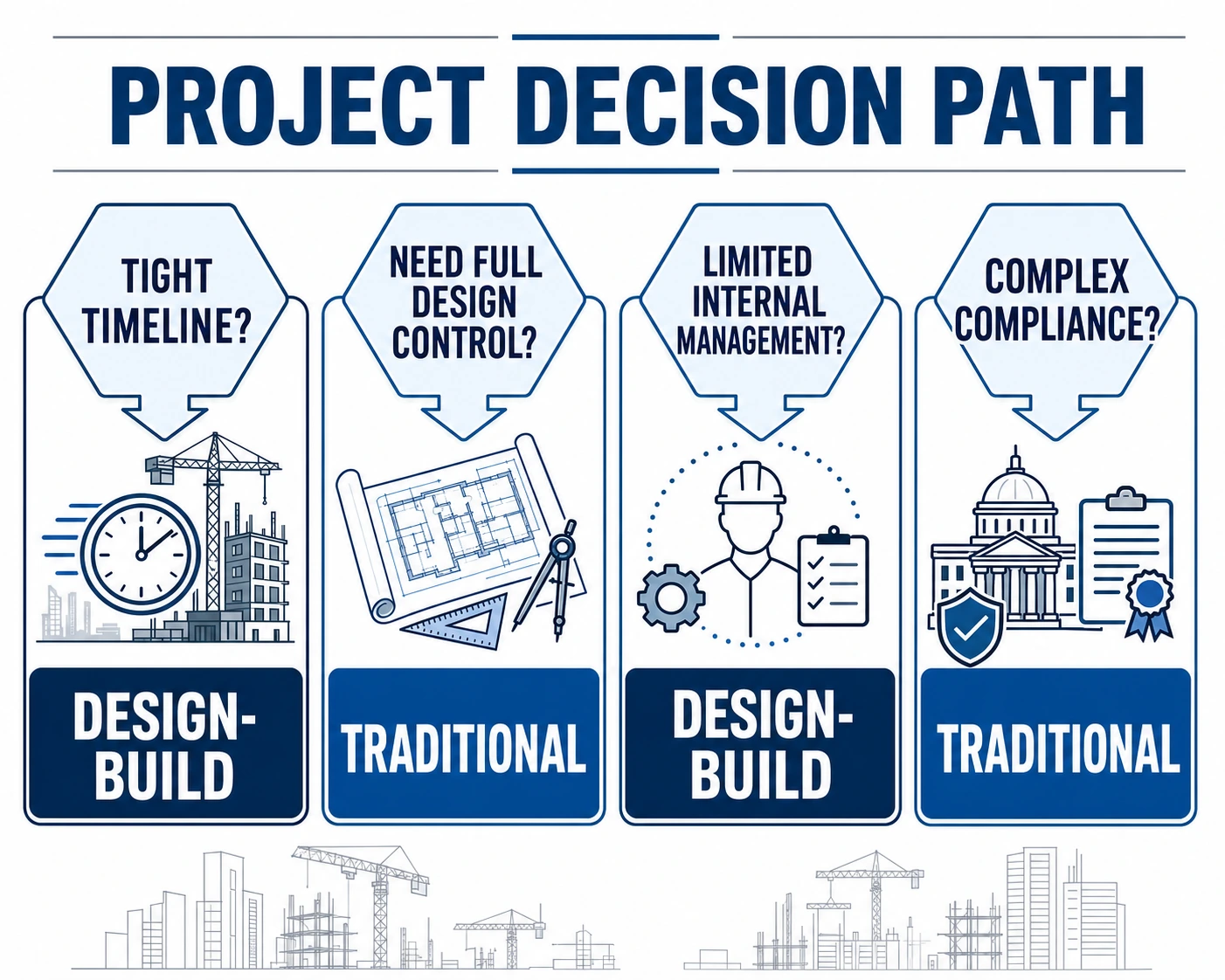
Choosing between design build vs traditional build depends on your priorities. If you value full design control, detailed customization, and competitive bidding, the Traditional approach may suit you. If speed, cost efficiency, and a streamlined process are key, Design-Build could be the better choice.
Either way, success depends on selecting a trusted partner who specifically understands your commercial project’s scope and goals. At Dub-L-EE, we bring decades of Albuquerque expertise, managing projects for businesses of all sizes, including NASA contracts. Bonded, licensed, insured, and committed to quality, we uphold the social responsibilities of a trustworthy commercial construction company, handling every detail from design to construction and delivering projects on time, on budget, and to your exact standards.
Conclusion
Now you must have completely grasped the difference between design-build and traditional build, so go ahead and pick what better suits your construction needs. But at the end of the day, success depends on selecting a trusted partner who specifically understands your commercial project’s scope and goals. At Dub-L-EE, we bring decades of Albuquerque expertise, managing projects for businesses of all sizes, including NASA contracts. Bonded, licensed, insured, and committed to quality, we uphold the social responsibilities of a trustworthy commercial construction company, handling every detail from design to construction and delivering projects on time, on budget, and to your exact standards.
Get in touch with Dub-L-EE today to discuss your commercial project and choose the right path with confidence.
FAQs
How do I verify if a contractor can handle a design-build project?
Check their track record with similar commercial projects, focusing on timelines, budget accuracy, and in-house design coordination capabilities.
Can I switch to design-build after starting with a traditional approach?
Yes, but late transitions often increase costs and delays; early-stage changes are far more efficient and beneficial.
How are disputes resolved in design-build vs traditional projects?
Design-build centralizes responsibility, simplifying resolution, while traditional methods may require owner involvement between separate parties.
Which method gives better cost predictability early on?
Design-build typically offers earlier cost insights, while traditional builds finalize costs only after contractor bidding.
Is design-build suitable for highly regulated commercial projects?
Yes, but only if the contractor has proven experience with compliance-heavy builds like healthcare or specialized facilities.
How does lender or investor preference impact my choice?
Some prefer traditional models for transparency, while others accept design-build with strong cost documentation and contractor credibility.
What risks do owners commonly overlook in these methods?
Coordination gaps, unclear scope, and late design changes can significantly impact cost and timelines if not managed early.