
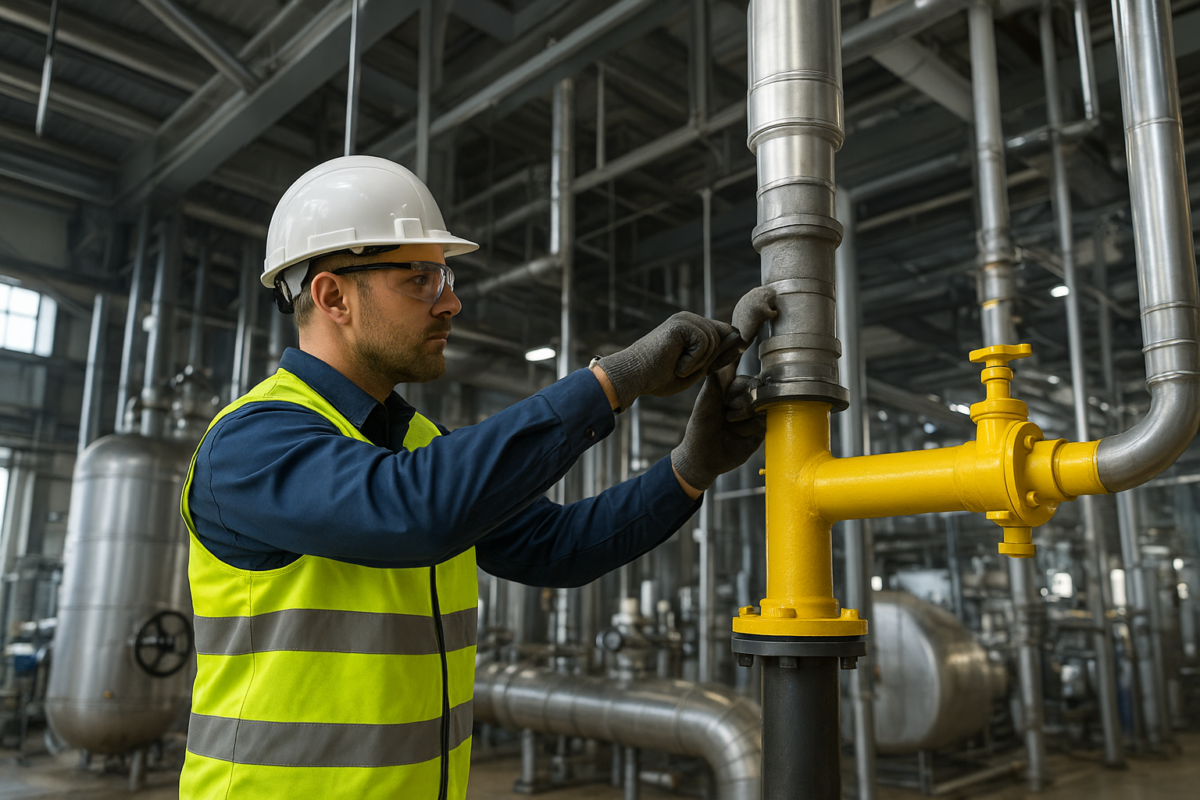
Commercial-gas piping systems are engineered for reliability, but in real life, even well-designed systems often run into trouble. According to the Pipeline and Hazardous Materials Safety Administration (PHMSA), over the period 1998–2020, roughly 18 % of “significant” pipeline incidents (those causing injury, fatality, or major property damage) were due to corrosion. Other major contributors include material defects, improper installation, aging pipe segments, and external forces like construction damage or ground movement, which is common in commercial settings. These failures often appear as leaks, ruptures, or deterioration in welds and pipe materials.
In this blog, we’ll examine these most frequent failure modes in commercial gas piping and share practical strategies that operators and facility managers can adopt to prevent leaks and hazards before they occur.
| AI Summary
|
Common Failures & Their Reasons in Commercial Gas Piping Systems
Corrosion
Reasons:
- Black Steel Oxidation: Black iron (common in U.S. commercial gas systems) corrodes internally when exposed to moisture or hydrogen sulfide.
- Soil Corrosion (Underground): U.S. codes require corrosion protection for buried metallic lines (NFPA 54 §7.1.5); failures often occur when:
- Protective wrapping deteriorates
- Soil is highly acidic or poorly drained
- Cathodic protection is missing or damaged
- Kitchen Environments: High humidity, salt, and cleaning chemicals accelerate corrosion around commercial cooking equipment.
Mechanical Joint Leaks (Threaded, Flanged, Welded)
Reasons:
According to FM Global loss data, joint leakage is one of the highest-frequency failure sources.
- Improper Assembly: NFPA 54 requires proper thread sealants; failures occur when commercial gas pipe installation is done correctly:
- Non-approved sealants are used
- Threads are overtightened or undertightened
- Vibration: Rooftop units, commercial dryers, generators, and high-capacity appliances impart vibration that loosens joints.
- Thermal Cycling: Gas lines connected to commercial appliances experience large temperature variations, causing expansion/contraction stresses.
Regulator Malfunction
Reasons:
- Regulator Vent Blockage: A known failure for commercial gas lines cited in NFPA 54 Annex G.
Caused by:- Insects (mud daubers, wasps)
- Construction debris
- Snow or ice
- Incorrect Orientation: Many U.S. regulator models require upright commercial gas pipe installation for proper venting.
- Diaphragm Aging: Over time, rubber diaphragms lose elasticity, especially in high-temperature mechanical rooms.
Incorrect Pipe Sizing
Reasons:
- Failure to Recalculate Demand: NFPA 54 requires sizing based on cumulative BTU load; many failures stem from adding new appliances without reassessing system capacity.
- Underestimating Pressure Loss: Especially in:
- Large warehouses
- Restaurants with multiple appliances
- Long rooftop gas runs
- Mixing Pressure Zones: Combining low-pressure (≤14 in. w.c.) and medium-pressure lines without proper regulators. Incorrect sizing affects both natural gas and propane supply lines, which have different pressure requirements.
Material Fatigue & Stress Cracking
Reasons:
- Unsupported Piping: NFPA 54 specifies support spacing; improper supports cause sagging and stress.
- Building Shifts & Seismic Movement:
States like California, Washington, and Utah require seismic gas shutoff valves due to common movement-related failures that directly impact commercial gas system pipes’ roles. - Thermal Stress: High-output appliances heat nearby piping beyond design assumptions.
Flexible Connector Failures
Reasons:
- Kinking During Appliance Movement: Common in kitchens where equipment is moved to clean behind units.
- Over-bending commercial gas piping past manufacturer limits
- Connector Fatigue: Especially in older brass or stainless-steel corrugated connectors.
- Not using ANSI Z21.69 certified connectors
Damage from Other Building Trades
OSHA accident investigations frequently cite secondary construction activity as a cause of gas line compromise.
Reasons:
- Accidental Penetration: Drill bits, screws, or nails used during renovations.
- HVAC Retrofits: Rooftop work sometimes damages adjacent gas piping.
- Unsupported Spacer Removal: Contractors sometimes remove temporary supports, leaving piping stressed.
Faulty Valves & Safety Shutoff Devices
Reasons:
- Valve Wear: Frequently cycled valves (e.g., in commercial kitchens or mechanical rooms) wear internally.
- Incorrect Valve Ratings: Using valves not rated per ANSI B16.33 or B16.38 for gas service.
- Failure of Excess Flow Valves: EVFs mis-sized too small or too large won’t trip properly.
Testing, Commissioning, or Maintenance Deficiencies
Reasons:
- Improper Pressure Testing: Using air at pressures that exceed allowable test limits can damage components.
- Skipping Periodic Inspections: Many U.S. states do not mandate commercial gas line re-inspections, causing long-term degradation to go unnoticed.
- Inadequate Documentation: Missing as-built drawings make troubleshooting and compliance difficult. This complicates the key elements involved in commercial gas systems repair, slowing diagnosis and increasing risk.
How to Prevent Gas Piping System Failures
Use Code-Compliant Materials and Certified Components
Preventing failures in commercial gas piping systems begins with using materials that fully comply with U.S. standards such as NFPA 54, the International Fuel Gas Code (IFGC), and relevant ANSI certifications. These codes require that all components, including piping, valves, regulators, and connectors, be listed and tested for fuel gas applications. Using non-listed materials not only increases leak risk but also violates mandatory U.S. safety regulations.
Implement Robust Corrosion Prevention Measures
To prevent corrosion-related failures, systems must incorporate proper protective coatings, approved wrapping for underground metallic pipe, and corrosion-resistant materials where applicable. Consistent monitoring for rust, discoloration, and moisture accumulation further strengthens long-term system integrity and safety.
Ensure Adequate Support, Anchoring, and Seismic Stability
Proper mechanical support is essential to preventing stress fractures and joint failures. U.S. codes specify the required spacing and type of pipe supports needed to maintain the stability of fuel gas systems under normal and extreme conditions. In seismic regions, additional bracing and seismic shutoff valves are required to protect gas systems from building movement. Ensuring that piping is properly anchored and protected against vibration and shifting helps prevent mechanical strain from developing into hazardous leaks.
Maintain Clear and Proper Venting of Gas Regulators
NFPA 54 requires that regulator vents be positioned, screened, and protected according to manufacturer specifications to avoid internal malfunction. Regular professional inspections help identify debris or environmental conditions that may compromise venting performance, thereby preventing over-pressurization incidents that can damage downstream components.
Schedule Regular Professional Inspections and Maintenance
A significant number of gas system failures occur in buildings that don’t receive routine professional inspections. That’s why it’s essential to bring in qualified technicians for regular assessment and maintenance. Today, IoT-enabled sensors are transforming how commercial utilities are monitored. These systems include real-time leak detection, pressure tracking, predictive maintenance, and automated shutoffs. IoT’s impact on monitoring and controlling commercial utility is that it now offers smarter, faster, and more reliable protection for commercial gas infrastructure.
Reassess Gas Load and System Capacity After Any Equipment Changes
Commercial buildings frequently add or upgrade gas-fired equipment such as boilers, dryers, fryers, and rooftop HVAC units. When the piping or regulators are not properly sized for these new loads, the system can experience unstable pressures, reduced appliance performance, and unnecessary mechanical stress. To prevent this, gas demand should be recalculated whenever equipment changes occur, using NFPA 54 sizing criteria. Regular reassessment ensures the system stays balanced, efficient, and capable of supporting both current and future appliance needs.
Conclusion
Preventing gas system failures requires more than compliance; it demands a proactive approach, skilled professionals, and reliable service partners. Dub‑L‑EE brings proven experience in commercial gas systems, welding, piping installation, pressure regulation, and leak detection. With our services, you get professional gas‑system solutions that safeguard performance, minimize risk, and support long‑term building operations. Contact us at 505.292.1684 today for consultation!
FAQs
What are the first signs of possible gas-piping system failure that managers or maintenance staff should watch for?
Warning signs include visible rust or corrosion on above-ground sections, signs of soil or coating deterioration around buried lines, hissing or smell of gas, irregular appliance performance (low flame, poor pressure), pressure drops, or leaks around joints and fittings.
How often should a commercial gas piping system be inspected?
Inspection every 1–2 years is recommended for commercial gas systems, though high‑use or older systems may need yearly checks.
Is it okay to mix gas piping with water or other utility pipes in the same trench or conduit?
No, combining gas lines with water or sewer lines increases risk. Gas lines need separate routing with proper marking and protection.
What kinds of documentation should be maintained for a commercial gas piping system?
Maintain as‑built drawings, inspection records, pressure‑test results, maintenance logs, and any modification history to support safety audits and future work.