
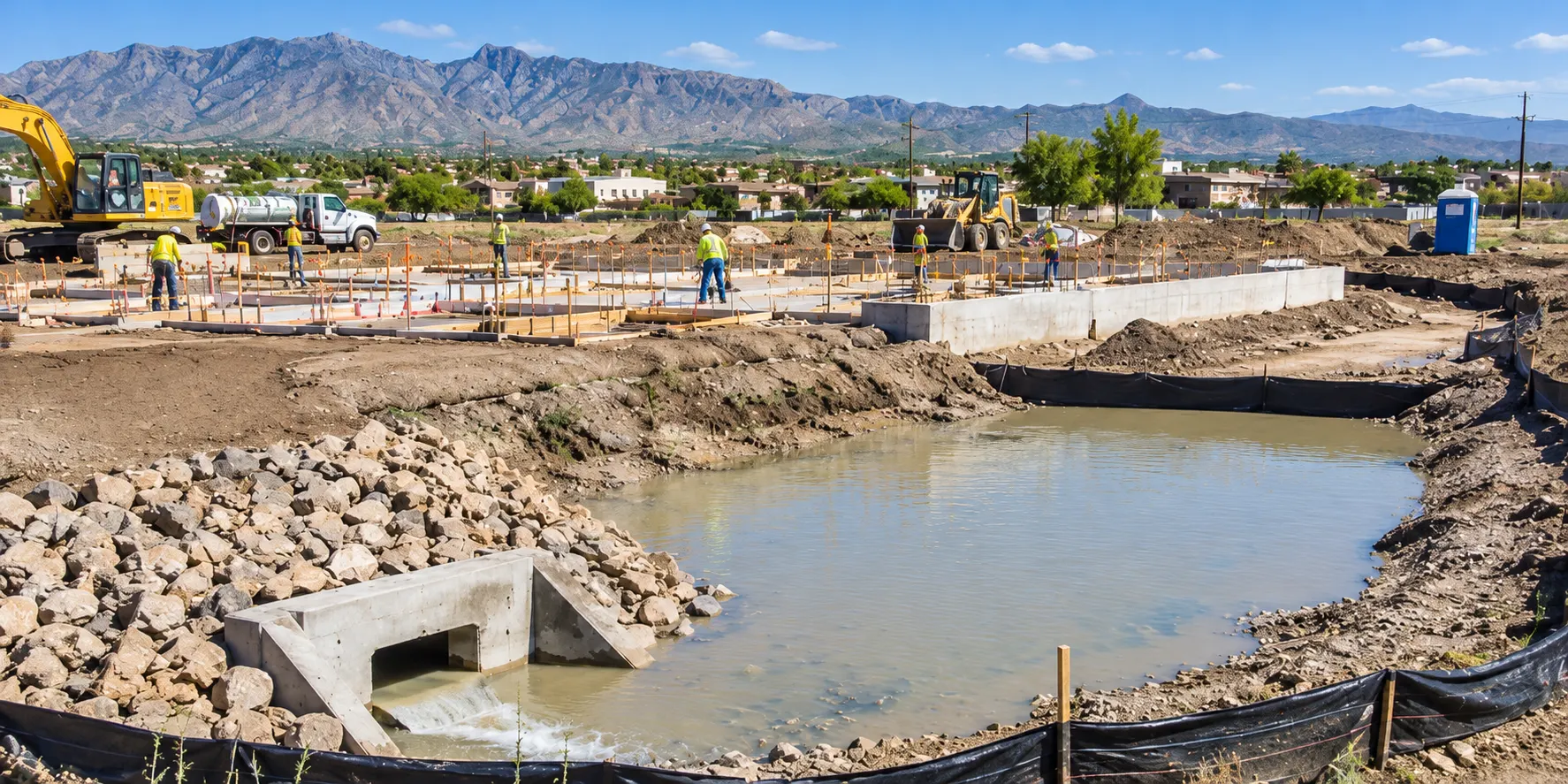
Construction projects across Albuquerque face a unique environmental dual threat: highly erodible desert soils and sudden, intense summer monsoon downpours. When excavation and grading alter natural drainage patterns, unmanaged runoff can quickly escalate from a muddy job site into severe erosion, costly project downtime, and heavy regulatory penalties.
According to the U.S. Environmental Protection Agency, sediment runoff from construction sites occurs at rates 10 to 20 times higher than agricultural lands, and 1,000 to 2,000 times higher than forest lands. In the Albuquerque metro area, where runoff flows directly through public arroyos into the Rio Grande, local and federal agencies enforce environmental compliance strictly.
Albuquerque Stormwater Compliance and Risk Control: OverviewAlbuquerque construction sites face severe stormwater risks from erodible desert soils and intense monsoon rainfall. Effective drainage, grading, erosion control, and containment protect foundations, equipment, workers, and the Rio Grande watershed from flooding and pollution. Projects disturbing one acre or more generally require NPDES permit coverage and an active SWPPP. DUB-L-EE provides temporary controls, SWPPP support, site stabilization, underground drainage installation, and compliance solutions to prevent delays, fines, and stop-work orders. |
The High Stakes of Albuquerque Stormwater Runoff
Managing site water isn’t just about keeping a job site clean. It’s about protecting your bottom line, your equipment, and your legal standing.
Controlling Sudden Monsoon Flooding
Albuquerque’s summer monsoons can drop significant rainfall in minutes. Without engineered drainage paths, uncontrolled surface flow floods low-lying work zones, damages freshly poured foundations, and destabilizes temporary access roads. Professional site grading and temporary storm piping keep crews working safely and prevent expensive weather-related delays. Permanent infrastructure also matters: every developer should understand why a commercial property needs storm piping before runoff creates recurring site damage, ponding, or drainage failures.
Protecting the Rio Grande Watershed
Rainwater moving across an active construction site picks up far more than dirt. It can carry concrete residue, fuels, chemical compounds, sediment, and site debris. Because Albuquerque’s drainage infrastructure channels runoff through public arroyos and local flood-control systems, contractors and developers must consider how their sites affect downstream waterways and surrounding communities.
The Albuquerque Metropolitan Arroyo Flood Control Authority plays an important role in managing regional flood-control infrastructure and arroyo systems. Comprehensive containment, sediment barriers, stabilized construction entrances, and inlet protection are essential measures for reducing pollution risks and protecting local drainage systems.
Navigating NPDES Permits and SWPPP Compliance
Any construction activity disturbing one acre or more, or a smaller parcel tied to a larger commercial plan, requires NPDES stormwater permit coverage. A site-specific Stormwater Pollution Prevention Plan must be drafted, implemented, and updated as site conditions evolve. Failing an inspection can result in an immediate stop-work order and steep daily fines, consequences that fall squarely on the project owner regardless of who’s actively working the site that day.
| Planning a commercial construction project in Albuquerque? Protect your timeline and maintain full SWPPP compliance with DUB-L-EE’s specialized underground drainage and commercial site services. |
High-Risk Site Areas Demanding Professional Oversight
Effective management requires continuous oversight at critical site nodes. Professional civil and utility contractors focus on a defined set of risk zones throughout every phase of a project.
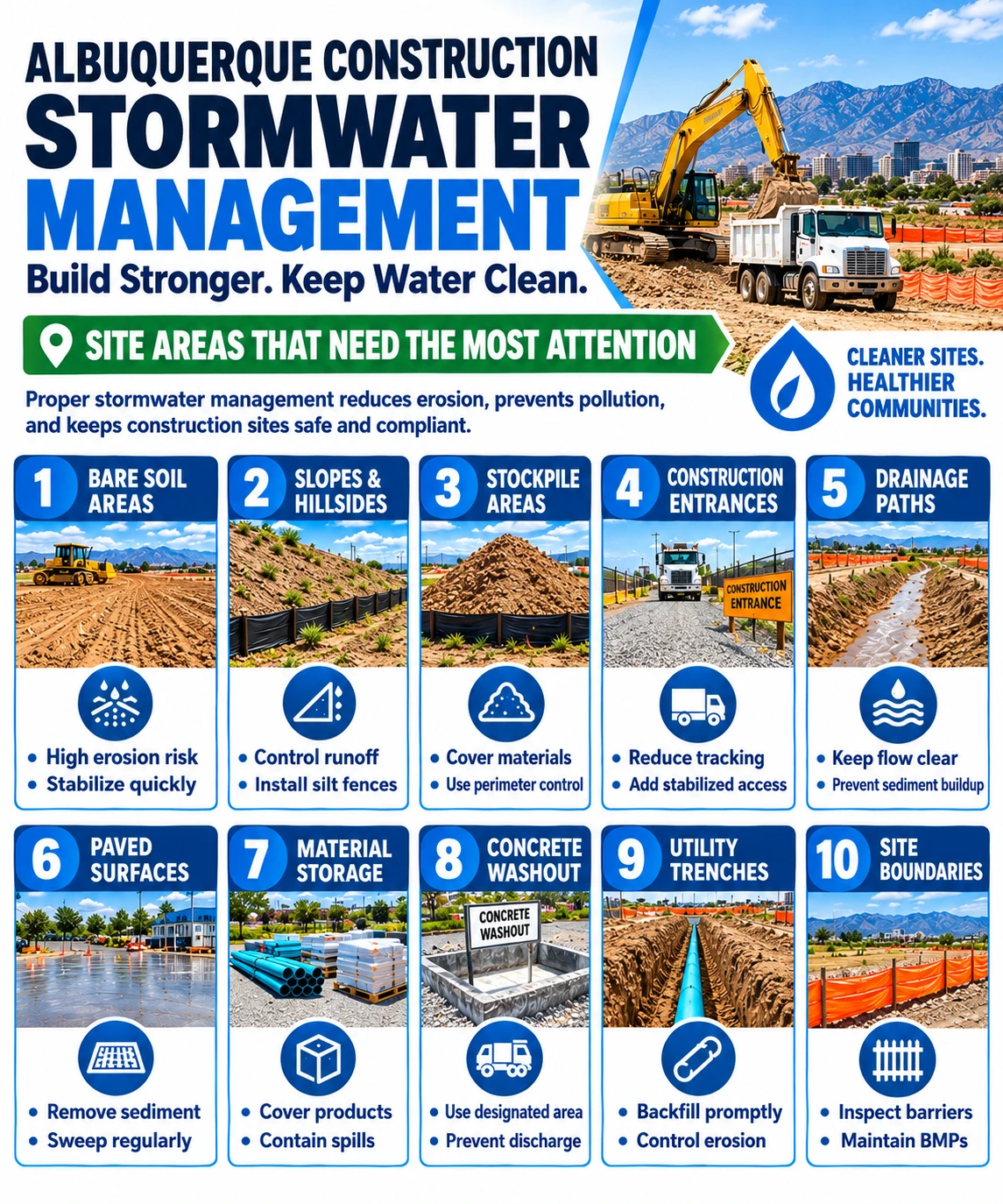
Utility trench work deserves particular attention because underground utility installation is crucial to a project’s long-term drainage performance, site safety, and infrastructure reliability. Poor trench drainage or improperly installed storm lines can create immediate erosion issues and costly repairs after construction is complete.
Why Commercial Developers Partner With DUB-L-EE
Installing temporary silt fences is only a fraction of stormwater management. As site work transitions from clearing and utility trenching to paving and final build-out, drainage needs constantly evolve, and each phase carries its own compliance requirements.
At DUB-L-EE, we bring heavy-civil expertise and underground utility precision to Albuquerque construction projects. We don’t just flag stormwater risks; we deliver end-to-end commercial solutions:
- Turnkey drainage installation: heavy-duty underground storm piping (PVC, cast iron, reinforced concrete) tailored to commercial development specifications
- Comprehensive SWPPP support: strategic planning, barrier installation, and adaptive controls that keep your site fully compliant across every phase of construction
- Site stabilization and grading: expert earthwork designed to manage extreme monsoon runoff and protect critical infrastructure
- Integrated project coordination: The use of technology in modern construction project management can improve scheduling, field communication, documentation, inspections, and coordination among contractors working on stormwater and utility infrastructure.
Mid-project and unsure whether your current stormwater controls will hold up to inspection? Request a Compliance Review From DUB-L-EE
Ensure Compliance and Protect Your Project Timeline
Don’t let an unexpected storm or a failed inspection halt your project. Partner with Albuquerque’s trusted commercial construction and underground utility experts, and keep your site compliant, your crews working, and your budget on track.
| Keep your Albuquerque construction project protected with practical stormwater solutions designed to manage runoff, control erosion, and maintain safer site conditions. |
Frequently Asked Questions
Why is stormwater management critical for Albuquerque construction sites?
Unmanaged site runoff causes severe soil erosion, damages equipment and foundations, and carries pollutants through public arroyos into the Rio Grande. Proactive, professionally managed controls protect site safety, protect local water quality, and help avoid costly regulatory fines.
Does my construction project require an NPDES stormwater permit?
If your project disturbs one acre or more of land, or is part of a larger common development plan disturbing one acre or more, you’re legally required to obtain NPDES permit coverage and maintain an active SWPPP throughout construction.
Can DUB-L-EE handle both temporary stormwater controls and permanent commercial drainage installation?
Yes. DUB-L-EE provides complete commercial construction services, from early-stage site stabilization and temporary SWPPP controls to permanent underground storm pipe installation and utility infrastructure.
What happens if a site fails a stormwater compliance inspection?
Inspectors can issue an immediate stop-work order along with daily fines that accumulate until the site is brought back into compliance. A professionally managed SWPPP significantly reduces this risk by catching gaps before an inspector does.
How quickly can DUB-L-EE respond to an active site issue?
Our commercial team can assess site conditions and recommend corrective measures quickly, since monsoon season leaves little room for delay once a drainage or erosion issue starts affecting a job site.